
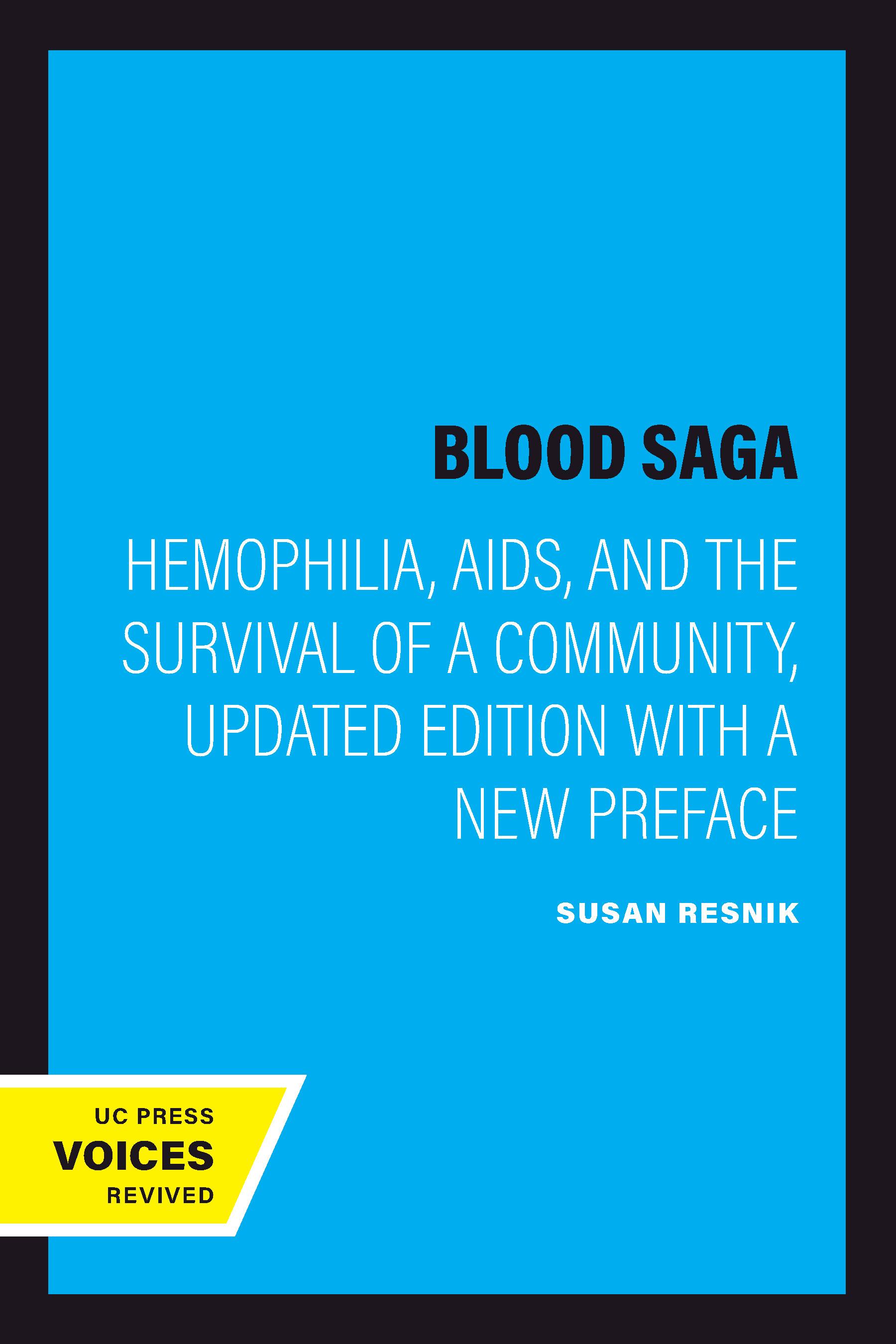
For thousands of years boys known as "bleeders" faced an early, painful death from hemophilia. Dubbed "the Royal Disease" because of its identification with Queen Victoria, the world's most renowned carrier, hemophilia is a genetic disease whose sufferers had little recourse until the mid-twentieth century. In the first book to chronicle the emergence and transformation of the hemophilia community, Susan Resnik sets her story within our national political landscape—where the disease is also a social, psychological, and economic experience.
Blood Saga includes many players and domains: men with hemophilia and their families, medical personnel, science researchers, and the author herself, who was Director of Education of the National Hemophilia Foundation in the early 1980s. At that time the "miracle treatment" of freeze-dried pooled plasma blood products enabled men with hemophilia to lead full, normal lives. Then the AIDS virus infiltrated the treatment system and over fifty percent of the hemophilia community became HIV-positive. But rather than collapsing, this community refocused its priorities, extended its reach, and helped shape blood safety policies to prevent further tragedy.
The hemophilia community includes people from every socioeconomic and ethnic group, and Resnik's narrative and use of oral histories never lose touch with those affected by the disease. Her extensive informant interviewing allows much of this social history to be told by participants on all levels: parents, wives, nurses, doctors, government agency directors, health care providers, and many others.
Gene insertion therapy now holds the promise of a cure for hemophilia in the near future. Scientific breakthroughs inevitably become intertwined with the industry and academic medical centers that govern the national health care system. And in that system, says Resnik, costs and safety are sometimes contending issues. She makes clear that the lessons learned in Blood Saga apply to all of us.
For thousands of years boys known as "bleeders" faced an early, painful death from hemophilia. Dubbed "the Royal Disease" because of its identification with Queen Victoria, the world's most renowned carrier, hemophilia is a genetic disease whose sufferers
Blood Saga includes many players and domains: men with hemophilia and their families, medical personnel, science researchers, and the author herself, who was Director of Education of the National Hemophilia Foundation in the early 1980s. At that time the "miracle treatment" of freeze-dried pooled plasma blood products enabled men with hemophilia to lead full, normal lives. Then the AIDS virus infiltrated the treatment system and over fifty percent of the hemophilia community became HIV-positive. But rather than collapsing, this community refocused its priorities, extended its reach, and helped shape blood safety policies to prevent further tragedy.
The hemophilia community includes people from every socioeconomic and ethnic group, and Resnik's narrative and use of oral histories never lose touch with those affected by the disease. Her extensive informant interviewing allows much of this social history to be told by participants on all levels: parents, wives, nurses, doctors, government agency directors, health care providers, and many others.
Gene insertion therapy now holds the promise of a cure for hemophilia in the near future. Scientific breakthroughs inevitably become intertwined with the industry and academic medical centers that govern the national health care system. And in that system, says Resnik, costs and safety are sometimes contending issues. She makes clear that the lessons learned in Blood Saga apply to all of us.
For thousands of years boys known as "bleeders" faced an early, painful death from hemophilia. Dubbed "the Royal Disease" because of its identification with Queen Victoria, the world's most renowned carrier, hemophilia is a genetic disease whose sufferers
Payez facilement par carte, Klarna, Apple Pay ou Google Pay. Pas satisfait ? Vous avez toujours une garantie de remboursement de 14 jours. En savoir plus dans nos conditions. Si vous avez des questions, envoyez-nous un e-mail à hello@memmo.org.
Memmo facilite tes études, où que tu sois dans le monde. On rassemble tes manuels de cours et des outils d'étude intelligents au même endroit : résumés, quiz, podcasts et flashcards. Et il y a Ted, ton compagnon d'étude qui répond à toutes tes questions. Plus de 50 000 étudiants étudient déjà ici – conçu pour t'aider à apprendre plus vite et à moins stresser.
Tu pourrais aussi aimer
Acheter le livre0