
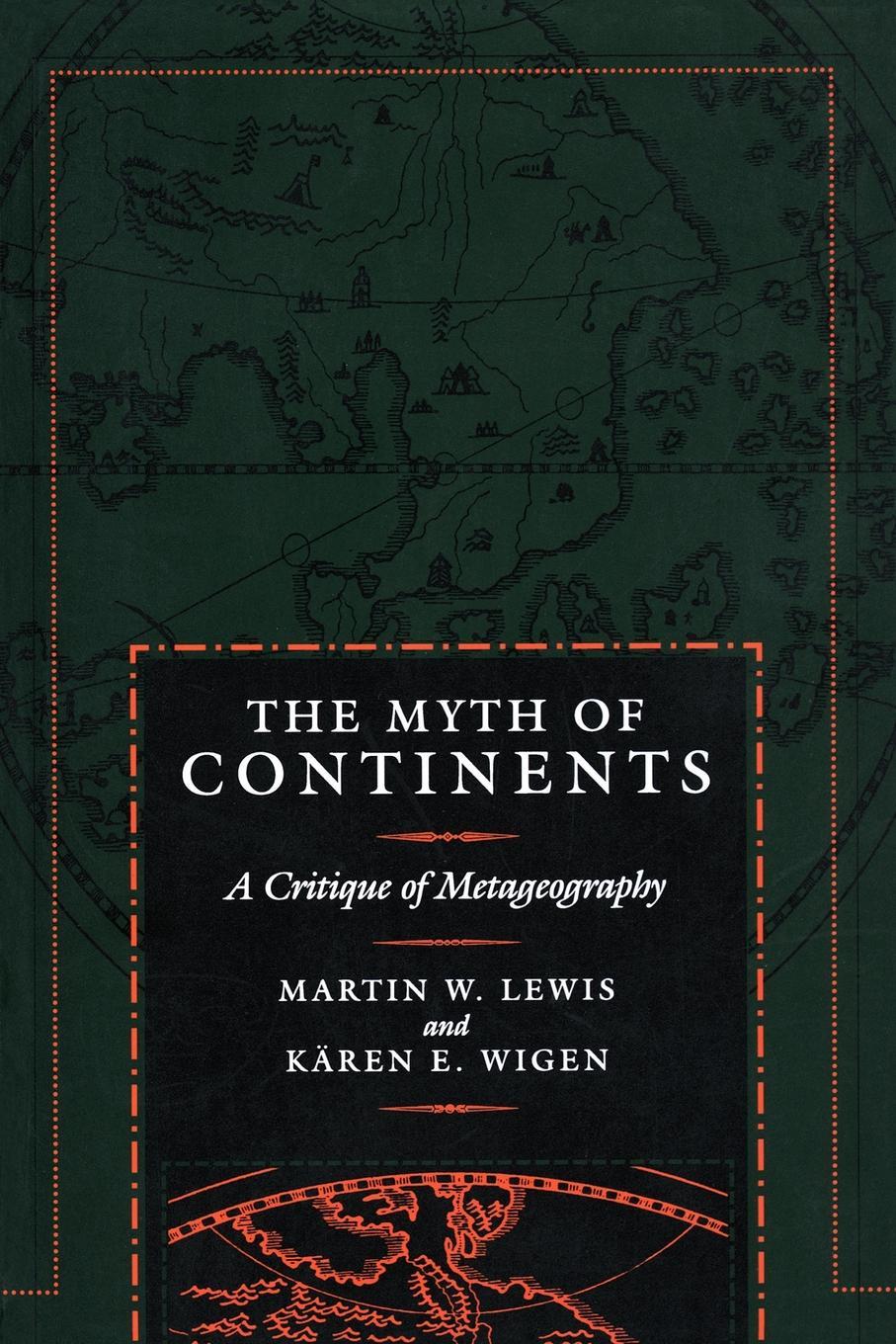
In this thoughtful and engaging critique, geographer Martin W. Lewis and historian Kären Wigen reexamine the basic geographical divisions we take for granted, and challenge the unconscious spatial frameworks that govern the way we perceive the world. Arguing that notions of East vs. West, First World vs. Third World, and even the sevenfold continental system are simplistic and misconceived, the authors trace the history of such misconceptions. Their up-to-the-minute study reflects both on the global scale and its relation to the specific continents of Europe, Asia, and Africa—actually part of one contiguous landmass.
The Myth of Continents sheds new light on how our metageographical assumptions grew out of cultural concepts: how the first continental divisions developed from classical times; how the Urals became the division between the so-called continents of Europe and Asia; how countries like Pakistan and Afghanistan recently shifted macroregions in the general consciousness.
This extremely readable and thought-provoking analysis also explores the ways that new economic regions, the end of the cold war, and the proliferation of communication technologies change our understanding of the world. It stimulates thinking about the role of large-scale spatial constructs as driving forces behind particular worldviews and encourages everyone to take a more thoughtful, geographically informed approach to the task of describing and interpreting the human diversity of the planet.
The Myth of Continents sheds new light on how our metageographical assumptions grew out of cultural concepts: how the first continental divisions developed from classical times; how the Urals became the division between the so-called continents of Europe and Asia; how countries like Pakistan and Afghanistan recently shifted macroregions in the general consciousness.
This extremely readable and thought-provoking analysis also explores the ways that new economic regions, the end of the cold war, and the proliferation of communication technologies change our understanding of the world. It stimulates thinking about the role of large-scale spatial constructs as driving forces behind particular worldviews and encourages everyone to take a more thoughtful, geographically informed approach to the task of describing and interpreting the human diversity of the planet.
Payez facilement par carte, Klarna, Apple Pay ou Google Pay. Pas satisfait ? Vous avez toujours une garantie de remboursement de 14 jours. En savoir plus dans nos conditions. Si vous avez des questions, envoyez-nous un e-mail à hello@memmo.org.
Memmo facilite tes études, où que tu sois dans le monde. On rassemble tes manuels de cours et des outils d'étude intelligents au même endroit : résumés, quiz, podcasts et flashcards. Et il y a Ted, ton compagnon d'étude qui répond à toutes tes questions. Plus de 50 000 étudiants étudient déjà ici – conçu pour t'aider à apprendre plus vite et à moins stresser.
Tu pourrais aussi aimer
Acheter le livre0