
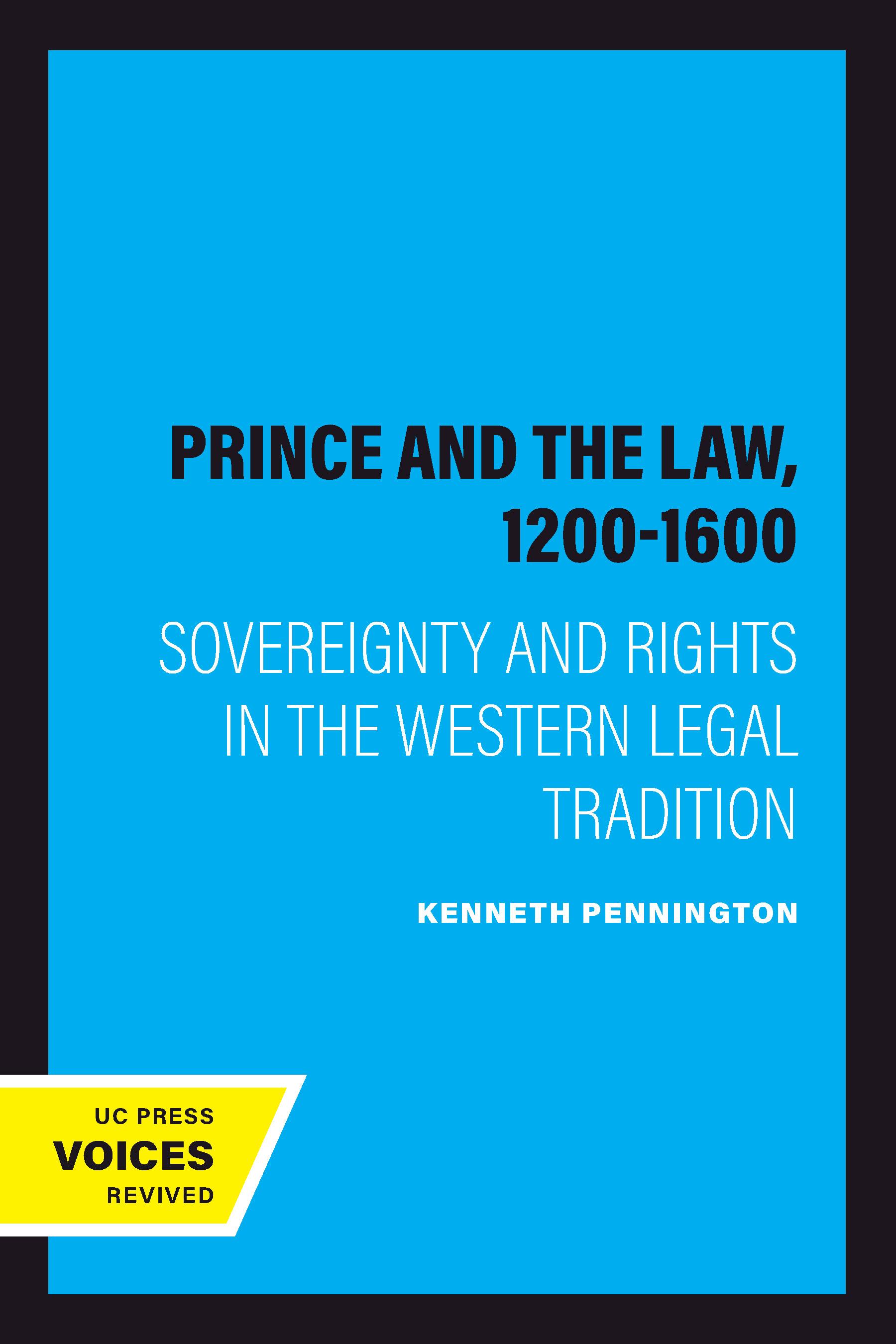
The power of the prince versus the rights of his subjects is one of the basic struggles in the history of law and government. In this masterful history of monarchy, conceptions of law, and due process, Kenneth Pennington addresses that struggle and opens an entirely new vista in the study of Western legal tradition.
Pennington investigates legal interpretations of the monarch's power from the twelfth to the seventeenth century. Then, tracing the evolution of defendants' rights, he demonstrates that the origins of due process are not rooted in English common law as is generally assumed. It was not a sturdy Anglo-Saxon, but, most probably, a French jurist of the late thirteenth century who wrote, "A man is innocent until proven guilty."
This is the first book to examine in detail the origins of our concept of due process. It also reveals a fascinating paradox: while a theory of individual rights was evolving, so, too, was the concept of the prince's "absolute power." Pennington illuminates this paradox with a clarity that will greatly interest students of political theory as well as legal historians.
The power of the prince versus the rights of his subjects is one of the basic struggles in the history of law and government. In this masterful history of monarchy, conceptions of law, and due process, Kenneth Pennington addresses that struggle and opens
Pennington investigates legal interpretations of the monarch's power from the twelfth to the seventeenth century. Then, tracing the evolution of defendants' rights, he demonstrates that the origins of due process are not rooted in English common law as is generally assumed. It was not a sturdy Anglo-Saxon, but, most probably, a French jurist of the late thirteenth century who wrote, "A man is innocent until proven guilty."
This is the first book to examine in detail the origins of our concept of due process. It also reveals a fascinating paradox: while a theory of individual rights was evolving, so, too, was the concept of the prince's "absolute power." Pennington illuminates this paradox with a clarity that will greatly interest students of political theory as well as legal historians.
The power of the prince versus the rights of his subjects is one of the basic struggles in the history of law and government. In this masterful history of monarchy, conceptions of law, and due process, Kenneth Pennington addresses that struggle and opens
Payez facilement par carte, Klarna, Apple Pay ou Google Pay. Pas satisfait ? Vous avez toujours une garantie de remboursement de 14 jours. En savoir plus dans nos conditions. Si vous avez des questions, envoyez-nous un e-mail à hello@memmo.org.
Memmo facilite tes études, où que tu sois dans le monde. On rassemble tes manuels de cours et des outils d'étude intelligents au même endroit : résumés, quiz, podcasts et flashcards. Et il y a Ted, ton compagnon d'étude qui répond à toutes tes questions. Plus de 50 000 étudiants étudient déjà ici – conçu pour t'aider à apprendre plus vite et à moins stresser.
Tu pourrais aussi aimer
Acheter le livre0