
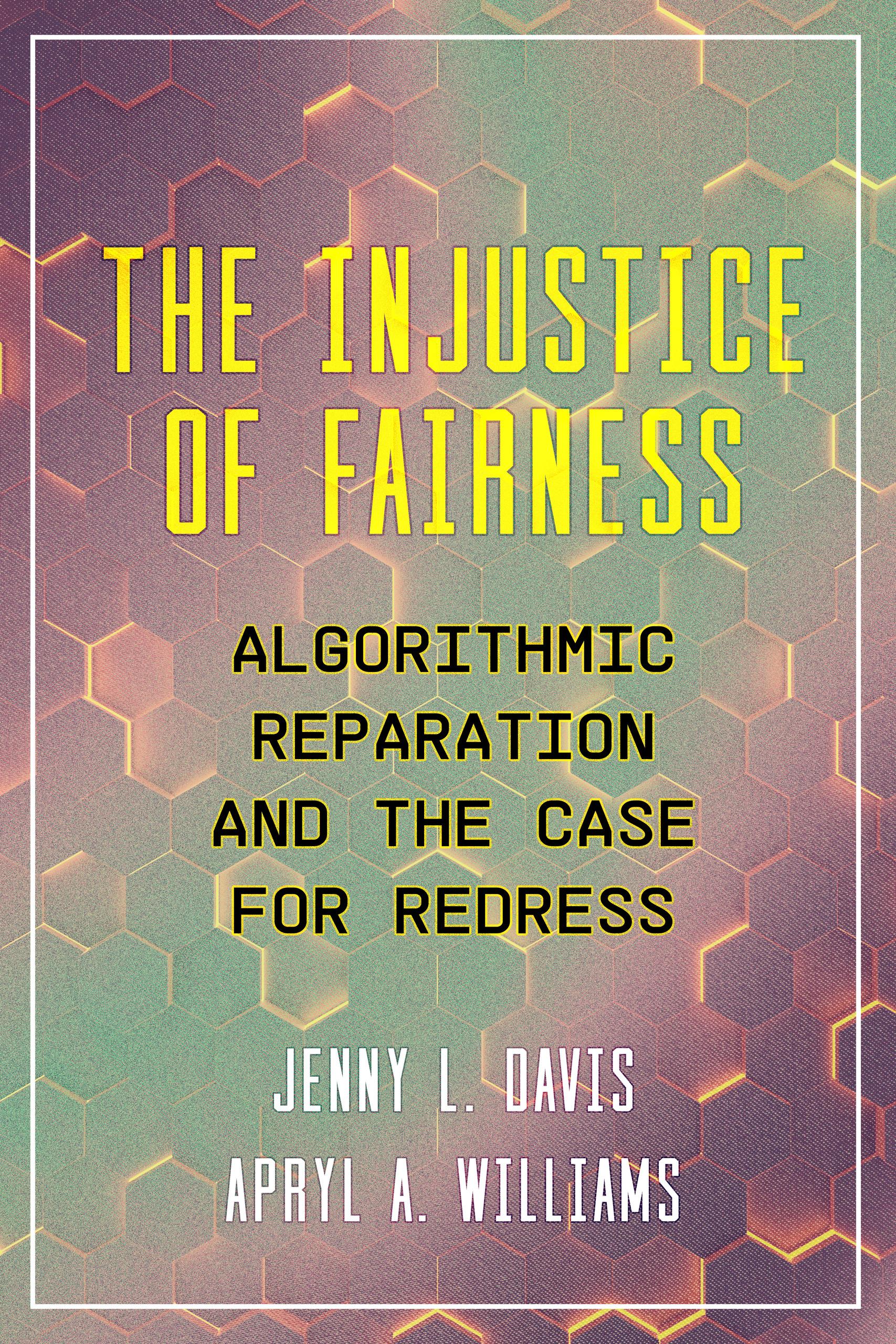
The Injustice of Fairness shifts the foundation of algorithmic ethics, displacing "fairness" with repair and redress. A substantial and growing field, algorithmic ethics aims to mitigate harms and realize social good. The fairness paradigm dominates this field across AI, machine learning, and other data-driven domains. So far, efforts toward fairness have been unsuccessful, with algorithmic harms that propagate and persist. Jenny L. Davis and Apryl A. Williams explain why algorithmic fairness perpetually fails and present "algorithmic reparation" in its place.
The stakes are high because algorithms are everywhere—from law to love, healthcare to housing, education to media, and beyond. More than lines of code or mathematical operations, algorithms carry history, configure the present, and are actively shaping the future. Set against a backdrop of societal instability and technological transformation, The Injustice of Fairness offers a careful critique, original framework, and blueprint for social change with algorithms as entry points and levers.
Payez facilement par carte, Klarna, Apple Pay ou Google Pay. Pas satisfait ? Vous avez toujours une garantie de remboursement de 14 jours. En savoir plus dans nos conditions. Si vous avez des questions, envoyez-nous un e-mail à hello@memmo.org.
Memmo facilite tes études, où que tu sois dans le monde. On rassemble tes manuels de cours et des outils d'étude intelligents au même endroit : résumés, quiz, podcasts et flashcards. Et il y a Ted, ton compagnon d'étude qui répond à toutes tes questions. Plus de 50 000 étudiants étudient déjà ici – conçu pour t'aider à apprendre plus vite et à moins stresser.