
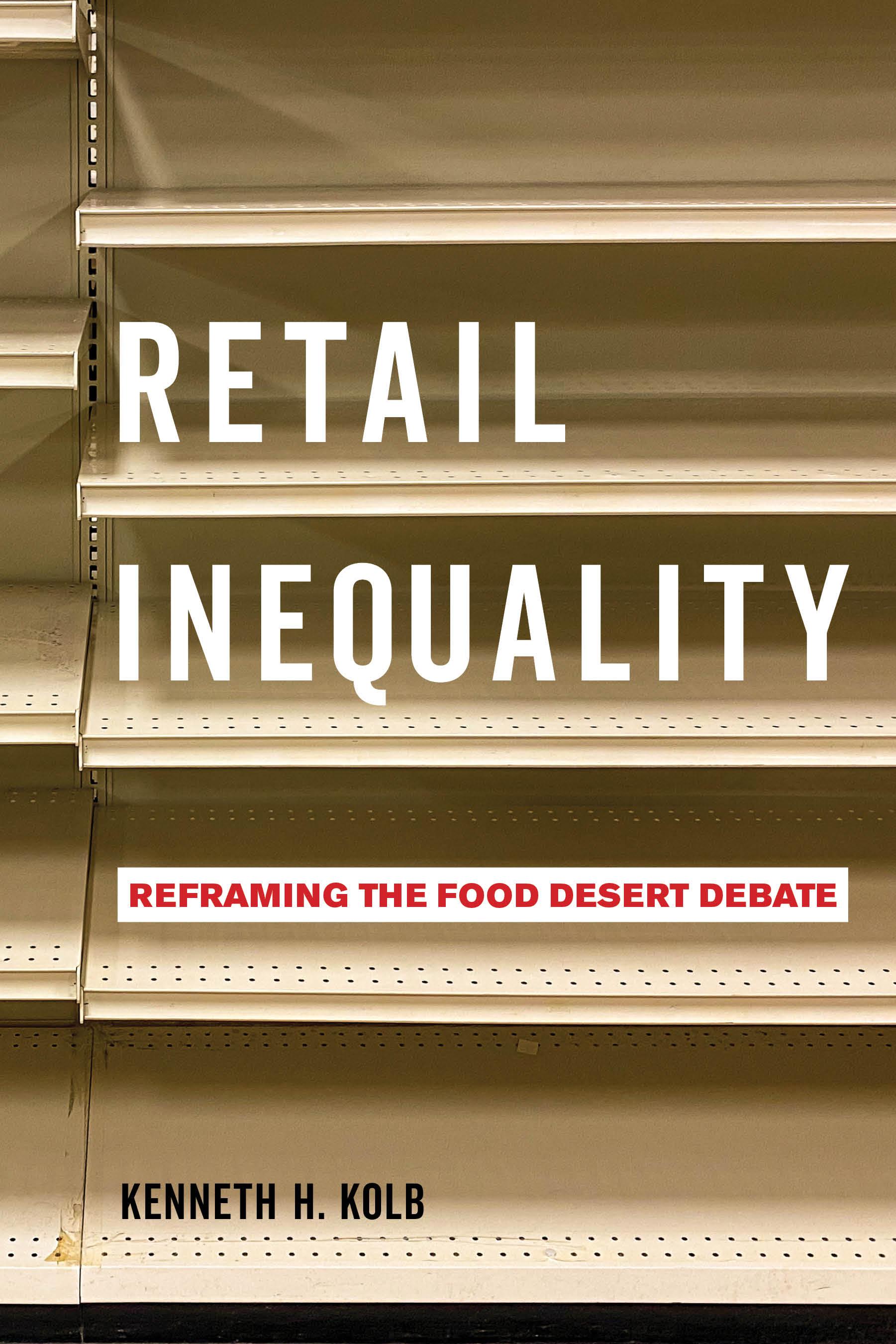
Retail Inequality examines the failure of recent efforts to improve Americans' diets by increasing access to healthy food. Based on exhaustive research, this book by Kenneth H. Kolb documents the struggles of two Black neighborhoods in Greenville, South Carolina. For decades, outsiders ignored residents' complaints about the unsavory retail options on their side of town—until the well-intentioned but flawed "food desert" concept took hold in popular discourse. Soon after, new allies arrived to help, believing that grocery stores and healthier options were the key to better health. These efforts, however, did not change neighborhood residents' food consumption practices. Retail Inequality explains why and also outlines the history of deindustrialization, urban public policy, and racism that are the cause of unequal access to food today. Kolb identifies retail inequality as the crucial concept to understanding today’s debates over gentrification and community development. As this book makes clear, the battle over food deserts was never about food—it was about equality.
Payez facilement par carte, Klarna, Apple Pay ou Google Pay. Pas satisfait ? Vous avez toujours une garantie de remboursement de 14 jours. En savoir plus dans nos conditions. Si vous avez des questions, envoyez-nous un e-mail à hello@memmo.org.
Memmo facilite tes études, où que tu sois dans le monde. On rassemble tes manuels de cours et des outils d'étude intelligents au même endroit : résumés, quiz, podcasts et flashcards. Et il y a Ted, ton compagnon d'étude qui répond à toutes tes questions. Plus de 50 000 étudiants étudient déjà ici – conçu pour t'aider à apprendre plus vite et à moins stresser.
Tu pourrais aussi aimer
Acheter le livre0