
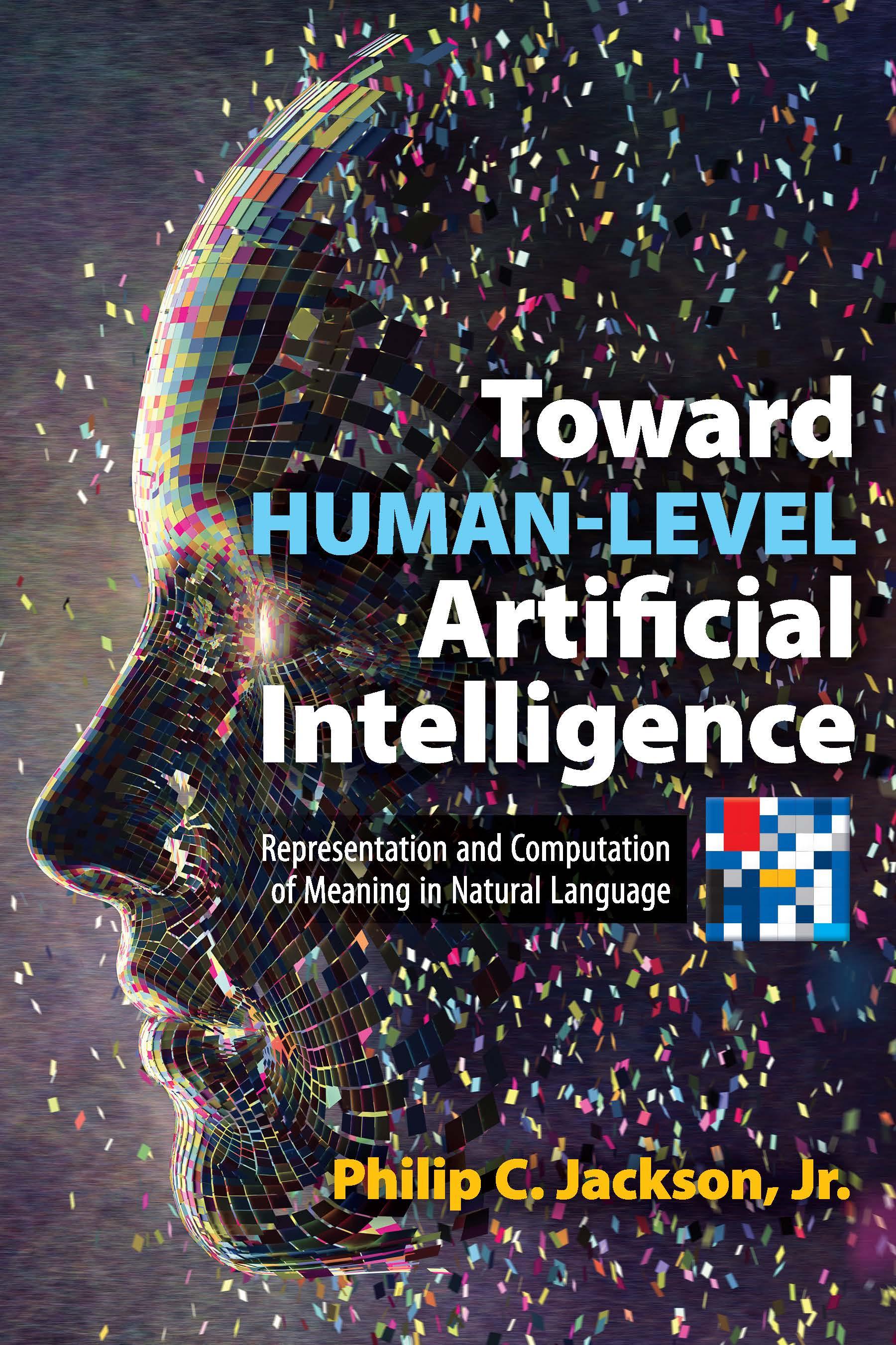
How can human-level artificial intelligence be achieved? What are the potential consequences? This book describes a research approach toward achieving human-level AI, combining a doctoral thesis and research papers by the author.
The research approach, called TalaMind, involves developing an AI system that uses a 'natural language of thought' based on the unconstrained syntax of a language such as English; designing the system as a collection of concepts that can create and modify concepts to behave intelligently in an environment; and using methods from cognitive linguistics for multiple levels of mental representation. Proposing a design-inspection alternative to the Turing Test, these pages discuss 'higher-level mentalities' of human intelligence, which include natural language understanding, higher-level forms of learning and reasoning, imagination, and consciousness. Dr. Jackson gives a comprehensive review of other research, addresses theoretical objections to the proposed approach and to achieving human-level AI in principle, and describes a prototype system that illustrates the potential of the approach.
This book discusses economic risks and benefits of AI, considers how to ensure that human-level AI and superintelligence will be beneficial for humanity, and gives reasons why human-level AI may be necessary for humanity's survival and prosperity.
The research approach, called TalaMind, involves developing an AI system that uses a 'natural language of thought' based on the unconstrained syntax of a language such as English; designing the system as a collection of concepts that can create and modify concepts to behave intelligently in an environment; and using methods from cognitive linguistics for multiple levels of mental representation. Proposing a design-inspection alternative to the Turing Test, these pages discuss 'higher-level mentalities' of human intelligence, which include natural language understanding, higher-level forms of learning and reasoning, imagination, and consciousness. Dr. Jackson gives a comprehensive review of other research, addresses theoretical objections to the proposed approach and to achieving human-level AI in principle, and describes a prototype system that illustrates the potential of the approach.
This book discusses economic risks and benefits of AI, considers how to ensure that human-level AI and superintelligence will be beneficial for humanity, and gives reasons why human-level AI may be necessary for humanity's survival and prosperity.
Payez facilement par carte, Klarna, Apple Pay ou Google Pay. Pas satisfait ? Vous avez toujours une garantie de remboursement de 14 jours. En savoir plus dans nos conditions. Si vous avez des questions, envoyez-nous un e-mail à hello@memmo.org.
Memmo facilite tes études, où que tu sois dans le monde. On rassemble tes manuels de cours et des outils d'étude intelligents au même endroit : résumés, quiz, podcasts et flashcards. Et il y a Ted, ton compagnon d'étude qui répond à toutes tes questions. Plus de 50 000 étudiants étudient déjà ici – conçu pour t'aider à apprendre plus vite et à moins stresser.
Tu pourrais aussi aimer
Acheter le livre0