
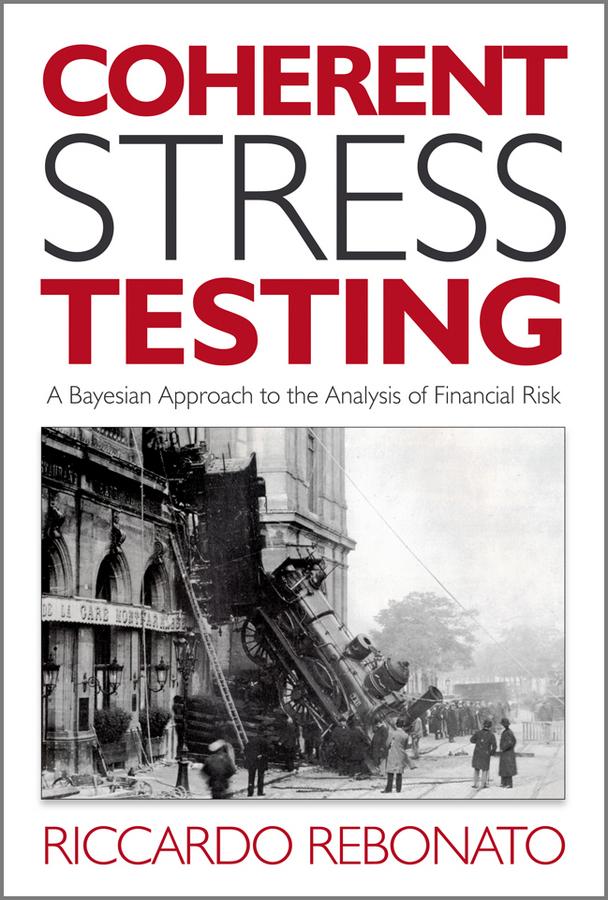
Based on the author's extensive work, research and presentations in the area, the book fills a gap in quantitative risk management by introducing a new and very intuitively appealing approach to stress testing based on expert judgement and Bayesian networks. It constitutes a radical departure from the traditional statistical methodologies based on Economic Capital or Extreme-Value-Theory approaches.
The book is split into four parts. Part I looks at stress testing and at its role in modern risk management. It discusses the distinctions between risk and uncertainty, the different types of probability that are used in risk management today and for which tasks they are best used. Stress testing is positioned as a bridge between the statistical areas where VaR can be effective and the domain of total Keynesian uncertainty. Part II lays down the quantitative foundations for the concepts described in the rest of the book. Part III takes readers through the application of the tools discussed in part II, and introduces two different systematic approaches to obtaining a coherent stress testing output that can satisfy the needs of industry users and regulators. In part IV the author addresses more practical questions such as embedding the suggestions of the book into a viable governance structure.
Payez facilement par carte, Klarna, Apple Pay ou Google Pay. Pas satisfait ? Vous avez toujours une garantie de remboursement de 14 jours. En savoir plus dans nos conditions. Si vous avez des questions, envoyez-nous un e-mail à hello@memmo.org.
Memmo facilite tes études, où que tu sois dans le monde. On rassemble tes manuels de cours et des outils d'étude intelligents au même endroit : résumés, quiz, podcasts et flashcards. Et il y a Ted, ton compagnon d'étude qui répond à toutes tes questions. Plus de 50 000 étudiants étudient déjà ici – conçu pour t'aider à apprendre plus vite et à moins stresser.