
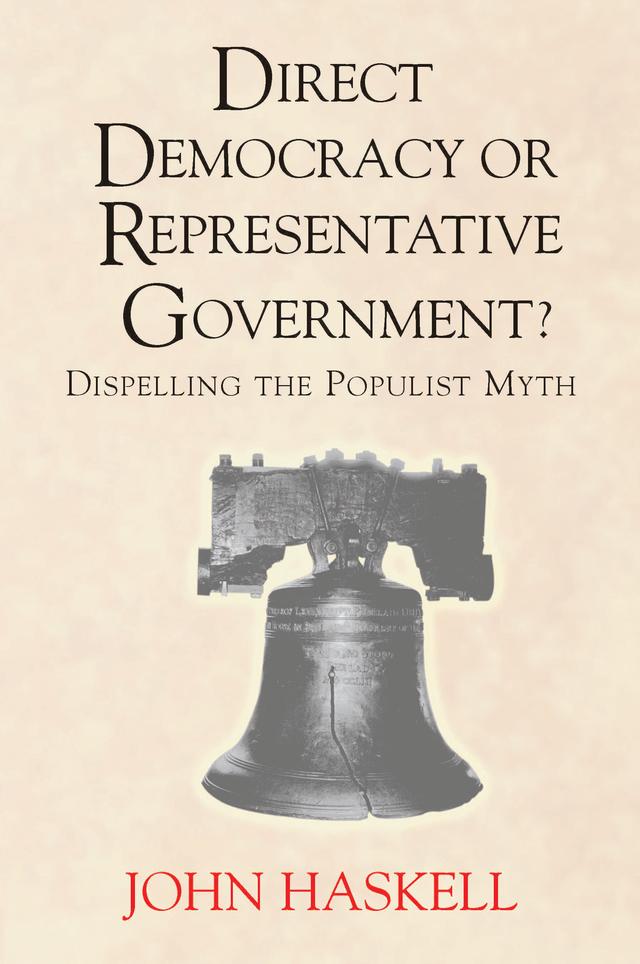
In Direct Democracy or Representative Government? John Haskell develops a devastating critique of direct democracy by exposing the central flaw in populist thinking. Contrary to the beliefs of populist advocates of direct democracy, the popular will cannot be interpreted from the results of the plebiscite. John Haskell presents a defense of representative institutions that brings to bear, in an understandable way, the findings of public choice scholars. Haskell covers the clash of ideas between populists and constitutionalists throughout American history. He follows the development of direct democracy during the twentieth century, especially the dramatically increased use of initiatives and referenda in the last decade. As Americans become increasingly frustrated with the workings of the institutions of government at the state and national levels, and as populist ideas gain greater currency, new forms of direct and participatory democracy making use of the latest computer technology appeal to more people. Haskell speculates as to the likely future direction of direct democracy in the U.S. He describes in clear language the fundamental problem with the premise of populist thinking and explains why direct democracy presents a threat to minority rights and only promises irresponsible and unaccountable governance.
Payez facilement par carte, Klarna, Apple Pay ou Google Pay. Pas satisfait ? Vous avez toujours une garantie de remboursement de 14 jours. En savoir plus dans nos conditions. Si vous avez des questions, envoyez-nous un e-mail à hello@memmo.org.
Memmo facilite tes études, où que tu sois dans le monde. On rassemble tes manuels de cours et des outils d'étude intelligents au même endroit : résumés, quiz, podcasts et flashcards. Et il y a Ted, ton compagnon d'étude qui répond à toutes tes questions. Plus de 50 000 étudiants étudient déjà ici – conçu pour t'aider à apprendre plus vite et à moins stresser.
Tu pourrais aussi aimer
Acheter le livre0