
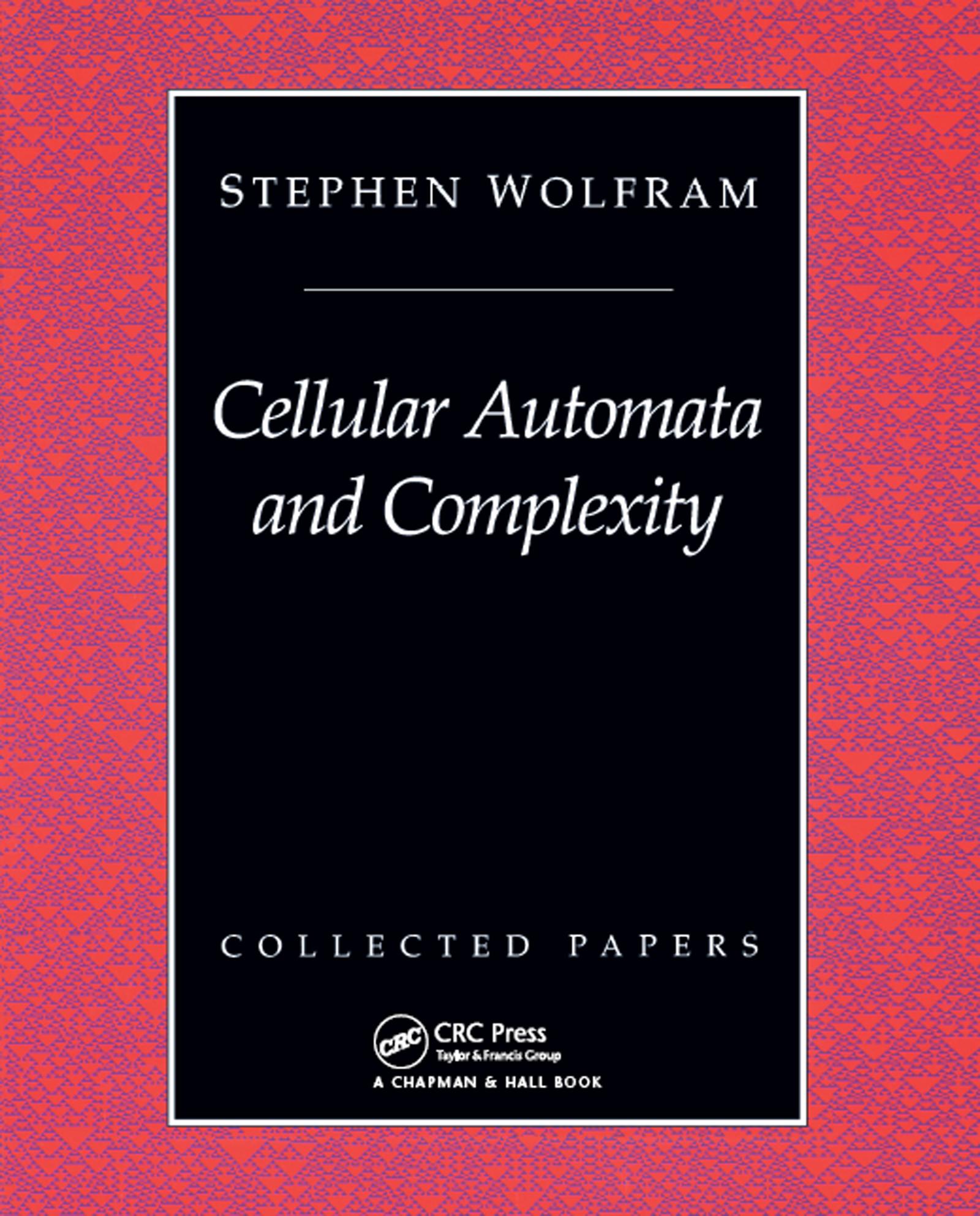
Are mathematical equations the best way to model nature? For many years it had been assumed that they were. But in the early 1980s, Stephen Wolfram made the radical proposal that one should instead build models that are based directly on simple computer programs. Wolfram made a detailed study of a class of such models known as cellular automata, and discovered a remarkable fact: that even when the underlying rules are very simple, the behaviour they produce can be highly complex, and can mimic many features of what we see in nature. And based on this result, Wolfram began a program of research to develop what he called A Science of Complexity."The results of Wolfram's work found many applications, from the so-called Wolfram Classification central to fields such as artificial life, to new ideas about cryptography and fluid dynamics. This book is a collection of Wolfram's original papers on cellular automata and complexity. Some of these papers are widely known in the scientific community others have never been published before. Together, the papers provide a highly readable account of what has become a major new field of science, with important implications for physics, biology, economics, computer science and many other areas.
Payez facilement par carte, Klarna, Apple Pay ou Google Pay. Pas satisfait ? Vous avez toujours une garantie de remboursement de 14 jours. En savoir plus dans nos conditions. Si vous avez des questions, envoyez-nous un e-mail à hello@memmo.org.
Memmo facilite tes études, où que tu sois dans le monde. On rassemble tes manuels de cours et des outils d'étude intelligents au même endroit : résumés, quiz, podcasts et flashcards. Et il y a Ted, ton compagnon d'étude qui répond à toutes tes questions. Plus de 50 000 étudiants étudient déjà ici – conçu pour t'aider à apprendre plus vite et à moins stresser.
Tu pourrais aussi aimer
Acheter le livre0