
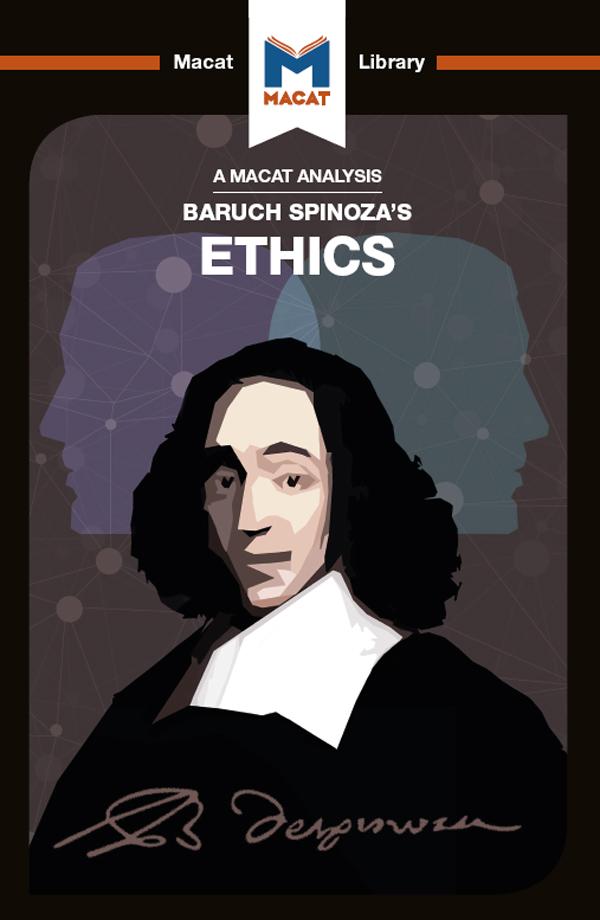
Baruch Spinoza’s Ethics is a dense masterpiece of sustained argumentative reasoning. It earned its place as one of the most important and influential books in Western philosophy by virtue of its uncompromisingly direct arguments about the nature of God, the universe, free will, and human morals.
Though it remains one of the densest and most challenging texts in the entire canon of Western philosophy, Ethics is also famous for Spinoza’s unique approach to ordering and constructing its arguments. As its full title – Ethics, Demonstrated in Geometrical Order – suggests, Spinoza decided to use the rigorous format of mathematical-style propositions to lay out his arguments, just as the Ancient Greek mathematician Euclid had used geometrical propositions to lay out the basic rules of geometry.
In choosing such a systematic method, Spinoza’s masterwork shows the crucial aspects of good reasoning skills being employed at the highest level. The key use of reasoning is the production of an argument that is well-organised, supports its conclusions and proceeds logically towards its end. Just as a mathematician might demonstrate a geometrical proof, Spinoza sought to lay out a comprehensive philosophy for human existence – an attempt that has influenced generations of philosophers since.
Payez facilement par carte, Klarna, Apple Pay ou Google Pay. Pas satisfait ? Vous avez toujours une garantie de remboursement de 14 jours. En savoir plus dans nos conditions. Si vous avez des questions, envoyez-nous un e-mail à hello@memmo.org.
Memmo facilite tes études, où que tu sois dans le monde. On rassemble tes manuels de cours et des outils d'étude intelligents au même endroit : résumés, quiz, podcasts et flashcards. Et il y a Ted, ton compagnon d'étude qui répond à toutes tes questions. Plus de 50 000 étudiants étudient déjà ici – conçu pour t'aider à apprendre plus vite et à moins stresser.