
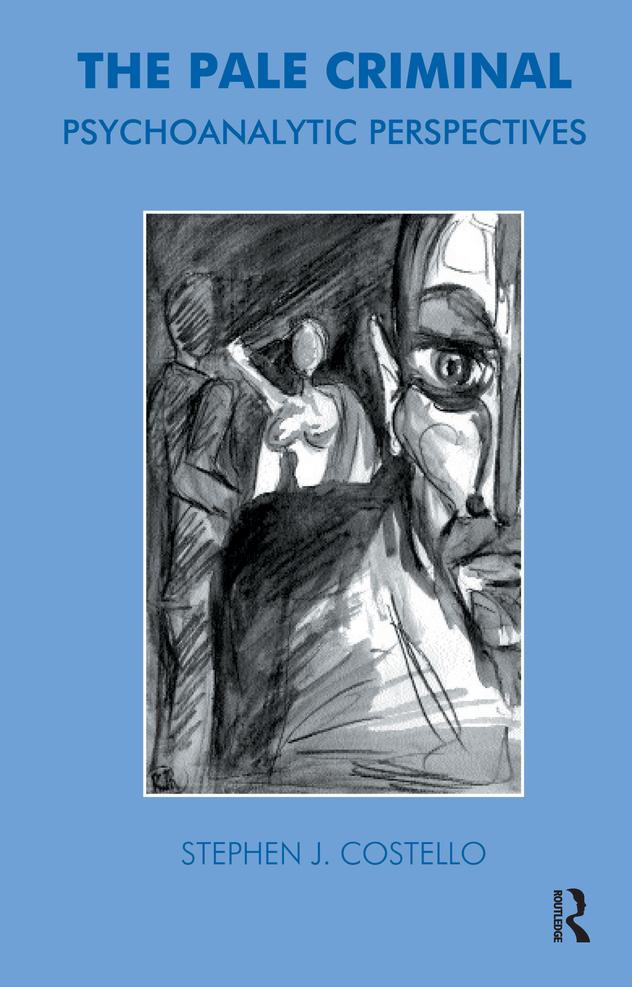
It was Freud, borrowing Nietszche's phrase from Thus Spake Zarathustra, who described as 'pale criminals' those who committed criminal acts out of deep-lying (unconscious) guilt. The focus of this challenging and penetrating study is on this type of criminality. The book bring sa 'unifying vision and theoretical integration' to the array of perspectives and theories in this field. He draws together for the first time the thoughts on the subject of Sigmund Freud, Carl Jung, Melanie Klein, Donald Winnicott and Jacques Lacan, examines the contributions of both orthodox and evolutionary psychiatry, and explores the role of family experience in shaping the 'pale criminal'. The result is an ambitious theory of criminality; a depth-psychological psychoanalytic model of the human being.In the early chapters, the aurthor provides a judicious and even-handed exposition of his chosen thinkers' views, before proceeding to an impressive and well-argued dialectical synthesis in which each theoretical perspective is used to correct, qualify or supplement the others. In a diffuse and divided field, this volume should provide an indispensable source of clarification and a stimulus to open creative debate.
Payez facilement par carte, Klarna, Apple Pay ou Google Pay. Pas satisfait ? Vous avez toujours une garantie de remboursement de 14 jours. En savoir plus dans nos conditions. Si vous avez des questions, envoyez-nous un e-mail à hello@memmo.org.
Memmo facilite tes études, où que tu sois dans le monde. On rassemble tes manuels de cours et des outils d'étude intelligents au même endroit : résumés, quiz, podcasts et flashcards. Et il y a Ted, ton compagnon d'étude qui répond à toutes tes questions. Plus de 50 000 étudiants étudient déjà ici – conçu pour t'aider à apprendre plus vite et à moins stresser.
Tu pourrais aussi aimer
Acheter le livre0