
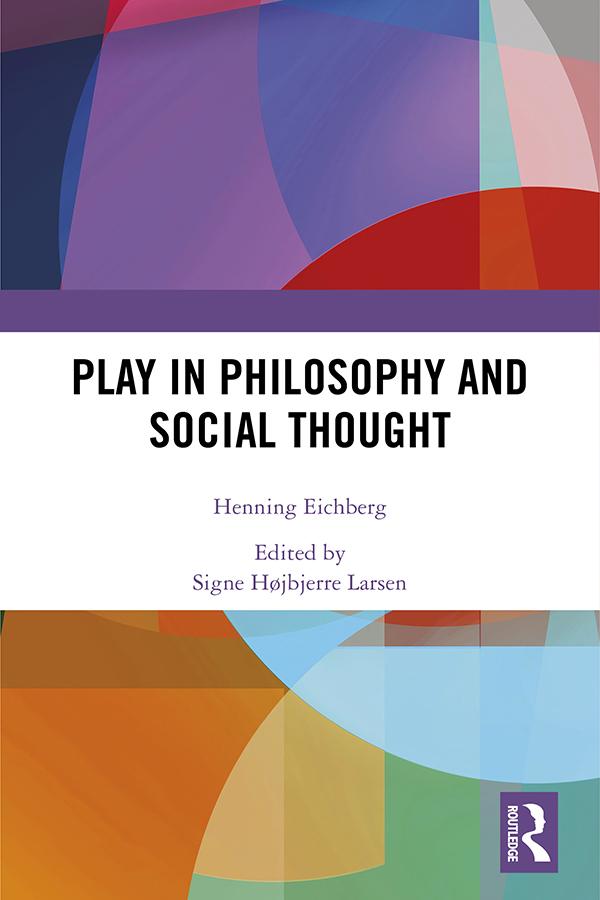
To understand play, we need a bottom-up phenomenology of play. This phenomenology highlights the paradox that it is the players who play the game, but it is also the game which makes us players. Yet what is it that plays us, when we play? Do we play the game, or does the game play us? These questions concern the relation between the playing subject and play as something larger than the individual – play as craft, play as rhythm, play between normality and otherness, even play as religion, as a sense of spiritual play between self and other.
This goes deeper than the welfare-political or educational intention to make people play or play more, or to advise individuals to play in a correct and useful way. Exploring topics such as identity, otherness, and disability, as well as activities including skiing, yoga, dance and street sport, this interdisciplinary study continues the work of the late Henning Eichberg and sheds new light on the questions that play at the borders of philosophy, anthropology, and the sociology of sport and leisure.
Play in Philosophy and Social Thought is a fascinating resource for students of philosophy of sport, cultural studies, sport sciences and anthropological studies. It is also a thought-provoking read for sport and play philosophers, sociologists, anthropologists, cultural studies scholars, and practitioners working with play.
Payez facilement par carte, Klarna, Apple Pay ou Google Pay. Pas satisfait ? Vous avez toujours une garantie de remboursement de 14 jours. En savoir plus dans nos conditions. Si vous avez des questions, envoyez-nous un e-mail à hello@memmo.org.
Memmo facilite tes études, où que tu sois dans le monde. On rassemble tes manuels de cours et des outils d'étude intelligents au même endroit : résumés, quiz, podcasts et flashcards. Et il y a Ted, ton compagnon d'étude qui répond à toutes tes questions. Plus de 50 000 étudiants étudient déjà ici – conçu pour t'aider à apprendre plus vite et à moins stresser.