
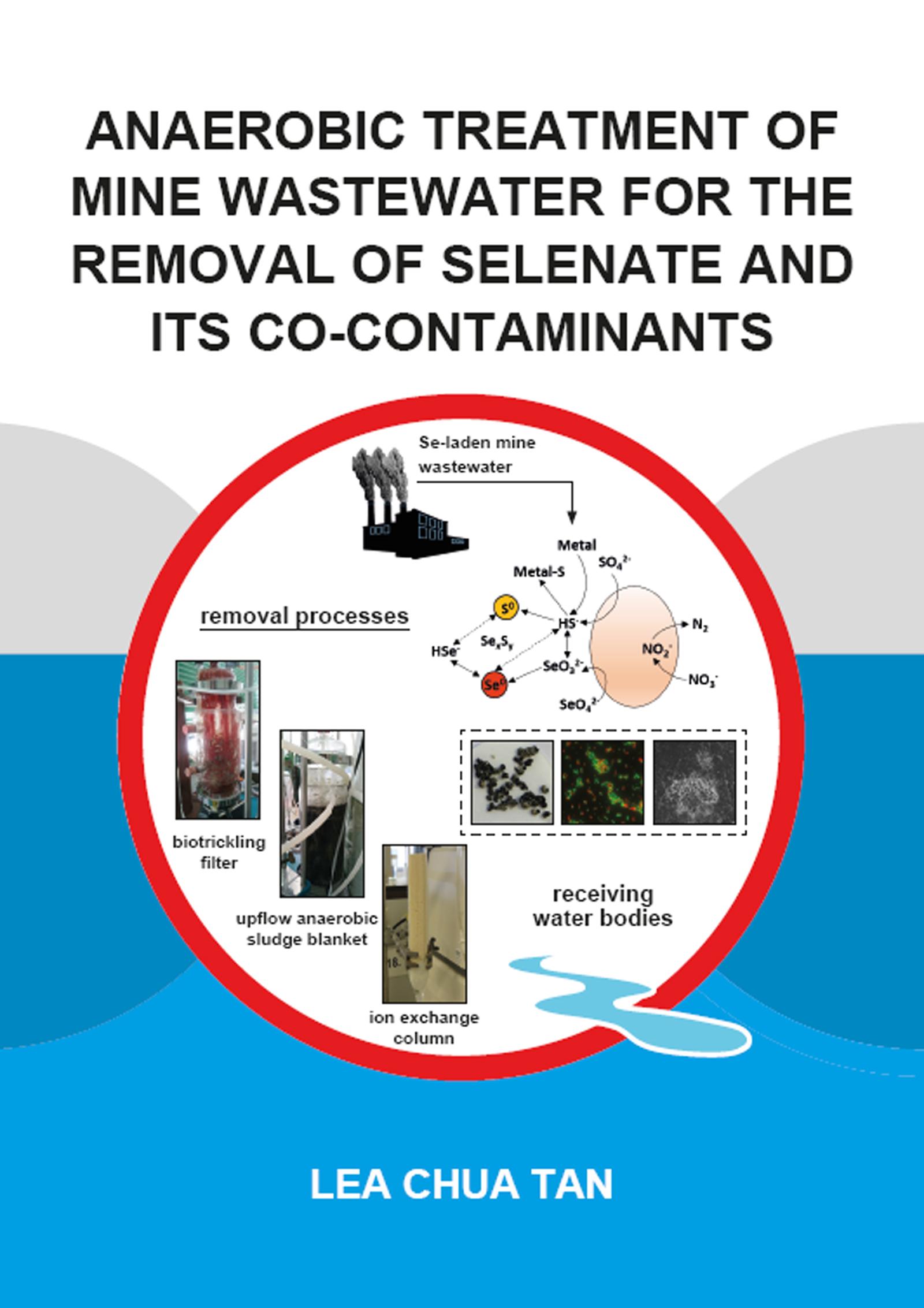
Selenium (Se) pollution has led to several cases of severe aquatic ecosystem deterioration due to Se poisoning caused by bioaccumulation over time. However, the removal of selenate (SeO42-) from wastewater streams with co-contaminants has been largely considered as a black box in anaerobic biological systems using mixed consortia. This research aimed at addressing the effect of wastewater characteristics, i.e. co-contaminants such as nitrate (NO3-) and sulfate (SO42-), heavy metals and pH, on the biological reduction of SeO42- and evaluating process integration for Se-laden wastewater treatment with co-contaminants. This study demonstrated that the presence of co-contaminants can actually be beneficial for Se removal provided that the concentrations are carefully monitored and appropriate operating conditions and process configurations are used. The Se removal (total Se and SeO42-) efficiency increased by ~30% in the presence of NO3- and/or SO42- compared to systems with SeO42- alone. Additionally, an integrated process of an ion exchange (IX) column and bioreactors showed improved overall removal capacity for SO42- and total Se. The knowledge and information gained from this research can help in the advancement and application of biological processes, i.e. predicting of reactor performance, solving specific design or practical problems and implementing novel treatment techniques for Se-laden mine wastewater.
Payez facilement par carte, Klarna, Apple Pay ou Google Pay. Pas satisfait ? Vous avez toujours une garantie de remboursement de 14 jours. En savoir plus dans nos conditions. Si vous avez des questions, envoyez-nous un e-mail à hello@memmo.org.
Memmo facilite tes études, où que tu sois dans le monde. On rassemble tes manuels de cours et des outils d'étude intelligents au même endroit : résumés, quiz, podcasts et flashcards. Et il y a Ted, ton compagnon d'étude qui répond à toutes tes questions. Plus de 50 000 étudiants étudient déjà ici – conçu pour t'aider à apprendre plus vite et à moins stresser.