
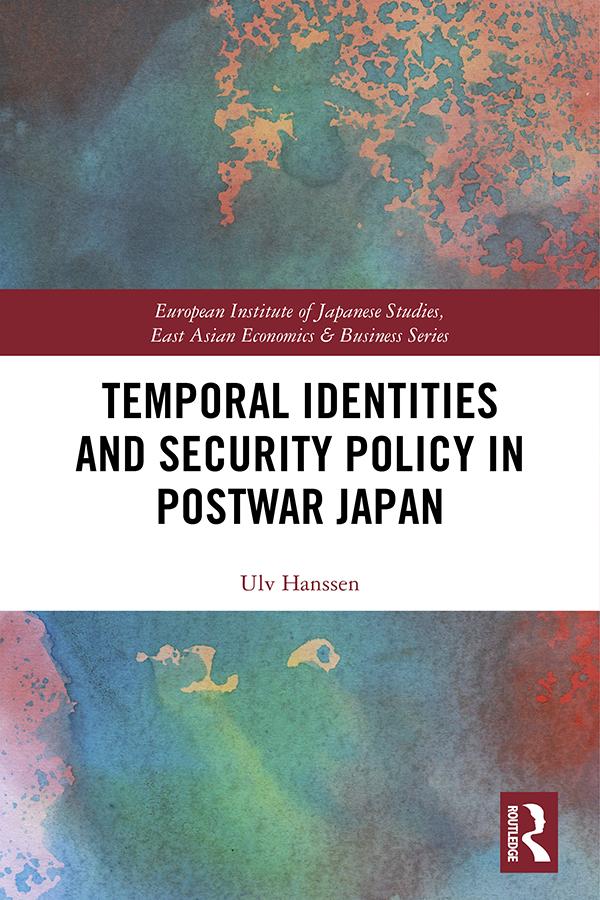
Through a discourse analysis of Japanese parliamentary debates, this book explores how different understandings of Japan’s history have led to sharply divergent security policies in the postwar period, whilst providing an explanation for the much-debated security policy changes under Abe Shinzō.
Analyzing the ways identities can be constructed through ‘temporal othering,’ as well as ‘spatial othering,’ this book examines the rise of a new form of identity in Japan since the end of the Cold War, one that is differentiated not from prewar and wartime Japan, but from postwar Japan. The champions of this identity, it argues, see the postwar past as a shameful period, characterized by self-imposed military restrictions, and thus the relentless chipping away of these limitations in recent years is indicative of how dominant this identity has become. Exploring how these military restrictions have shifted from being a symbol of pride to a symbol of shame, this book demonstrates the concrete ways in which the past can both enable and constrain policy.
Temporal Identities and Security Policy in Postwar Japan will be invaluable to students and scholars of Japanese politics and foreign policy, as well as international relations more generally.
Payez facilement par carte, Klarna, Apple Pay ou Google Pay. Pas satisfait ? Vous avez toujours une garantie de remboursement de 14 jours. En savoir plus dans nos conditions. Si vous avez des questions, envoyez-nous un e-mail à hello@memmo.org.
Memmo facilite tes études, où que tu sois dans le monde. On rassemble tes manuels de cours et des outils d'étude intelligents au même endroit : résumés, quiz, podcasts et flashcards. Et il y a Ted, ton compagnon d'étude qui répond à toutes tes questions. Plus de 50 000 étudiants étudient déjà ici – conçu pour t'aider à apprendre plus vite et à moins stresser.