
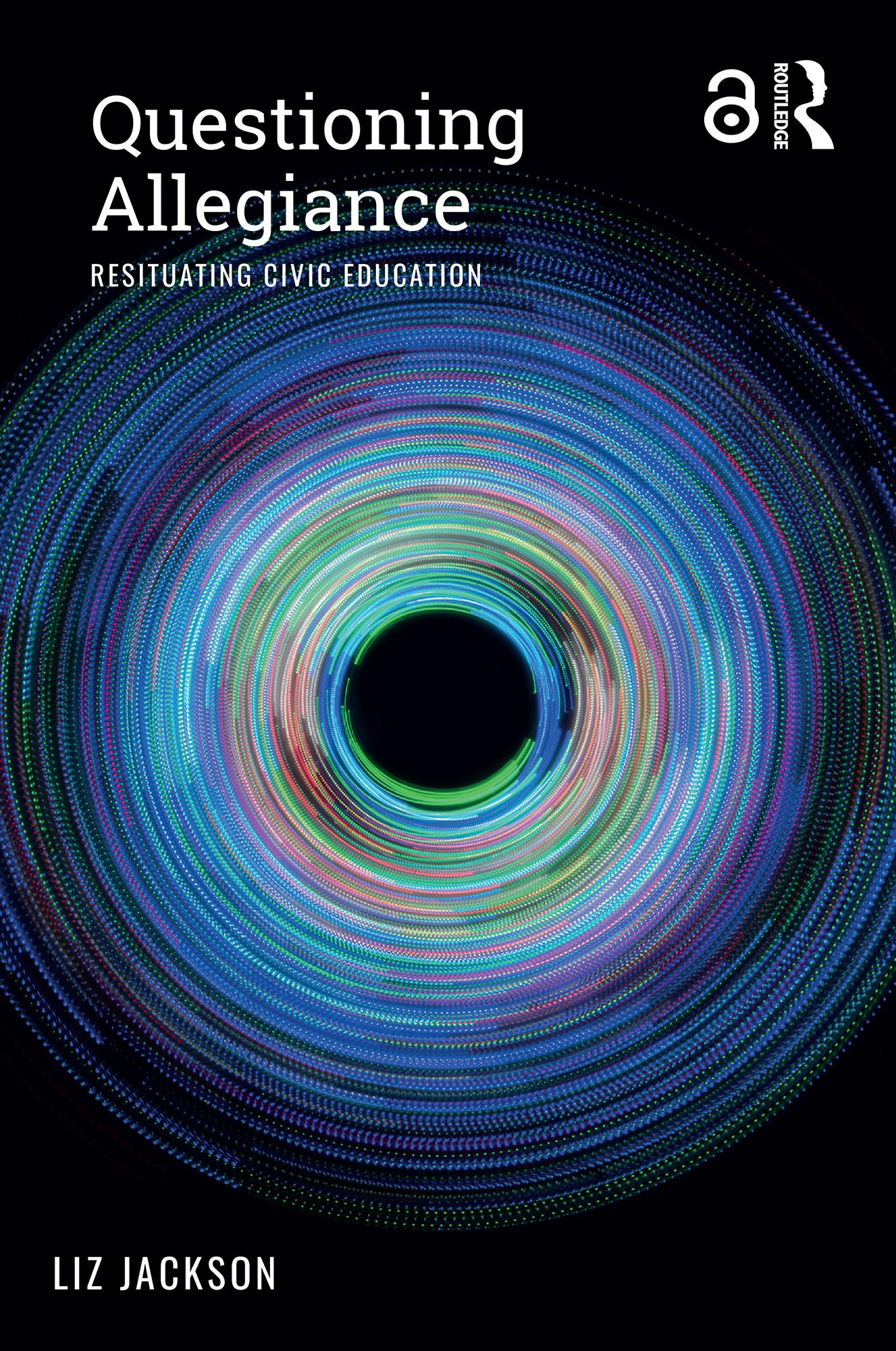
Education about living in society and in the world is a vital task of schools. Yet such civic education is not always critically examined, and few among us have been encouraged to reflect on our civic education experiences. Around the world, one’s civic education most often looks like a black box. How it works is unclear. When human harm, violence, and oppression can be seen in a wide variety of contexts, it is worth critically examining civic education. Could it be that civic education is not playing a helpful role in society? Can it be done differently and better? As one reflects on the contemporary social world, it is helpful to examine the assumptions surrounding education for living together, to think about current modes and possible alternatives. Otherwise, one might end up promoting allegiance to civic and partisan entities which are themselves black boxes (the ‘nation’, the ‘people’), failing to notice when and how what goes on in civic education is morally questionable.
This book aims to elucidate some of the black box of civic education, and focuses on some of its main operations across contexts. Offering a new framework for students and academics, this book questions existing thinking and shifts the focus of attention from the right balance to strike between local, national, and global allegiances to the more fundamental question of what counts as ‘local’, ‘national’, and ‘global’, and what might be involved in cultivating allegiances to them. It looks at allegiance to not just transnational but also sub-global ‘civilisations’ and it problematises the notion of the ‘local community’ in new ways.
This book is the 2020 AESA Critics' Choice Book Award Winner.
The Open Access version of this book, available at http://www.taylorfrancis.com, has been made available under a Creative Commons Attribution-Non Commercial-No Derivatives (CC BY-NC-ND) 4.0 license.
Payez facilement par carte, Klarna, Apple Pay ou Google Pay. Pas satisfait ? Vous avez toujours une garantie de remboursement de 14 jours. En savoir plus dans nos conditions. Si vous avez des questions, envoyez-nous un e-mail à hello@memmo.org.
Memmo facilite tes études, où que tu sois dans le monde. On rassemble tes manuels de cours et des outils d'étude intelligents au même endroit : résumés, quiz, podcasts et flashcards. Et il y a Ted, ton compagnon d'étude qui répond à toutes tes questions. Plus de 50 000 étudiants étudient déjà ici – conçu pour t'aider à apprendre plus vite et à moins stresser.