
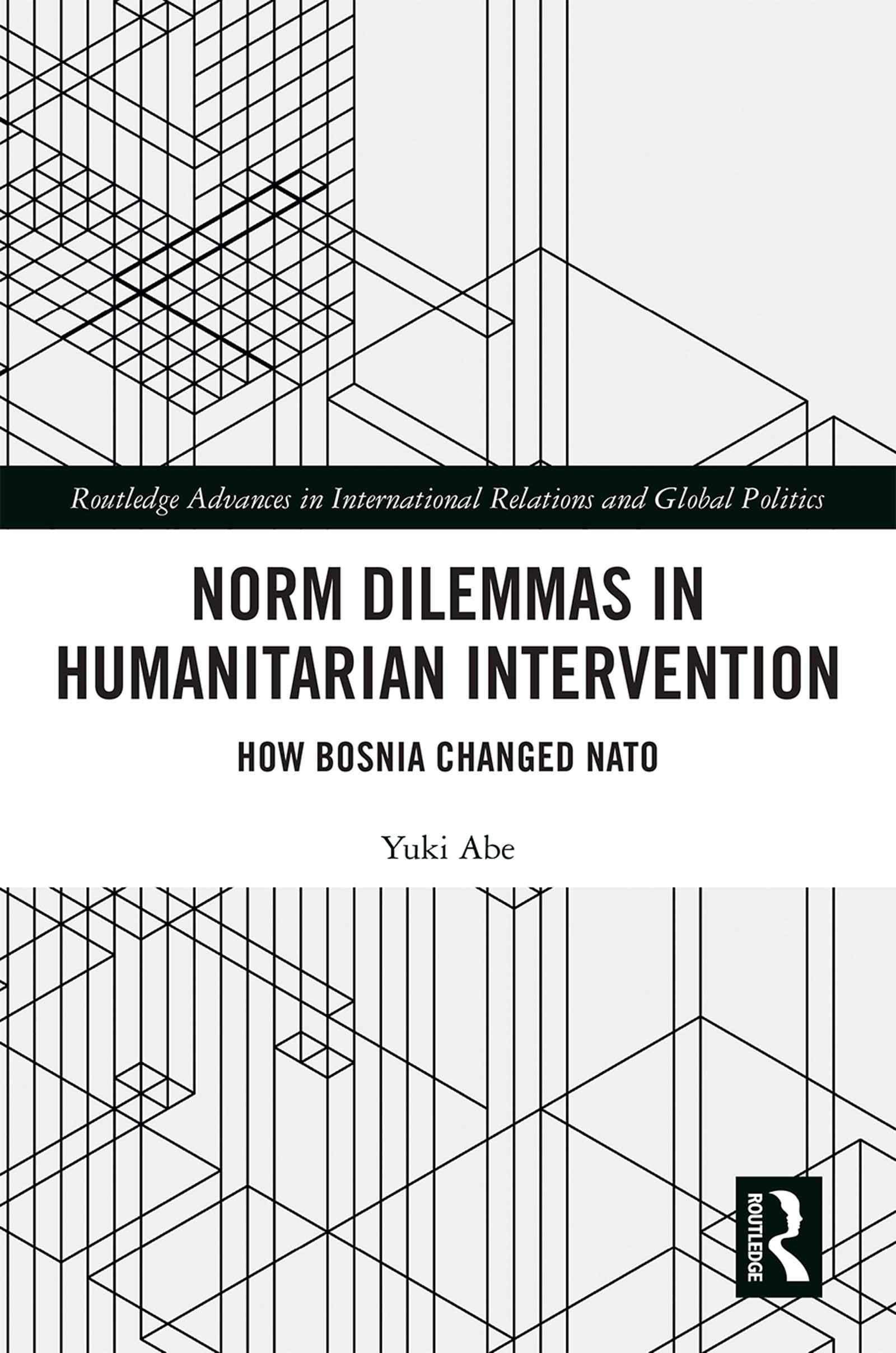
NATO, an organisation brought together to function as an anti-communist alliance, faced existential questions after the unexpected collapse of the USSR at the beginning of the 1990s. Intervention in the conflict in Bosnia between 1992 and 1995 gave it a renewed sense of purpose and a redefining of its core mission. Abe argues that an impetus for this change was the norm dilemma that the conflict in Bosnia represented. On the one hand a state which oversaw the massacre of its civilians was in breach of international norms, but on the other hand intervention by outside states would breach the norms of sovereign integrity and non-use of force. NATO, as an international governance organisation, thus became a vehicle for avoiding this kind of dilemma.
A detailed case study of NATO during the Bosnian war, this book explores how the differing views and preferences among the Western states on the intervention in Bosnia were reconciled as they agreed on the outline of NATO’s reform. It examines detailed decision-making processes in Britain, France, Germany and the USA. In particular Abe analyses why conflicting norms led to an emphasis on conflict prevention capacity, rather than simply on armed intervention capacity.
Payez facilement par carte, Klarna, Apple Pay ou Google Pay. Pas satisfait ? Vous avez toujours une garantie de remboursement de 14 jours. En savoir plus dans nos conditions. Si vous avez des questions, envoyez-nous un e-mail à hello@memmo.org.
Memmo facilite tes études, où que tu sois dans le monde. On rassemble tes manuels de cours et des outils d'étude intelligents au même endroit : résumés, quiz, podcasts et flashcards. Et il y a Ted, ton compagnon d'étude qui répond à toutes tes questions. Plus de 50 000 étudiants étudient déjà ici – conçu pour t'aider à apprendre plus vite et à moins stresser.