
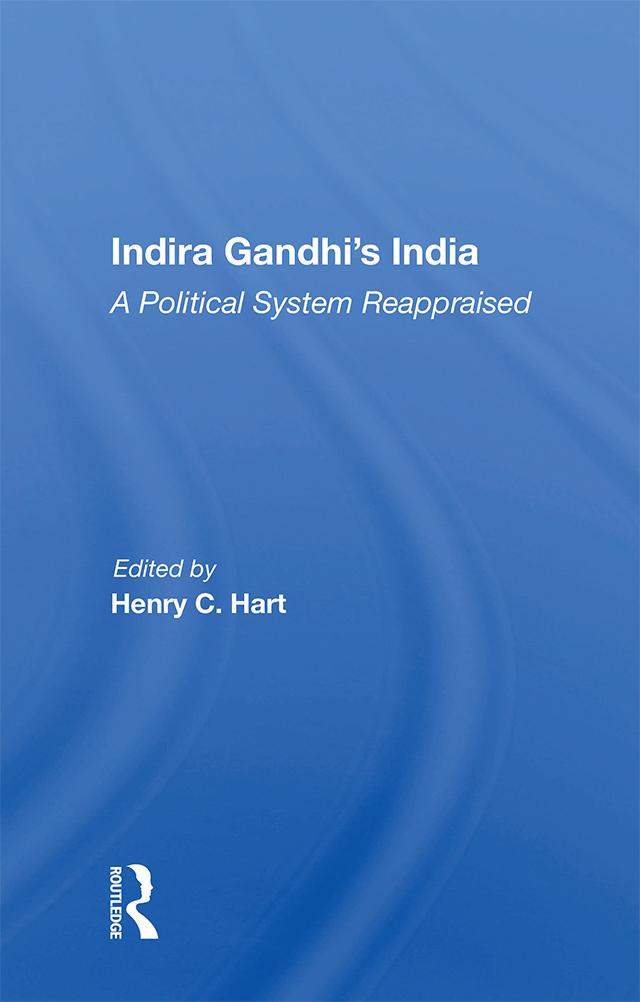
India, credited with the best institutionalized democracy of the Third World, changed in 1975, apparently overnight and at the decision of one individual, to a quasi-dictatorship. A transformation so remarkable prompted eight scholars of Indian politics to reexamine the sectors of the system they know well, seeking explanations. They reappraise the carry-over of colonial institutions and procedures, the distribution of power in the ruling party, business influence, the roles of the divided Communist parties, the position of the administrative corps and of the army, and unrest among the rural poor at its most volatile, in the state of Bihar. An introduction shows just what Mrs. Gandhi changed, the situation that triggered her action, and the justification she advances. A concluding chapter tests the facts of the Indian transformation against four major theories of political change in the developing world: projection into politics of personality conflicts of the leader, agrarian class conflict, social mobilization, and cultural assimilation and institutionalization.
Payez facilement par carte, Klarna, Apple Pay ou Google Pay. Pas satisfait ? Vous avez toujours une garantie de remboursement de 14 jours. En savoir plus dans nos conditions. Si vous avez des questions, envoyez-nous un e-mail à hello@memmo.org.
Memmo facilite tes études, où que tu sois dans le monde. On rassemble tes manuels de cours et des outils d'étude intelligents au même endroit : résumés, quiz, podcasts et flashcards. Et il y a Ted, ton compagnon d'étude qui répond à toutes tes questions. Plus de 50 000 étudiants étudient déjà ici – conçu pour t'aider à apprendre plus vite et à moins stresser.
Tu pourrais aussi aimer
Acheter le livre0