
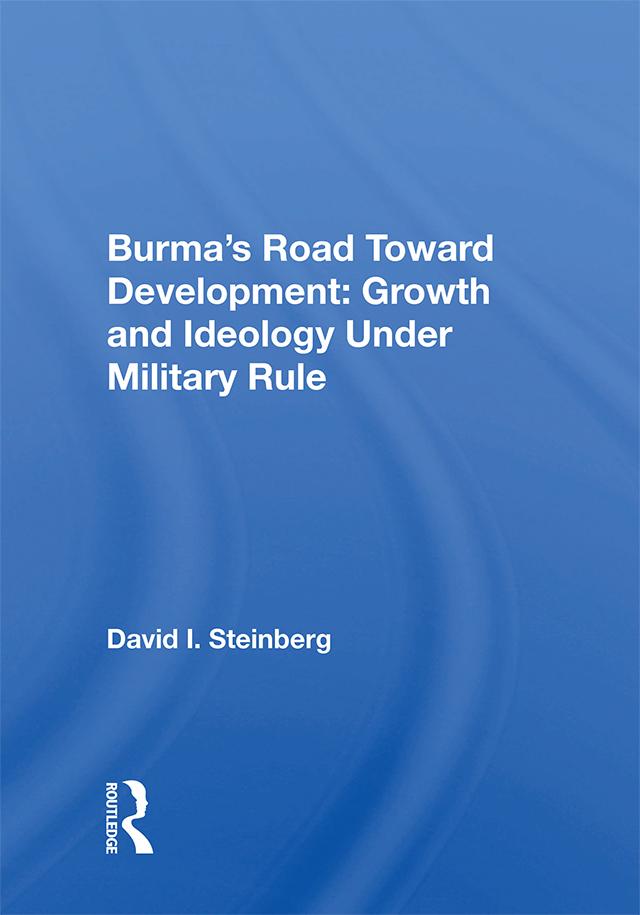
A liberalization of economic policies has inspired considerable economic growth and encouraged the development of Burma's natural resources, but, according to David Steinberg, the current military government is akin to previous civilian governments in its commitment to socialism as a vehicle for development. The economic flexibility demonstrated by the government has not been matched by political liberalization, and as a result, economic growth remains a captive of administrative and policy constraints. Steinberg traces the origins and acceptance of socialist thought and planning in Burma and shows how socialist ideology has had to be tempered with pragmatism in order to make economic development possible. Looking to Burma's future, he also points out two central problems facing the country: strained minority relations, which have kept the nation from developing a sense of unity, and difficulties with political succession brought on by the military regime's preoccupation with perpetuating its own leadership.
Pages: 256
Catégorie: Ekonomi & Utveckling
e-ISBN: 9780429724602
Poids d'expédition: 1.2 kg
Expédié sous: 1-2 jours
Payez facilement par carte, Klarna, Apple Pay ou Google Pay. Pas satisfait ? Vous avez toujours une garantie de remboursement de 14 jours. En savoir plus dans nos conditions. Si vous avez des questions, envoyez-nous un e-mail à hello@memmo.org.
Memmo facilite tes études, où que tu sois dans le monde. On rassemble tes manuels de cours et des outils d'étude intelligents au même endroit : résumés, quiz, podcasts et flashcards. Et il y a Ted, ton compagnon d'étude qui répond à toutes tes questions. Plus de 50 000 étudiants étudient déjà ici – conçu pour t'aider à apprendre plus vite et à moins stresser.
Tu pourrais aussi aimer
Acheter le livre0