
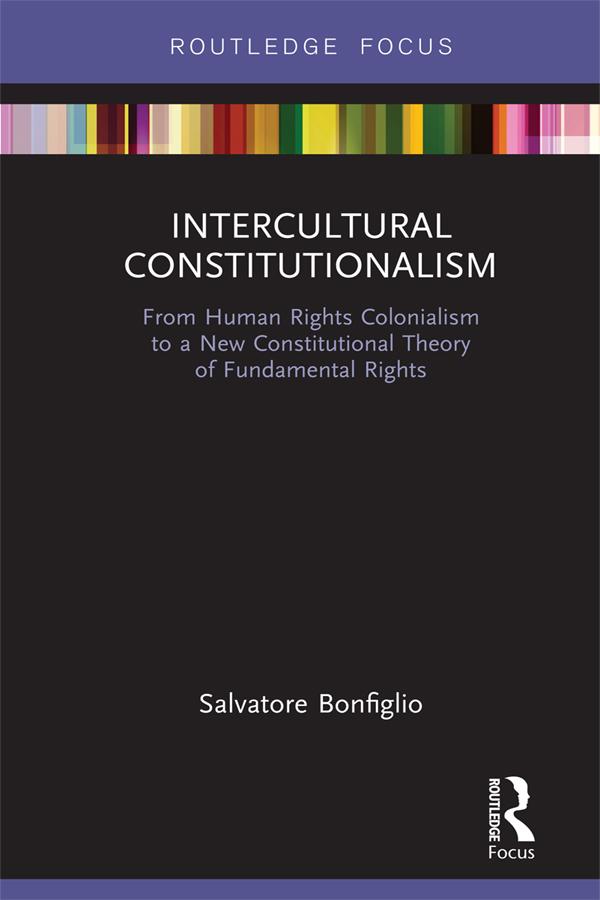
This book argues that the effective protection of fundamental rights in a contemporary, multicultural society requires not only tolerance and respect for others, but also an ethics of reciprocity and a pursuit of dialogue between different cultures of human rights. Nowadays, all cultures tend to claim an equitable arrangement that can be articulated in the terms of fundamental rights and in the multicultural organization of the State. Starting from the premise that every culture is and always was intercultural, this book elaborates a new, and more fundamentally, pluralist view of the relationship between rights and cultural identity. No culture is pure; from the perspective of an irreducible cultural contamination, this book argues, it is possible to formulate constitutional idea of diversity that is properly intercultural. This concept of intercultural constitutionalism is not, then, based on abstract principles, but nor is it bound to any particular cultural norm. Rather, intercultural constitutionalism allows the interpretation of rights, rules and legal principles, which are established in different contexts.
Payez facilement par carte, Klarna, Apple Pay ou Google Pay. Pas satisfait ? Vous avez toujours une garantie de remboursement de 14 jours. En savoir plus dans nos conditions. Si vous avez des questions, envoyez-nous un e-mail à hello@memmo.org.
Memmo facilite tes études, où que tu sois dans le monde. On rassemble tes manuels de cours et des outils d'étude intelligents au même endroit : résumés, quiz, podcasts et flashcards. Et il y a Ted, ton compagnon d'étude qui répond à toutes tes questions. Plus de 50 000 étudiants étudient déjà ici – conçu pour t'aider à apprendre plus vite et à moins stresser.