
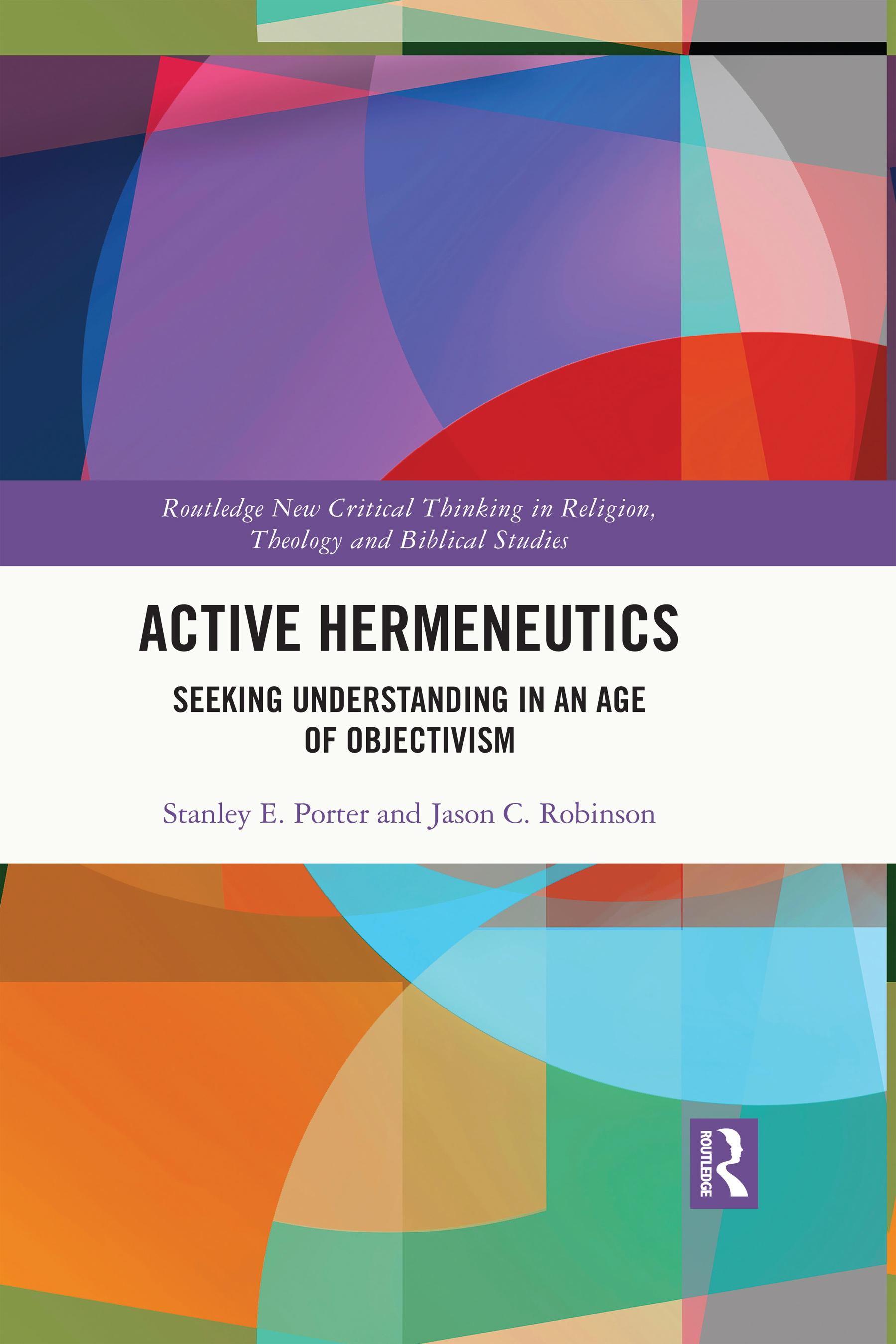
Hermeneutics, as a discipline of the humanities, is often assumed to be in thrall to the same subjectivity of every interpretive method, in direct contrast to the objectivity prized by the natural sciences. This book argues that there is a false dichotomy here, and that ancient and modern ideas of knowledge can be utilized to create a new active form of hermeneutics. One capable of creating a standard by which to judge better and worse models of understanding.
This book explores decisive aspects over which the future of hermeneutics—a future inexplicably tied to a history of hermeneutics—will continue to struggle, namely the limits and possibilities of situated human understanding. This book is located in the middle of a number of major, converging discussions within contemporary intellectual discourse. Drawing upon a wide range of ancient and modern hermeneutical thought, including Aristotle, Bernstein, Heidegger, Kant, and Gadamer, the result is a hermeneutical approach that pushes beyond the traditional limits of human understanding.
This is a bold attempt to move hermeneutics into a new phase. As such, it will be of significant interest to scholars and academics working in General Hermeneutics, Theology, and the Philosophy of Religion.
Payez facilement par carte, Klarna, Apple Pay ou Google Pay. Pas satisfait ? Vous avez toujours une garantie de remboursement de 14 jours. En savoir plus dans nos conditions. Si vous avez des questions, envoyez-nous un e-mail à hello@memmo.org.
Memmo facilite tes études, où que tu sois dans le monde. On rassemble tes manuels de cours et des outils d'étude intelligents au même endroit : résumés, quiz, podcasts et flashcards. Et il y a Ted, ton compagnon d'étude qui répond à toutes tes questions. Plus de 50 000 étudiants étudient déjà ici – conçu pour t'aider à apprendre plus vite et à moins stresser.