
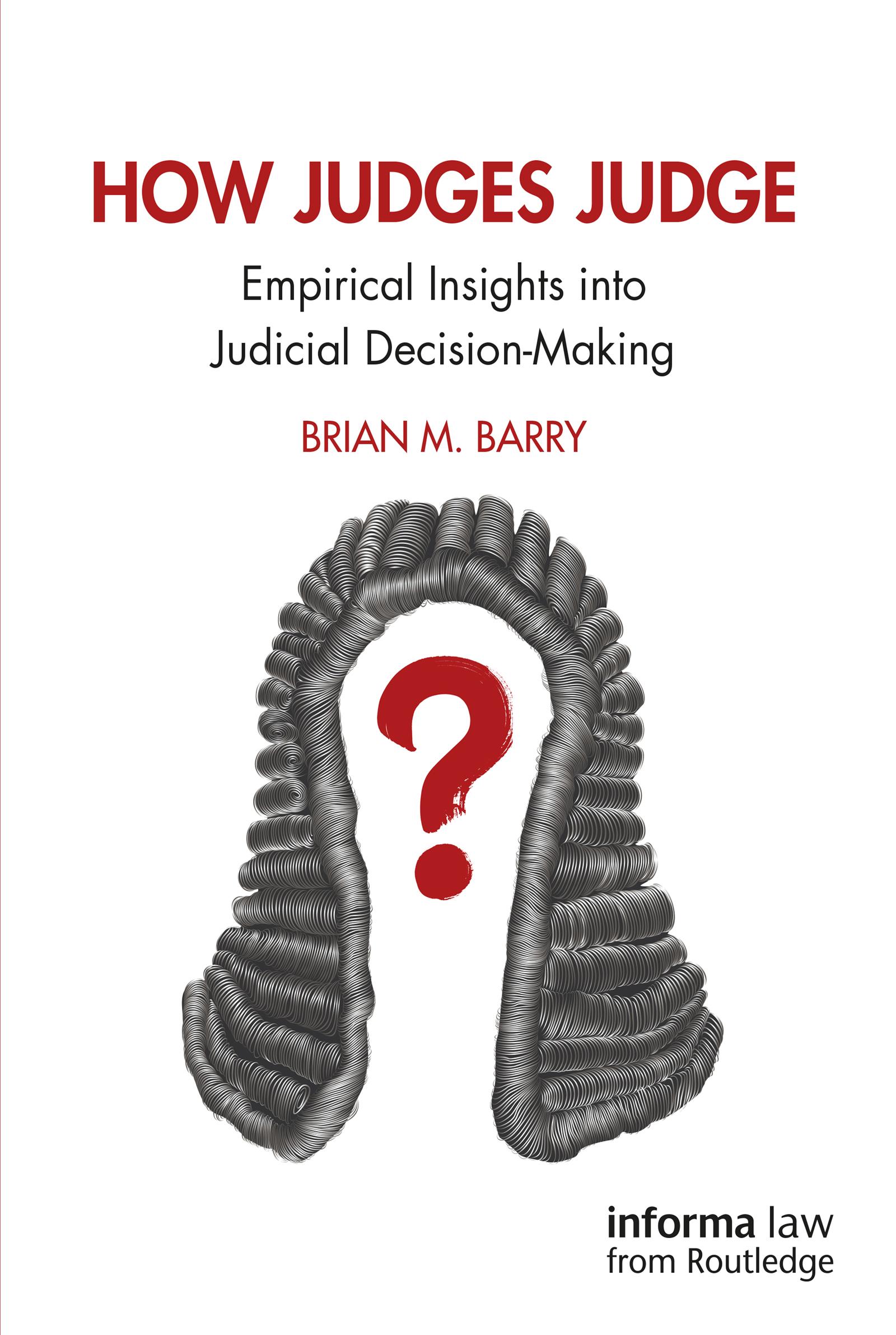
A judge’s role is to make decisions. This book is about how judges undertake this task. It is about forces on the judicial role and their consequences, about empirical research from a variety of academic disciplines that observes and verifies how factors can affect how judges judge.
On the one hand, judges decide by interpreting and applying the law, but much more affects judicial decision-making: psychological effects, group dynamics, numerical reasoning, biases, court processes, influences from political and other institutions, and technological advancement. All can have a bearing on judicial outcomes. In How Judges Judge: Empirical Insights into Judicial Decision-Making, Brian M. Barry explores how these factors, beyond the law, affect judges in their role. Case examples, judicial rulings, judges’ own self-reflections on their role and accounts from legal history complement this analysis to contextualise the research, make it more accessible and enrich the reader’s understanding and appreciation of judicial decision-making.
Offering research-based insights into how judges make the decisions that can impact daily life and societies around the globe, this book will be of interest to practising and training judges, litigation lawyers and those studying law and related disciplines.
Payez facilement par carte, Klarna, Apple Pay ou Google Pay. Pas satisfait ? Vous avez toujours une garantie de remboursement de 14 jours. En savoir plus dans nos conditions. Si vous avez des questions, envoyez-nous un e-mail à hello@memmo.org.
Memmo facilite tes études, où que tu sois dans le monde. On rassemble tes manuels de cours et des outils d'étude intelligents au même endroit : résumés, quiz, podcasts et flashcards. Et il y a Ted, ton compagnon d'étude qui répond à toutes tes questions. Plus de 50 000 étudiants étudient déjà ici – conçu pour t'aider à apprendre plus vite et à moins stresser.