
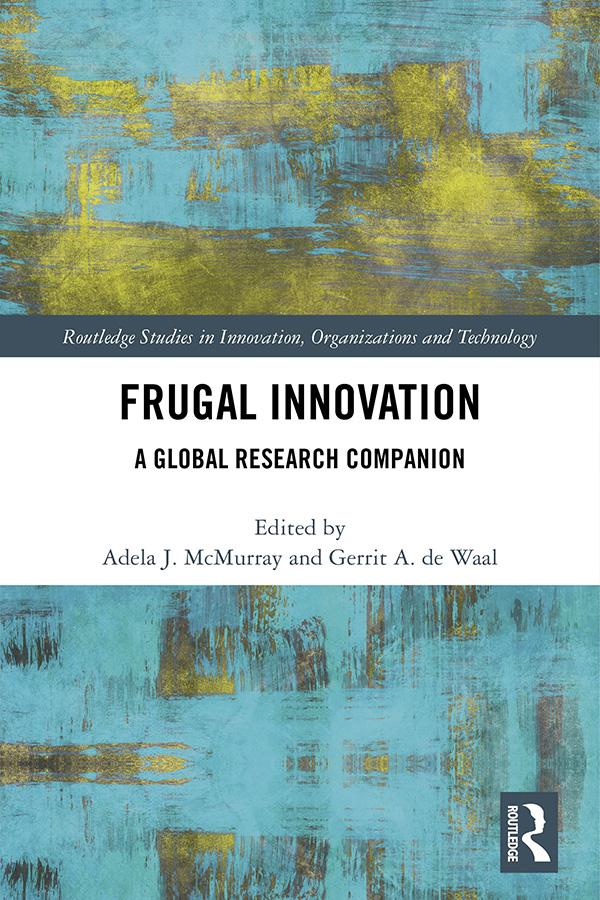
Customers are increasingly seeking "low-cost, high-quality" or what is known as frugal products that meet the buyer’s needs while reducing the associated cost of ownership. This book examines the developing principles and theories of frugal innovations across the globe. The authors identify frugal innovation (FI) using a multi-method approach to data analysis. They argue that the concept of frugality as a societal/ethical value has undergone several changes and propose a differentiated model of frugal innovations. They address frugal innovations that have never been accessible to the public.
Hands-on case studies across various industry sectors and countries, supported by theory, provide multiple learning opportunities. The authors explore the relationship between FI and digitalisation and technology, and discuss how FI can be applied in the context of contemporary issues such as food security. Further, they articulate the mechanisms by which FI beliefs and values can be incorporated into organisational culture. The final chapters address both ethical and controversial views of frugal innovation.
The book is a valuable resource for students in business courses, for industry professionals wanting to improve their triple bottom line, and for educators wanting to influence and change the mindsets of the younger generations to effectively deal with today’s and tomorrow’s challenges.
Payez facilement par carte, Klarna, Apple Pay ou Google Pay. Pas satisfait ? Vous avez toujours une garantie de remboursement de 14 jours. En savoir plus dans nos conditions. Si vous avez des questions, envoyez-nous un e-mail à hello@memmo.org.
Memmo facilite tes études, où que tu sois dans le monde. On rassemble tes manuels de cours et des outils d'étude intelligents au même endroit : résumés, quiz, podcasts et flashcards. Et il y a Ted, ton compagnon d'étude qui répond à toutes tes questions. Plus de 50 000 étudiants étudient déjà ici – conçu pour t'aider à apprendre plus vite et à moins stresser.