
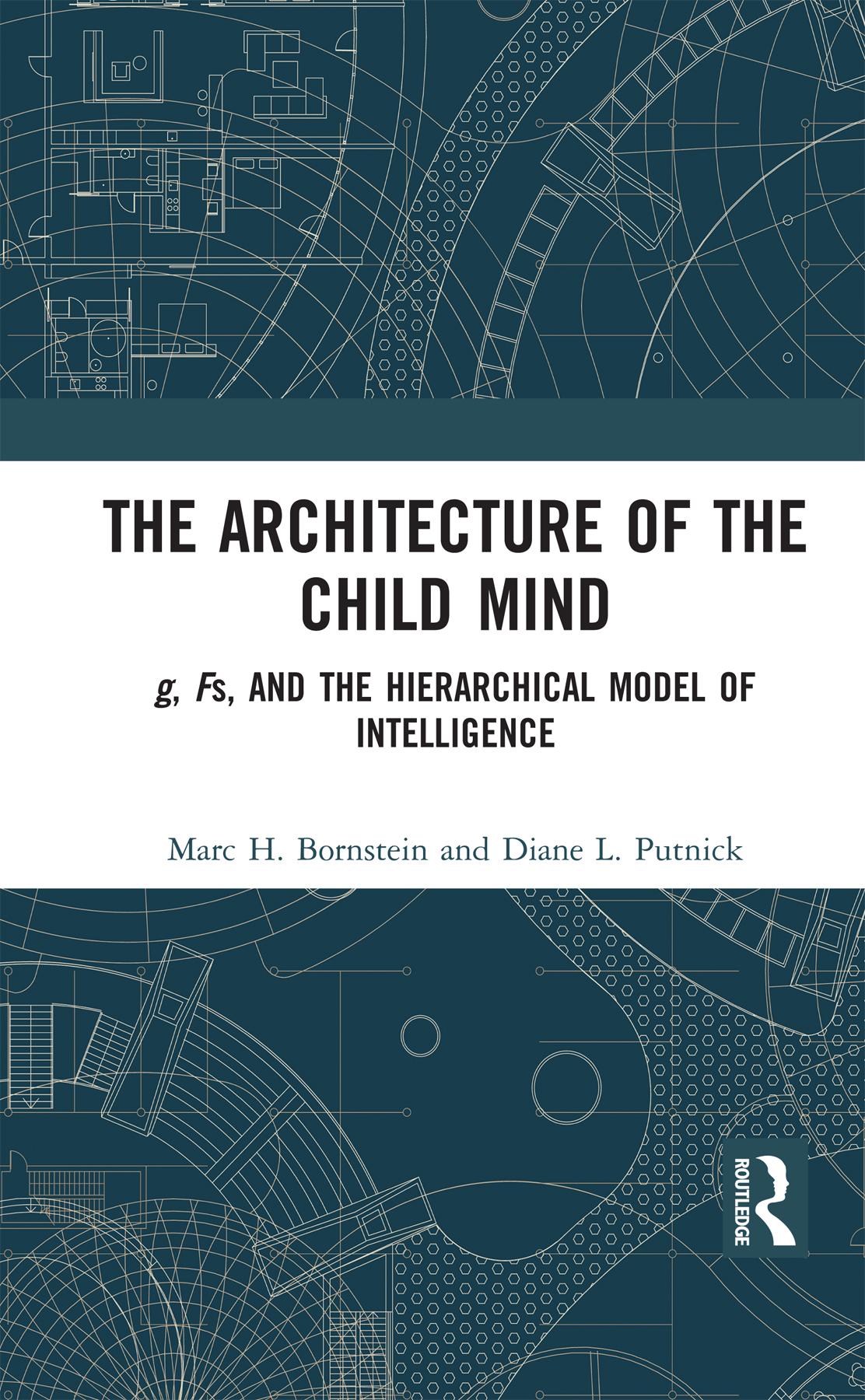
What exactly does it mean to be intelligent? Does intelligence manifest itself in one way or in different ways in children? Do children fit any preconceived notions of intelligence? Some theories assert a general (g) factor for intelligence that is universal and enters all mental abilities; other theories state that there are many separate domains or faculties (Fs) of intelligence; and still others argue that the g and Fs of intelligence coexist in a hierarchical relation. The Architecture of the Child Mind: g, Fs, and the Hierarchical Model of Intelligence argues for the third option in young children. Through state-of-the-art methodologies in an intensive research program conducted with 4-year-old children, Bornstein and Putnick show that the structure of intelligence in the preschool child is best construed as a hierarchically organized combination of a General Intelligence factor (g) and multiple domain-specific faculties (Fs).
The Architecture of the Child Mind offers a review of the history of intelligence theories and testing, and a comprehensive and original research effort on the nature and structure of intelligence in young children before they enter school. Its focus on intelligence will appeal to cognitive, developmental, and social psychologists as well as researchers and scholars in education, particularly those specializing in early childhood education.
Payez facilement par carte, Klarna, Apple Pay ou Google Pay. Pas satisfait ? Vous avez toujours une garantie de remboursement de 14 jours. En savoir plus dans nos conditions. Si vous avez des questions, envoyez-nous un e-mail à hello@memmo.org.
Memmo facilite tes études, où que tu sois dans le monde. On rassemble tes manuels de cours et des outils d'étude intelligents au même endroit : résumés, quiz, podcasts et flashcards. Et il y a Ted, ton compagnon d'étude qui répond à toutes tes questions. Plus de 50 000 étudiants étudient déjà ici – conçu pour t'aider à apprendre plus vite et à moins stresser.