
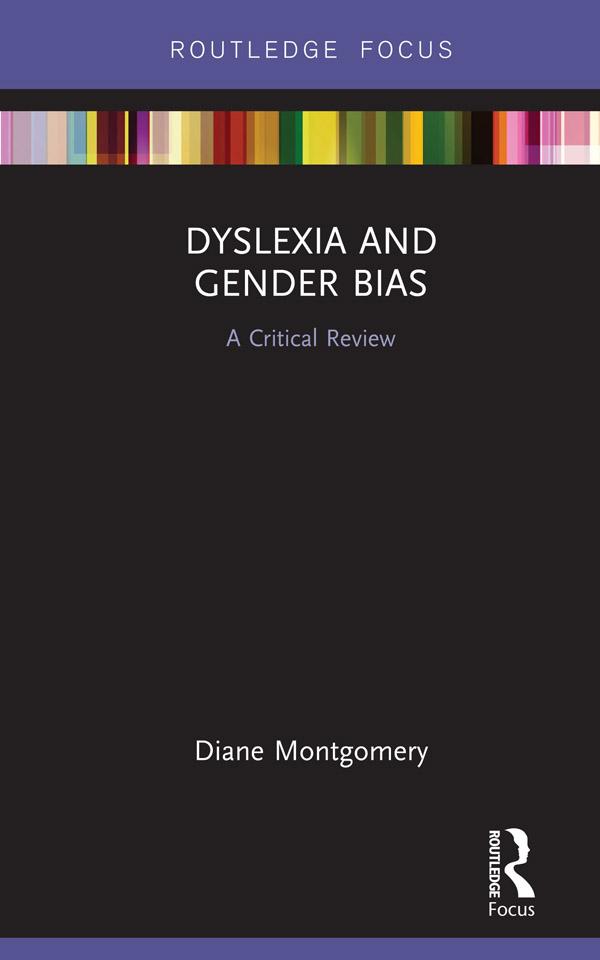
Providing an overview of the various understandings and approaches taken to dyslexia over the last 100 years, this text considers why men have traditionally taken the lead in dyslexia theory and research, whilst women have often been confined to practice.
Exploring how and why particular pathways in dyslexia theory, research and practice were historically pursued, whilst other potentially successful methods were not, Montgomery argues that gender bias has played a significant and often obstructive role in the development of our identification and understanding of dyslexia. Explaining why women and girls have often been under-represented in dyslexia clinics and in research, chapters trace the contributions made by dyslexia pioneers, analyse current problems within education and research systems, and document widespread patterns of misogyny and gender discrimination in the field. Montgomery links dyslexia history, current research paradigms and transgender experiences, to ask whether assumed male superiority has disadvantaged dyslexic learners, and whether it will continue to do so. In the process, she presents a new trajectory for research and practice.
A timely exploration of the impacts of gender discrimination on research and education, this text provides essential insight into the subtle impacts of sexism on dyslexic learners.
Payez facilement par carte, Klarna, Apple Pay ou Google Pay. Pas satisfait ? Vous avez toujours une garantie de remboursement de 14 jours. En savoir plus dans nos conditions. Si vous avez des questions, envoyez-nous un e-mail à hello@memmo.org.
Memmo facilite tes études, où que tu sois dans le monde. On rassemble tes manuels de cours et des outils d'étude intelligents au même endroit : résumés, quiz, podcasts et flashcards. Et il y a Ted, ton compagnon d'étude qui répond à toutes tes questions. Plus de 50 000 étudiants étudient déjà ici – conçu pour t'aider à apprendre plus vite et à moins stresser.