
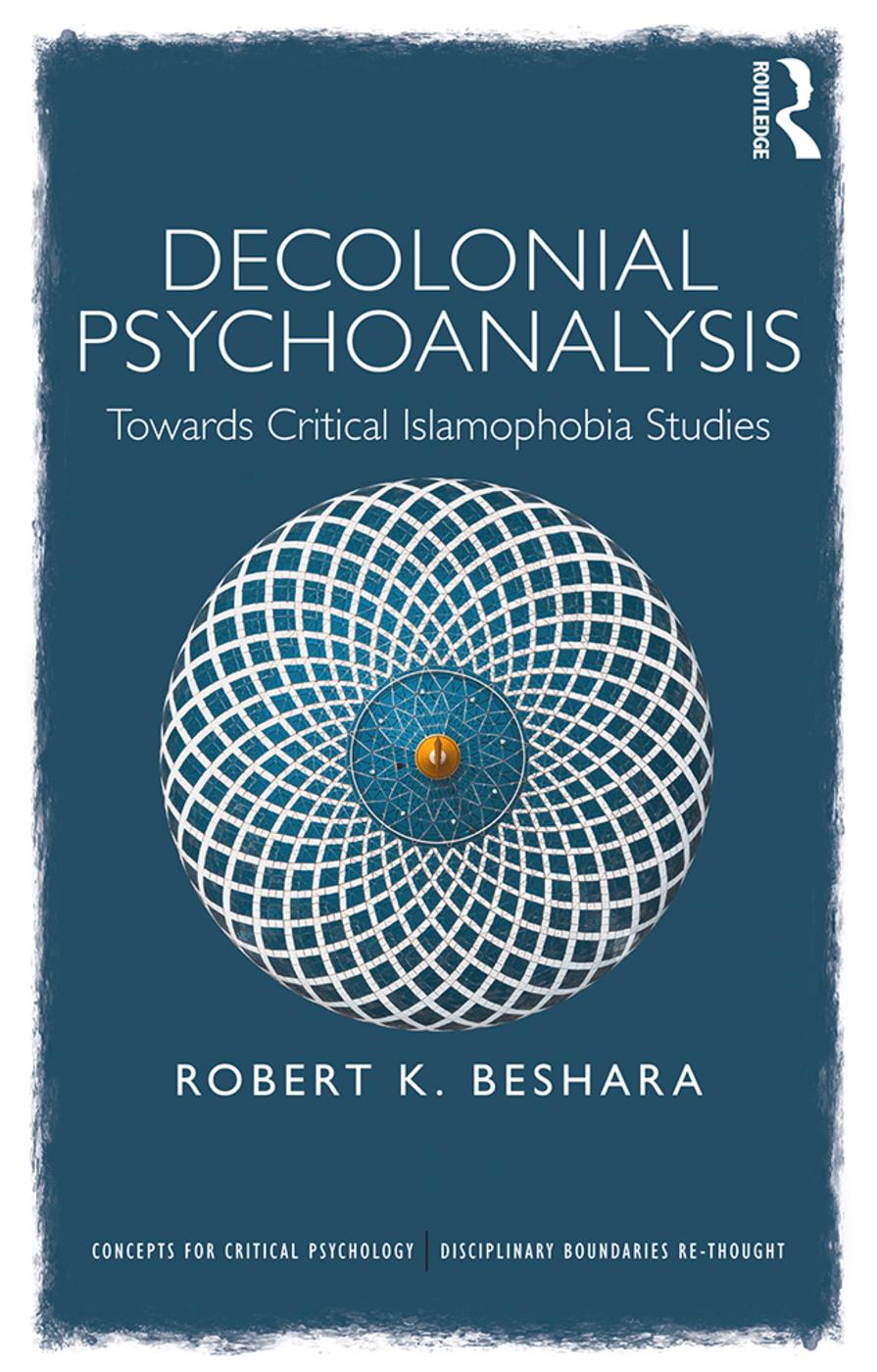
In this provocative and necessary book, Robert K. Beshara uses psychoanalytic discursive analysis to explore the possibility of a genuinely anti-colonial critical psychology. Drawing on postcolonial and decolonial approaches to Islamophobia, this book enhances understandings of Critical Border Thinking and Lacanian Discourse Analysis, alongside other theoretico-methodological approaches.
Using a critical decolonial psychology approach to conceptualize everyday Islamophobia, the author examines theoretical resources situated within the discursive turn, such as decoloniality/transmodernity, and carries out an archeology of (counter)terrorism, a genealogy of the conceptual Muslim, and a Žižekian ideology critique. Conceiving of Decolonial Psychoanalysis as one theoretical resource for Critical Islamophobia Studies (CIS), the author also applies Lacanian Discourse Analysis to extracts from interviews conducted with US Muslims to theorize their ethico-political subjectivity and considers a politics of resistance, adversarial aesthetics, and ethics of liberation.
Essential to any attempt to come to terms with the legacy of racism in psychology, and the only critical psychological study on Islamophobia in the United States, this is a fascinating read for anyone interested in a critical approach to Islamophobia.
Payez facilement par carte, Klarna, Apple Pay ou Google Pay. Pas satisfait ? Vous avez toujours une garantie de remboursement de 14 jours. En savoir plus dans nos conditions. Si vous avez des questions, envoyez-nous un e-mail à hello@memmo.org.
Memmo facilite tes études, où que tu sois dans le monde. On rassemble tes manuels de cours et des outils d'étude intelligents au même endroit : résumés, quiz, podcasts et flashcards. Et il y a Ted, ton compagnon d'étude qui répond à toutes tes questions. Plus de 50 000 étudiants étudient déjà ici – conçu pour t'aider à apprendre plus vite et à moins stresser.