
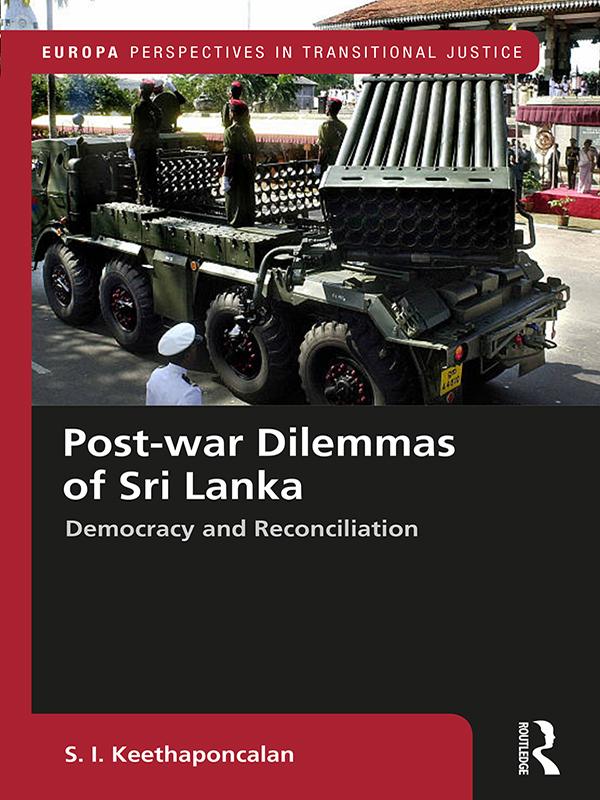
By investigating Sri Lanka as a case study, this book examines whether democracy, compared to authoritarianism, is conducive to post-war reconciliation. The research, founded on primary as well as secondary data, concludes that political systems have little to do with the success or failure of post-war ethnic reconciliation. The Sri Lankan case indicated that post-war reconciliation is more contingent on the readiness of the former enemies to come together. Readiness stems from, for example, satisfaction in the way issues have been resolved, confidence in the other party's intentions, and the compulsion to coexist. If the level of satisfaction, confidence, and the compulsion to coexist are low, the readiness to reconcile will also be low.
The end of the war had a profound impact on post-war governance and ethnic relations in Sri Lanka. Hence, the volume provides an in-depth analysis of the factors that led to the military victory of the Sri Lankan government over the Liberation Tigers of Tamil Eelam (LTTE) in 2009. The chapters delve into the nexus between governance and reconciliation under the first two post-war governments. Reconciliation did not materialize in this period. Instead, new fault-lines emerged as attacks on the Muslim community escalated drastically. This book provides a comprehensive analysis of the nature of relations between the Sinhalese and Muslims and the Tamils and Muslims, as well as the nature and causes of post-war anti-Muslim riots.
Payez facilement par carte, Klarna, Apple Pay ou Google Pay. Pas satisfait ? Vous avez toujours une garantie de remboursement de 14 jours. En savoir plus dans nos conditions. Si vous avez des questions, envoyez-nous un e-mail à hello@memmo.org.
Memmo facilite tes études, où que tu sois dans le monde. On rassemble tes manuels de cours et des outils d'étude intelligents au même endroit : résumés, quiz, podcasts et flashcards. Et il y a Ted, ton compagnon d'étude qui répond à toutes tes questions. Plus de 50 000 étudiants étudient déjà ici – conçu pour t'aider à apprendre plus vite et à moins stresser.