
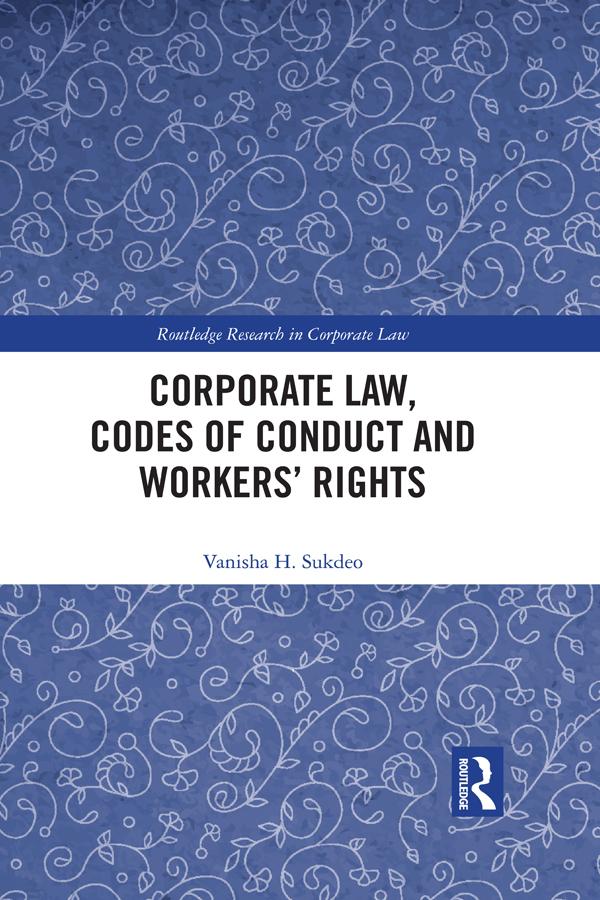
This book critically explores how increased regulation and governance of corporations can be used to help improve the rights of workers amidst an era of union decline.
The book posits that soft law techniques such as codes of conduct are more effective in protecting workers than "hard law" i.e. domestic regulation. It starts by analysing the transnational regulation of corporations and codes of conduct, and then puts forward a model code of conduct that can be used by corporations to help increase the protection of workers. Through this model's use of a monitoring scheme, shareholders, activists, and NGOs put pressure on the corporation to reform itself and enact a code which has obligations flowing both ways between the corporation and its employees. The book then looks at the expansions of fiduciary duties and changes to corporate governance, including Benefit Corporations and how they can be used to increase the rights of workers. It then discusses changes to standard union contracts before concluding with an assessment of the best way forward for workers’ rights.
By providing a new contribution to the current dialogue on corporate social responsibility and codes of conduct, this book will be a valuable resource for academics working on labour, employment, and business law as well as corporate lawyers.
Payez facilement par carte, Klarna, Apple Pay ou Google Pay. Pas satisfait ? Vous avez toujours une garantie de remboursement de 14 jours. En savoir plus dans nos conditions. Si vous avez des questions, envoyez-nous un e-mail à hello@memmo.org.
Memmo facilite tes études, où que tu sois dans le monde. On rassemble tes manuels de cours et des outils d'étude intelligents au même endroit : résumés, quiz, podcasts et flashcards. Et il y a Ted, ton compagnon d'étude qui répond à toutes tes questions. Plus de 50 000 étudiants étudient déjà ici – conçu pour t'aider à apprendre plus vite et à moins stresser.