
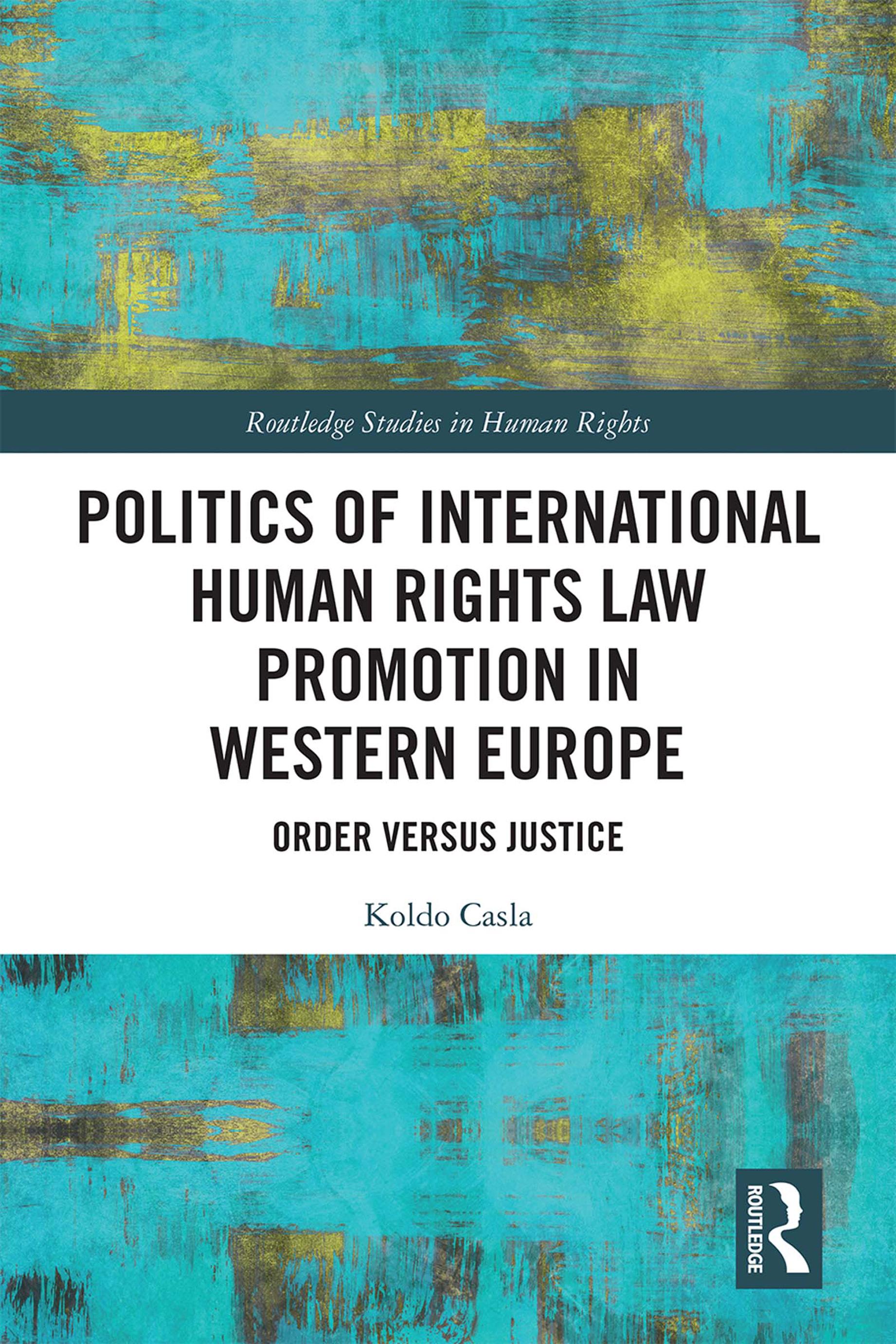
This book offers a critical reinterpretation of Western European States’ programmatic support for International Human Rights Law (IHRL) since the 1970s. It examines the systemic or structural constraints inherent to the international legal system and argues that order trumps justice in Western Europe’s promotion of international human rights norms.
The book shows that IHRL evolved as a result of a tension between two forces: A European understanding of international society, based on order, the centrality of the State and a minimalist conception of human rights; and a civil society and UN-promoted, mostly Western, particularly European but broader conception of human rights, based on justice. As such, human rights norms emerge and develop when (some) states’ idea of order meets with advocates’ idea of justice.
We are living a historical juncture of shifting tectonic plates with rising nationalism in the Global North, ever growing power in the Global South and a declining presence of Europe in global affairs. The conditions under which IHRL emerged have fundamentally changed and unpacking the factors beneath the international recognition of human rights has never been more pressing.
This book will be of key interest to scholars, students and practitioners in human rights law, public international law, international relations, critical legal theory and in European politics.
Payez facilement par carte, Klarna, Apple Pay ou Google Pay. Pas satisfait ? Vous avez toujours une garantie de remboursement de 14 jours. En savoir plus dans nos conditions. Si vous avez des questions, envoyez-nous un e-mail à hello@memmo.org.
Memmo facilite tes études, où que tu sois dans le monde. On rassemble tes manuels de cours et des outils d'étude intelligents au même endroit : résumés, quiz, podcasts et flashcards. Et il y a Ted, ton compagnon d'étude qui répond à toutes tes questions. Plus de 50 000 étudiants étudient déjà ici – conçu pour t'aider à apprendre plus vite et à moins stresser.