
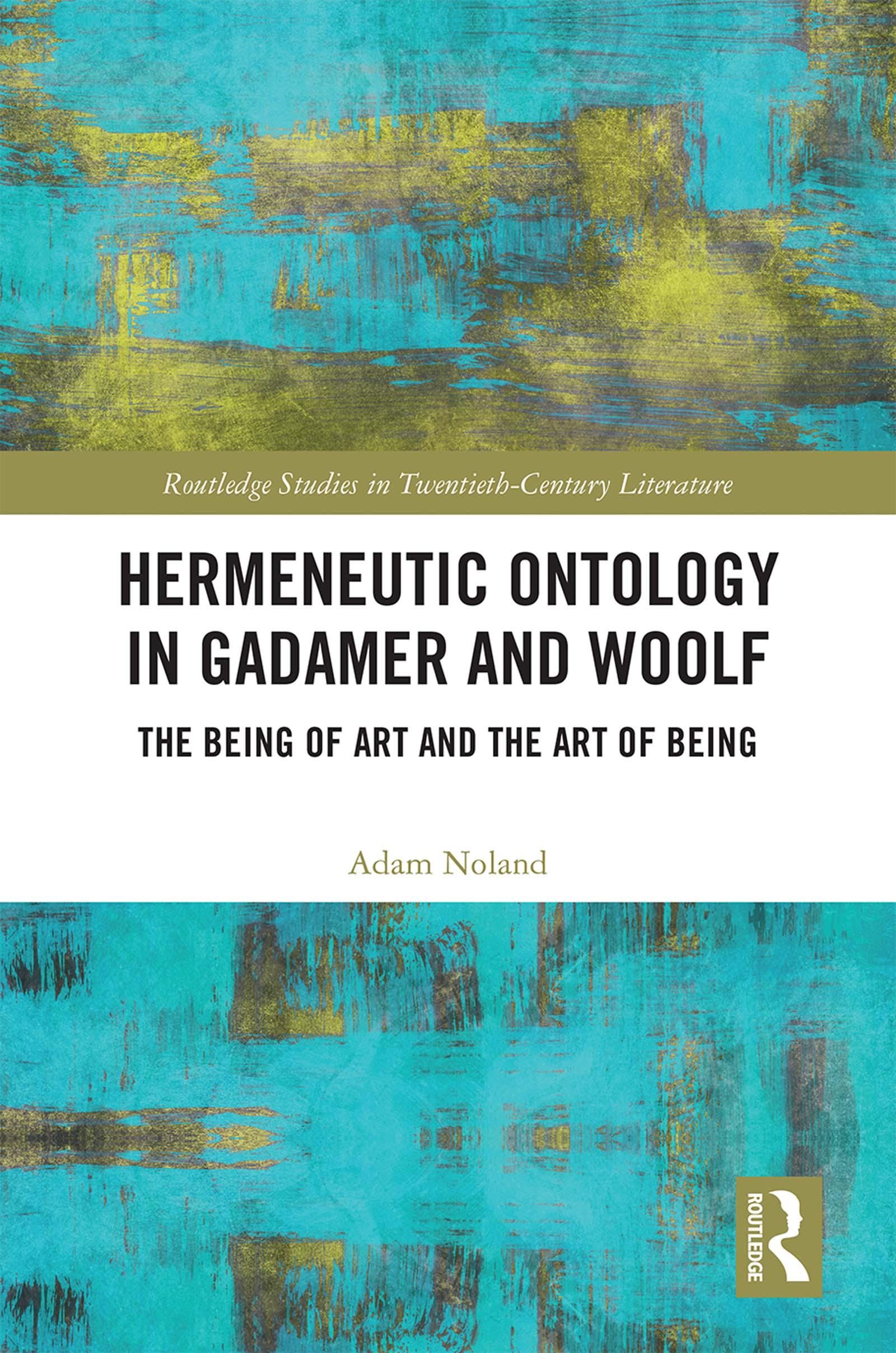
This volume analyses Virginia Woolf’s novels through a philosophical lens, providing an interpretive overview of her works through Hans-Georg Gadamer’s hermeneutic ontology. The text argues that interpretation itself is the central subject matter of Woolf’s novels: in order to understand these novels in all of their complexity and depth, it is both useful and helpful to comprehend the interpretive pillars that inform these narratives. Indeed, interpretation became a central theme during the Modernist movement, and Woolf’s novels took part in this conversation. For his part, Gadamer was in important voice in these discussions, dedicating his life’s work to the concept of interpretation. Gadamer focused on the universality of interpretation, arguing that it is inescapable and irrevocably bound up with existence. In many ways, Woolf’s novels represent an enactment of Gadamer’s philosophy, as they emphasize the radical questionability of the world—what this interpretive imperative requires of its participants and the potential yield that may result. On the other end, Gadamer’s philosophy acquires a concrete praxis when applied to Woolf’s novels. His philosophy hinges on the universality of interpretation as it manifests itself in daily existence; the literary text and its interpretation participate in this universality and is shaped by it.
Payez facilement par carte, Klarna, Apple Pay ou Google Pay. Pas satisfait ? Vous avez toujours une garantie de remboursement de 14 jours. En savoir plus dans nos conditions. Si vous avez des questions, envoyez-nous un e-mail à hello@memmo.org.
Memmo facilite tes études, où que tu sois dans le monde. On rassemble tes manuels de cours et des outils d'étude intelligents au même endroit : résumés, quiz, podcasts et flashcards. Et il y a Ted, ton compagnon d'étude qui répond à toutes tes questions. Plus de 50 000 étudiants étudient déjà ici – conçu pour t'aider à apprendre plus vite et à moins stresser.