
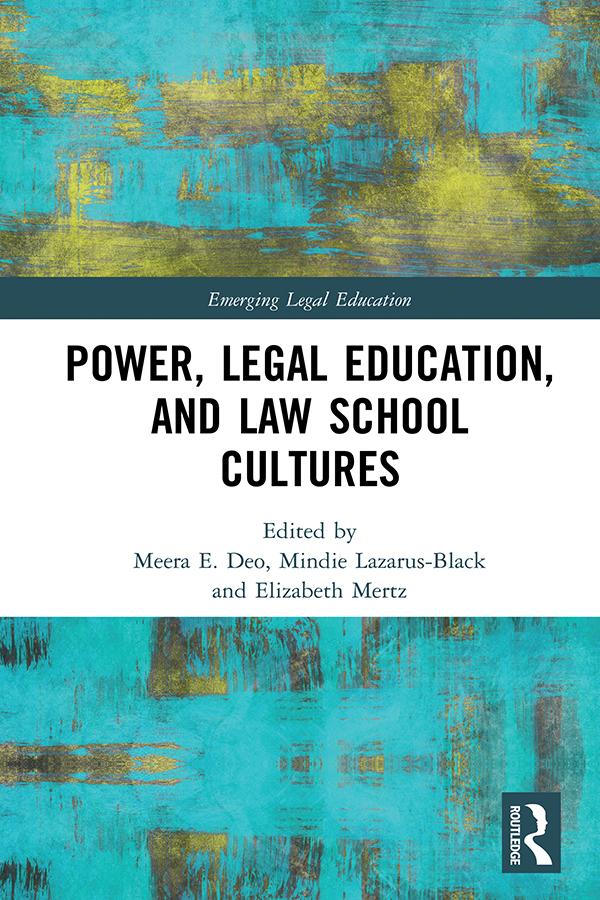
There is a myth that lingers around legal education in many democracies. That myth would have us believe that law students are admitted and then succeed based on raw merit, and that law schools are neutral settings in which professors (also selected and promoted based on merit) use their expertise to train those students to become lawyers. Based on original, empirical research, this book investigates this myth from myriad perspectives, diverse settings, and in different nations, revealing that hierarchies of power and cultural norms shape and maintain inequities in legal education.
Embedded within law school cultures are assumptions that also stymie efforts at reform. The book examines hidden pedagogical messages, showing how presumptions about theory’s relation to practice are refracted through the obfuscating lens of curricula. The contributors also tackle questions of class and market as they affect law training.
Finally, this collection examines how structural barriers replicate injustice even within institutions representing themselves as democratic and open, revealing common dynamics across cultural and institutional forms. The chapters speak to similar issues and to one another about the influence of context, images of law and lawyers, the political economy of legal education, and the agency of students and faculty.
Payez facilement par carte, Klarna, Apple Pay ou Google Pay. Pas satisfait ? Vous avez toujours une garantie de remboursement de 14 jours. En savoir plus dans nos conditions. Si vous avez des questions, envoyez-nous un e-mail à hello@memmo.org.
Memmo facilite tes études, où que tu sois dans le monde. On rassemble tes manuels de cours et des outils d'étude intelligents au même endroit : résumés, quiz, podcasts et flashcards. Et il y a Ted, ton compagnon d'étude qui répond à toutes tes questions. Plus de 50 000 étudiants étudient déjà ici – conçu pour t'aider à apprendre plus vite et à moins stresser.