
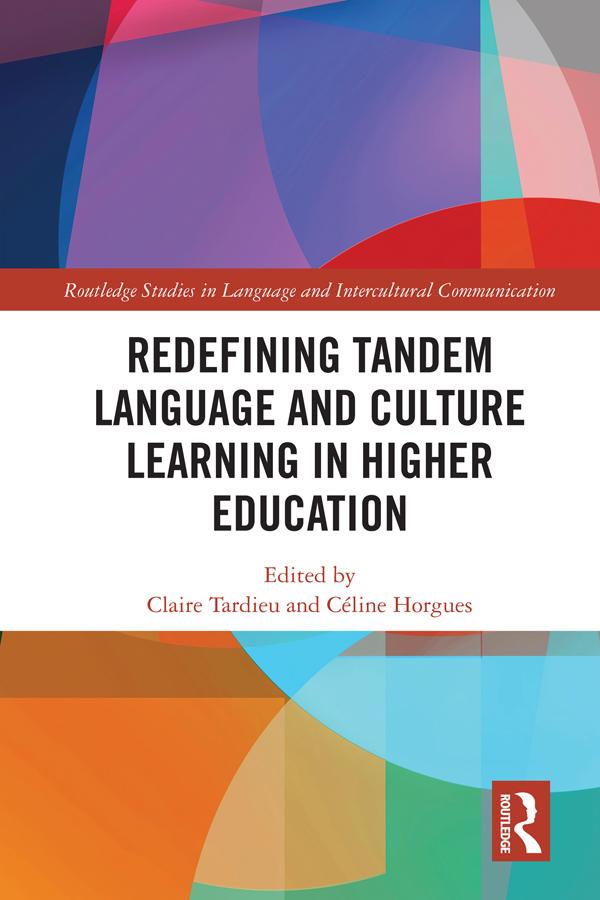
This book provides a comprehensive critical account of tandem learning, charting it evolution from its origins in European educational settings to modern programs offering new perspectives on the approach’s role within higher education. Taking stock of the ways in which increased globalization has produced new linguistic and sociocultural realities, the volume begins by looking back at the development of tandem learning over the last several decades, growing out of a need to create more opportunities for L2 learners to communicate in their target language. The book then examines the different learning objectives and learning outcomes of tandem learning arrangements, moving toward a discussion of tandem learning’s potential role in shaping language policy and the unique challenges involved in implementing tandem programs at higher education institutions. The final section of the book brings the previous discussions together to consider new tools and technology and the ways in which they can better equip language educators to implement tandem learning in their own practice. Highlighting tandem learning’s potential to promote multilingual and multicultural learning on a global scale, this volume will be of particular interest to students and researchers in intercultural communication, language education, multilingualism, and applied linguistics.
Payez facilement par carte, Klarna, Apple Pay ou Google Pay. Pas satisfait ? Vous avez toujours une garantie de remboursement de 14 jours. En savoir plus dans nos conditions. Si vous avez des questions, envoyez-nous un e-mail à hello@memmo.org.
Memmo facilite tes études, où que tu sois dans le monde. On rassemble tes manuels de cours et des outils d'étude intelligents au même endroit : résumés, quiz, podcasts et flashcards. Et il y a Ted, ton compagnon d'étude qui répond à toutes tes questions. Plus de 50 000 étudiants étudient déjà ici – conçu pour t'aider à apprendre plus vite et à moins stresser.