
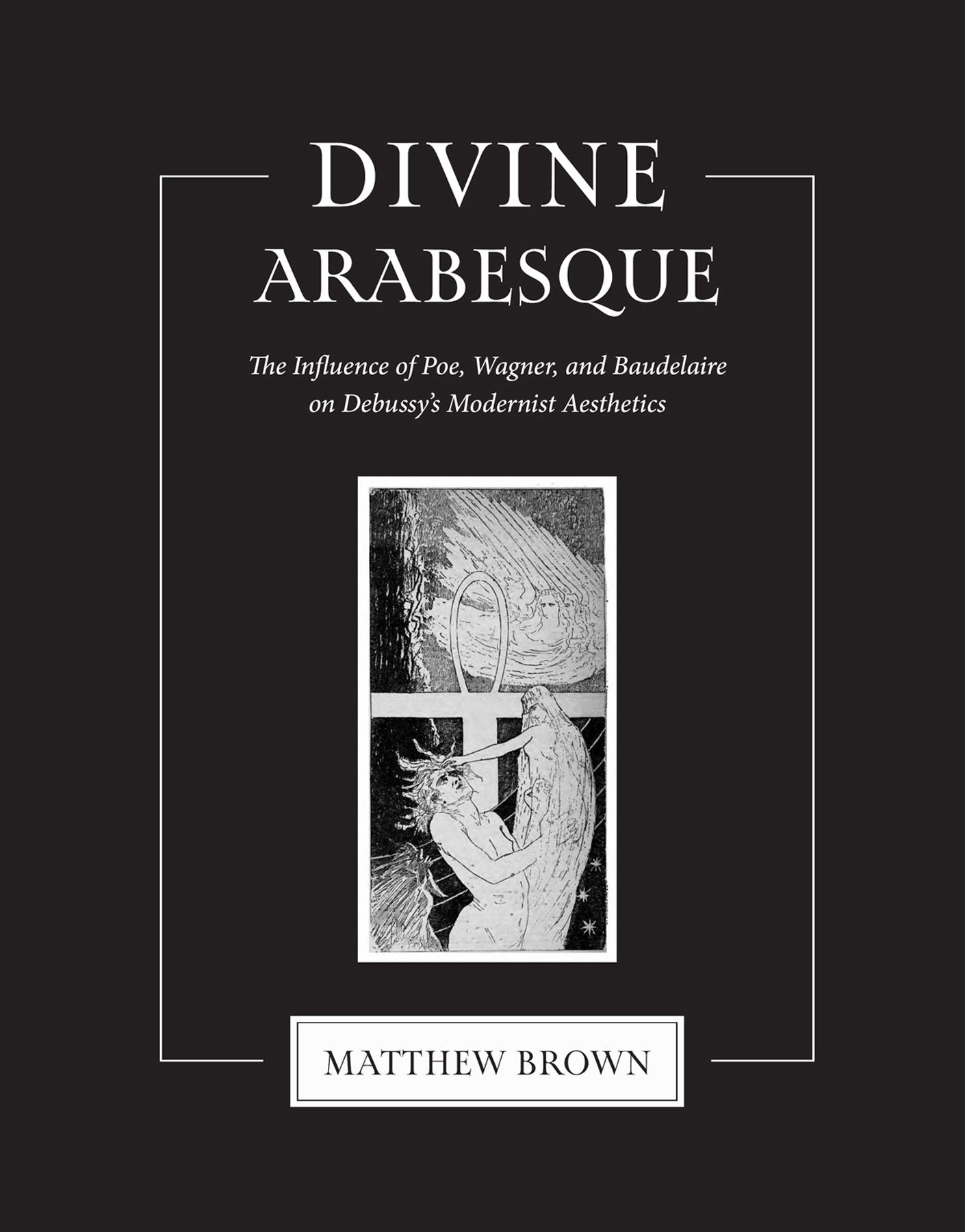
The arabesque, a crucial component of nineteenth-century aesthetics characterized by recurring patterns of interlocking geometric and floral ornamentation, was found in a wide range of forms of artistic expression and played a pivotal role in the music of Claude Debussy. Divine Arabesque explores the arabesque in Debussy's music and reveals its profound influence on his musical repertoire and on the works of other Symbolist artists and writers.
Taking as his starting point a discussion of the short manifesto Debussy published in "La Revue blanche" in 1901, author Matthew Brown embarks on a thorough and comprehensive analysis of Debussy's works across all phases of his career and genres—from his early songs and piano pieces to mature orchestral compositions and late works. Along the way, Brown unveils the intertextual connections between Debussy's compositions and the works of such Symbolist artists as Edgar Allan Poe, Richard Wagner, Charles Baudelaire, Stéphane Mellarmé, Vaslav Nijinsky, and others.
Featuring a rich collection of music examples and illustrations, Divine Arabesque sheds new light on the full range of Debussy's musical output and establishes his critical role in ushering in the age of Modernism.
Payez facilement par carte, Klarna, Apple Pay ou Google Pay. Pas satisfait ? Vous avez toujours une garantie de remboursement de 14 jours. En savoir plus dans nos conditions. Si vous avez des questions, envoyez-nous un e-mail à hello@memmo.org.
Memmo facilite tes études, où que tu sois dans le monde. On rassemble tes manuels de cours et des outils d'étude intelligents au même endroit : résumés, quiz, podcasts et flashcards. Et il y a Ted, ton compagnon d'étude qui répond à toutes tes questions. Plus de 50 000 étudiants étudient déjà ici – conçu pour t'aider à apprendre plus vite et à moins stresser.