
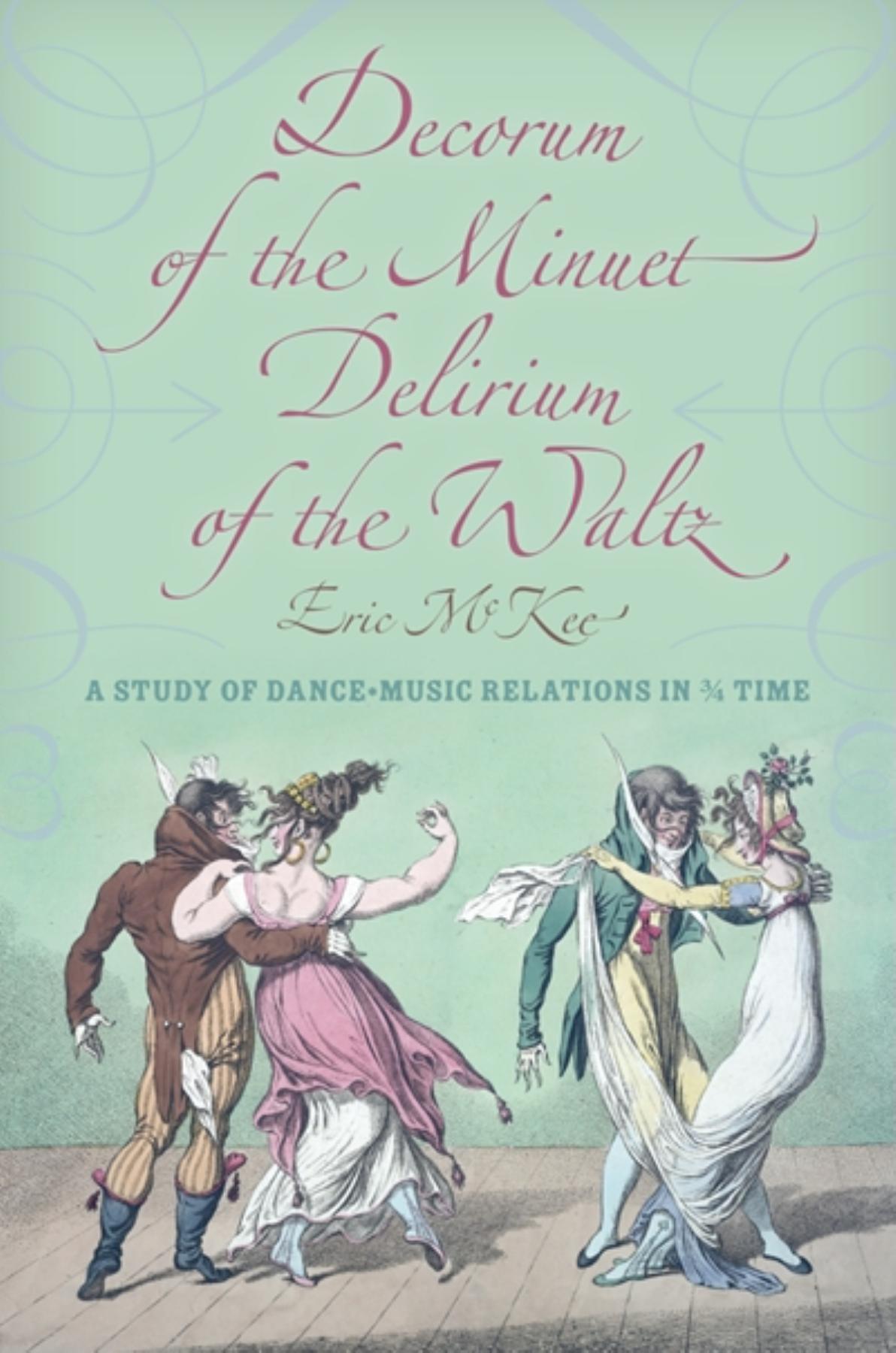
Much music was written for the two most important dances of the 18th and 19th centuries, the minuet and the waltz. In Decorum of the Minuet, Delirium of the Waltz, Eric McKee argues that to better understand the musical structures and expressive meanings of this dance music, one must be aware of the social contexts and bodily rhythms of the social dances upon which it is based. McKee approaches dance music as a component of a multimedia art form that involves the interaction of physical motion, music, architecture, and dress. Moreover, the activity of attending a ball involves a dynamic network of modalities—sight, sound, bodily awareness, touch, and smell, which can be experienced from the perspectives of a dancer, a spectator, or a musician. McKee considers dance music within a larger system of signifiers and points-of-view that opens new avenues of interpretation.
Payez facilement par carte, Klarna, Apple Pay ou Google Pay. Pas satisfait ? Vous avez toujours une garantie de remboursement de 14 jours. En savoir plus dans nos conditions. Si vous avez des questions, envoyez-nous un e-mail à hello@memmo.org.
Memmo facilite tes études, où que tu sois dans le monde. On rassemble tes manuels de cours et des outils d'étude intelligents au même endroit : résumés, quiz, podcasts et flashcards. Et il y a Ted, ton compagnon d'étude qui répond à toutes tes questions. Plus de 50 000 étudiants étudient déjà ici – conçu pour t'aider à apprendre plus vite et à moins stresser.