
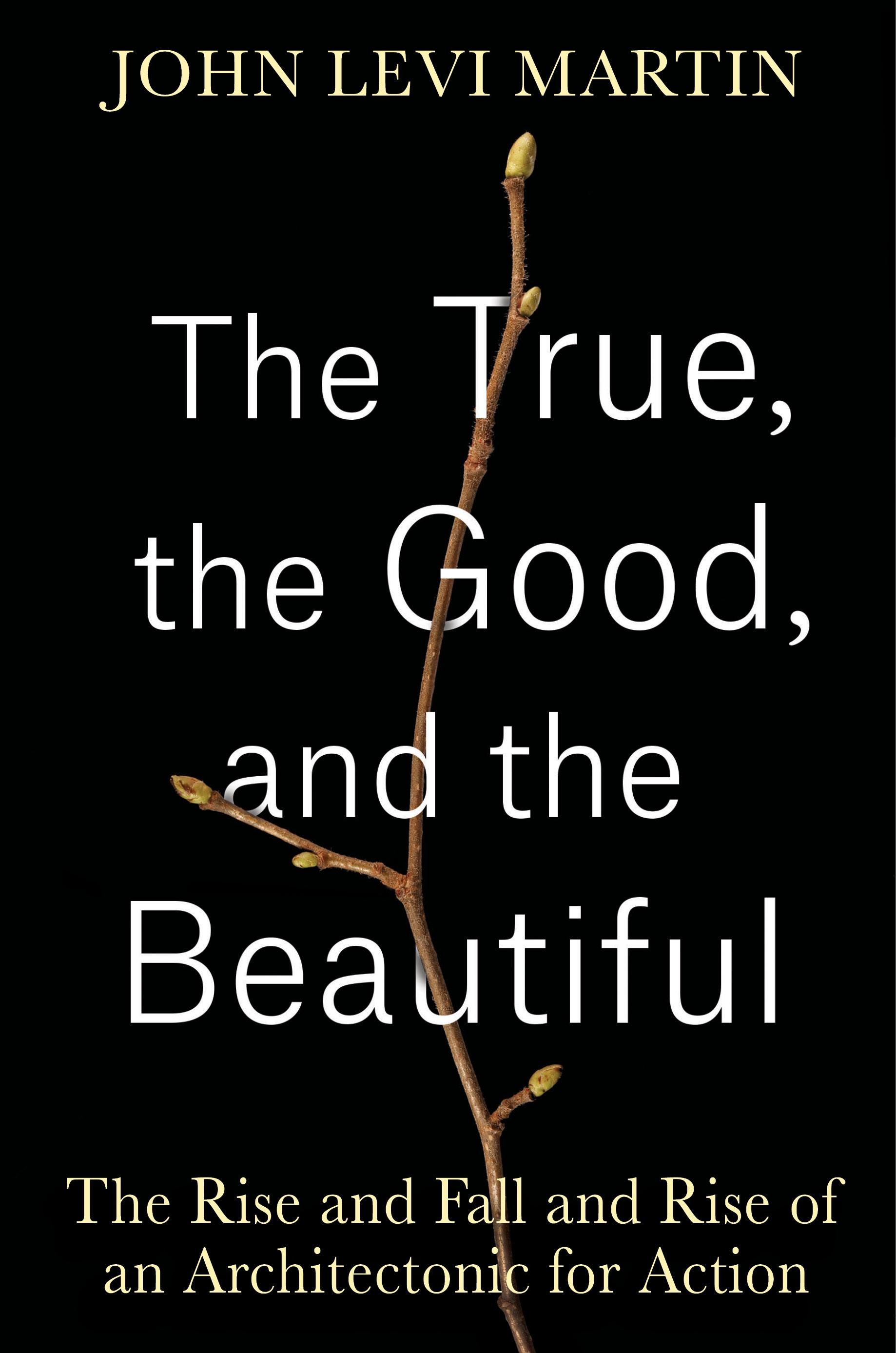
We have many histories of social theory—what different authors attempted to do as they responded to previous theories. But we know precious little about how they did this in structural terms—what scaffolding they adopted and adapted to make their claims. Yet today’s social thoughts largely employ structures passed down from previous generations, structures that were developed to solve problems that are no longer ours.
In The True, the Good, and the Beautiful, John Levi Martin explores these structures, the resulting tensions, and their broader significance for sociological thought. By examining how thinkers mapped interpersonal to intrapersonal structures, he traces the development of the underlying architectonics of theory, focusing on one that was inherited from eighteenth-century philosophy and brought into social science in the nineteenth century. He shows that the structural tensions inherent in these theories paralleled those being worked out in practical terms by constitutional theorists as thinkers attempted to return to their most fundamental understandings of the nature of the human, the social, and the political to recraft their societies. A magisterial new interpretation of the foundations of sociological thought, The True, the Good, and the Beautiful is as ambitious a work of social theory as we have seen in generations.
Payez facilement par carte, Klarna, Apple Pay ou Google Pay. Pas satisfait ? Vous avez toujours une garantie de remboursement de 14 jours. En savoir plus dans nos conditions. Si vous avez des questions, envoyez-nous un e-mail à hello@memmo.org.
Memmo facilite tes études, où que tu sois dans le monde. On rassemble tes manuels de cours et des outils d'étude intelligents au même endroit : résumés, quiz, podcasts et flashcards. Et il y a Ted, ton compagnon d'étude qui répond à toutes tes questions. Plus de 50 000 étudiants étudient déjà ici – conçu pour t'aider à apprendre plus vite et à moins stresser.