
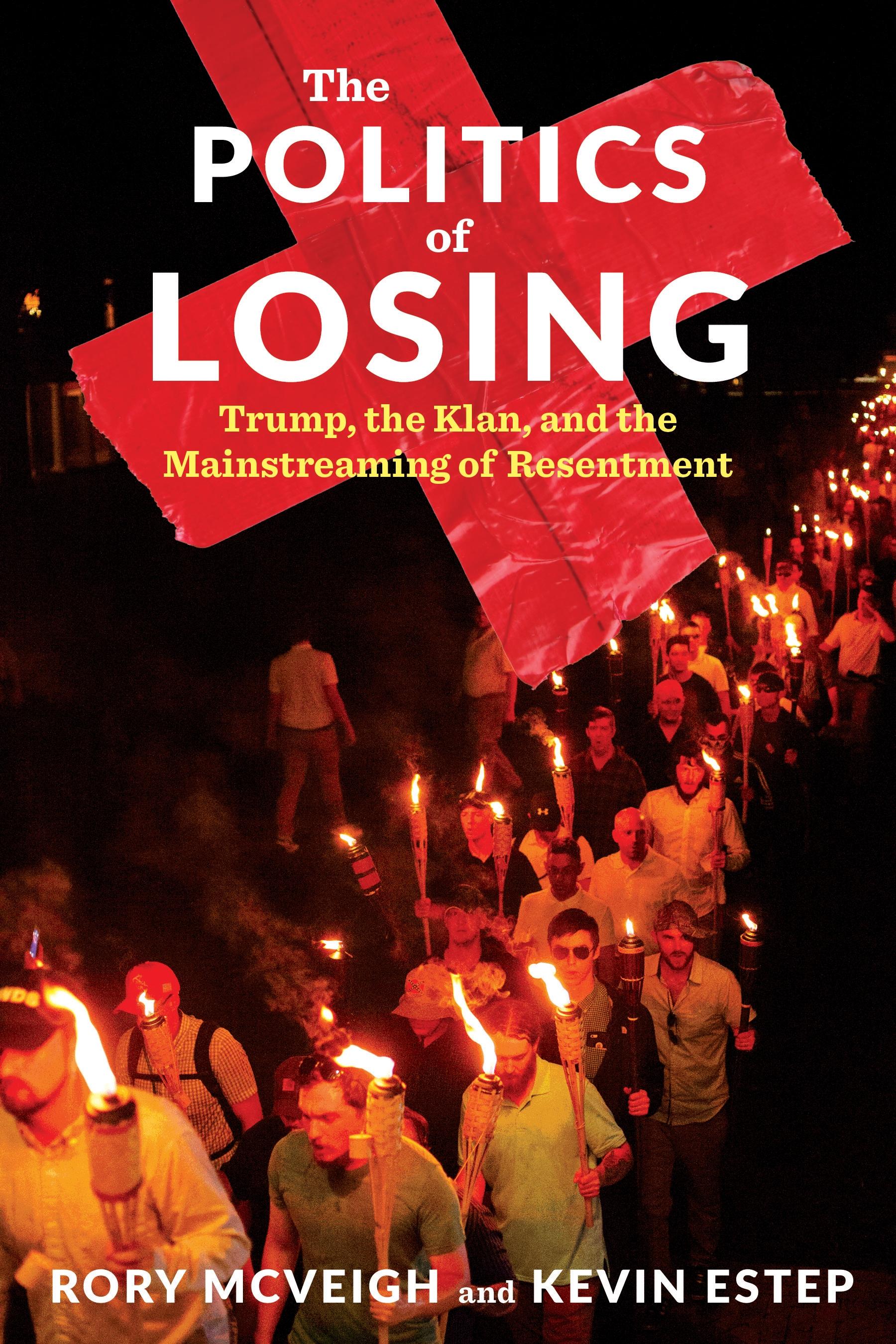
The Ku Klux Klan has peaked three times in American history: after the Civil War, around the 1960s Civil Rights Movement, and in the 1920s, when the Klan spread farthest and fastest. Recruiting millions of members even in non-Southern states, the Klan’s nationalist insurgency burst into mainstream politics. Almost one hundred years later, the pent-up anger of white Americans left behind by a changing economy has once again directed itself at immigrants and cultural outsiders and roiled a presidential election.
In The Politics of Losing, Rory McVeigh and Kevin Estep trace the parallels between the 1920s Klan and today’s right-wing backlash, identifying the conditions that allow white nationalism to emerge from the shadows. White middle-class Protestant Americans in the 1920s found themselves stranded by an economy that was increasingly industrialized and fueled by immigrant labor. Mirroring the Klan’s earlier tactics, Donald Trump delivered a message that mingled economic populism with deep cultural resentments. McVeigh and Estep present a sociological analysis of the Klan’s outbreaks that goes beyond Trump the individual to show how his rise to power was made possible by a convergence of circumstances. White Americans’ experience of declining privilege and perceptions of lost power can trigger a political backlash that overtly asserts white-nationalist goals. The Politics of Losing offers a rigorous and lucid explanation for a recurrent phenomenon in American history, with important lessons about the origins of our alarming political climate.
Payez facilement par carte, Klarna, Apple Pay ou Google Pay. Pas satisfait ? Vous avez toujours une garantie de remboursement de 14 jours. En savoir plus dans nos conditions. Si vous avez des questions, envoyez-nous un e-mail à hello@memmo.org.
Memmo facilite tes études, où que tu sois dans le monde. On rassemble tes manuels de cours et des outils d'étude intelligents au même endroit : résumés, quiz, podcasts et flashcards. Et il y a Ted, ton compagnon d'étude qui répond à toutes tes questions. Plus de 50 000 étudiants étudient déjà ici – conçu pour t'aider à apprendre plus vite et à moins stresser.