
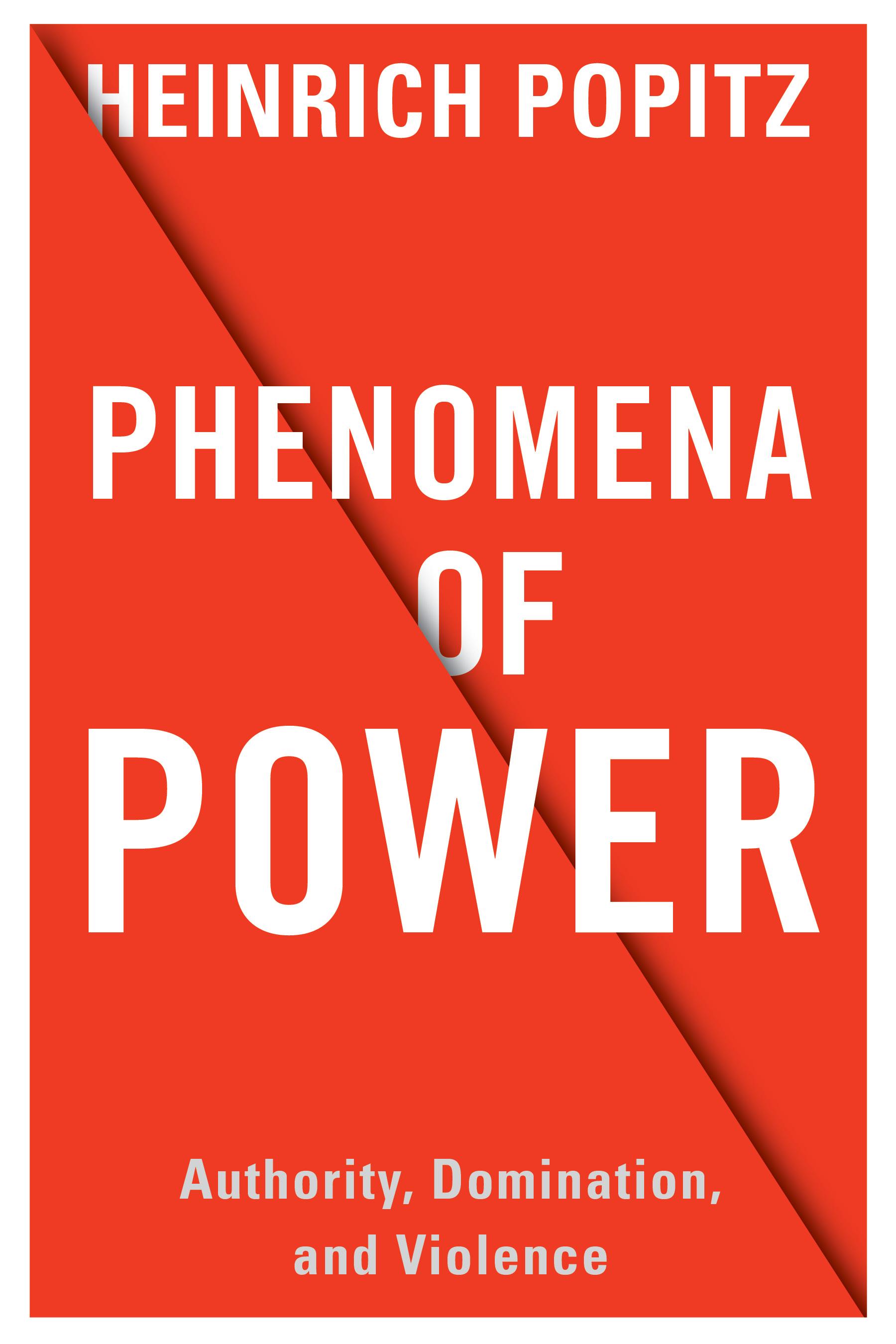
In Phenomena of Power, one of the leading figures of postwar German sociology reflects on the nature, and many forms of, power. For Heinrich Popitz, power is rooted in the human condition and is therefore part of all social relations. Drawing on philosophical anthropology, he identifies the elementary forms of power to provide detailed insight into how individuals gain and perpetuate control over others. Instead of striving for a power-free society, Popitz argues, humanity should try to impose limits on power where possible and establish counterpower where necessary.
Phenomena of Power delves into the sociohistorical manifestations of power and breaks through to its general structures. Popitz distinguishes the forms of the enforcement of power as well as of its stabilization and institutionalization, clearly articulating how the mechanisms of power work and how to track them in the social world. Philosophically trained, historically informed, and endowed with keen observation, Popitz uses examples ranging from the way passengers on a ship organize deck chairs to how prisoners of war share property to illustrate his theory. Long influential in German sociology, Phenomena of Power offers a challenging reworking of one of the essential concepts of the social sciences.
Payez facilement par carte, Klarna, Apple Pay ou Google Pay. Pas satisfait ? Vous avez toujours une garantie de remboursement de 14 jours. En savoir plus dans nos conditions. Si vous avez des questions, envoyez-nous un e-mail à hello@memmo.org.
Memmo facilite tes études, où que tu sois dans le monde. On rassemble tes manuels de cours et des outils d'étude intelligents au même endroit : résumés, quiz, podcasts et flashcards. Et il y a Ted, ton compagnon d'étude qui répond à toutes tes questions. Plus de 50 000 étudiants étudient déjà ici – conçu pour t'aider à apprendre plus vite et à moins stresser.