
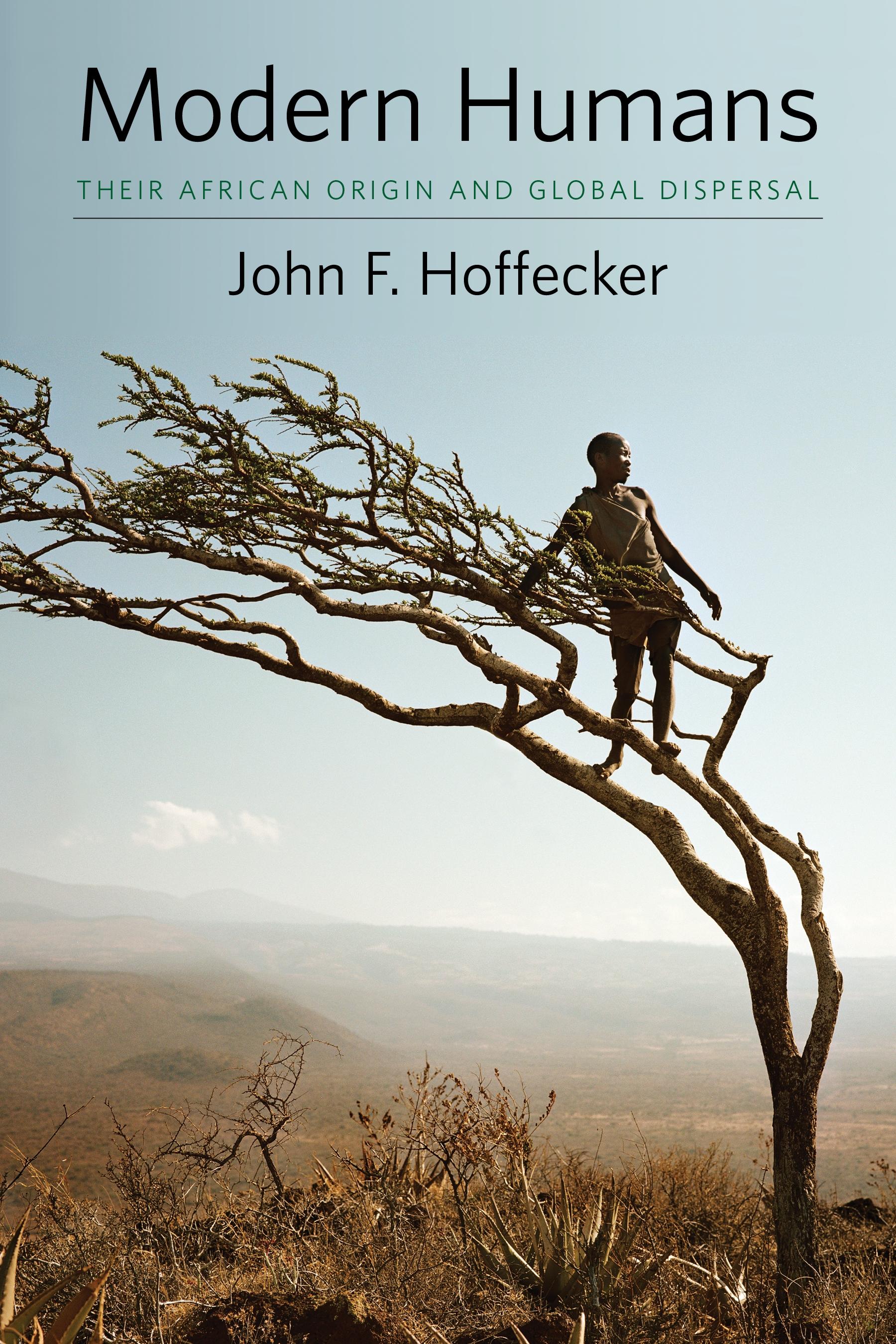
Modern Humans is a vivid account of the most recent—and perhaps the most important—phase of human evolution: the appearance of anatomically modern people (Homo sapiens) in Africa less than half a million years ago and their later spread throughout the world. Leaving no stone unturned, John F. Hoffecker demonstrates that Homo sapiens represents a “major transition” in the evolution of living systems in terms of fundamental changes in the role of non-genetic information.
Modern Humans synthesizes recent findings from genetics (including the rapidly growing body of ancient DNA), the human fossil record, and archaeology relating to the African origin and global dispersal of anatomically modern people. Hoffecker places humans in the broad context of the evolution of life, emphasizing the critical role of genetic and non-genetic forms of information in living systems as well as how changes in the storage, transmission, and translation of information underlie major transitions in evolution. He also draws on information and complexity theory to explain the emergence of Homo sapiens in Africa several hundred thousand years ago and the rapid and unprecedented spread of our species into a variety of environments in Australia and Eurasia, including the Arctic and Beringia, beginning between 75,000 and 60,000 years ago. This magisterial work will appeal to all with an interest in the ever-fascinating field of human evolution.
Payez facilement par carte, Klarna, Apple Pay ou Google Pay. Pas satisfait ? Vous avez toujours une garantie de remboursement de 14 jours. En savoir plus dans nos conditions. Si vous avez des questions, envoyez-nous un e-mail à hello@memmo.org.
Memmo facilite tes études, où que tu sois dans le monde. On rassemble tes manuels de cours et des outils d'étude intelligents au même endroit : résumés, quiz, podcasts et flashcards. Et il y a Ted, ton compagnon d'étude qui répond à toutes tes questions. Plus de 50 000 étudiants étudient déjà ici – conçu pour t'aider à apprendre plus vite et à moins stresser.