
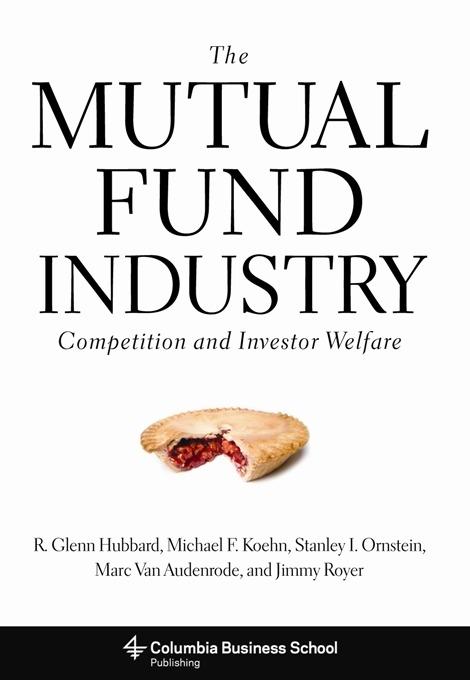
Mutual funds form the bedrock of retirement savings in the United States, and, considering their rapid growth, are sure to be more critical in the future. Because the size of fees paid by investors to mutual fund advisers can strongly affect the return on investment, these fees have become a contentious issue in Congress and the courts, with many arguing that investment advisers grow rich at the expense of investors.
This ground-breaking book not only conceptualizes a new economic model of the mutual fund industry, but also uses this model to test for price competition between investment advisers, evaluating the assertion that market forces fail to protect investors' returns from excessive fees. Highly experienced authors track the growth of the industry over the past twenty-five years and present arguments and evidence both for and against theories of adviser malfeasance. The authors review the regulatory history of mutual fund fees and summarize leading case decisions addressing excessive fees.
Revealing the extent to which the governance structure of mutual funds truly impacts fund performance, this book provides the best understanding of today's mutual fund industry and is a vital tool for investors, money managers, fund directors, securities lawyers, economists, and anyone concerned with the regulation of mutual funds.
Payez facilement par carte, Klarna, Apple Pay ou Google Pay. Pas satisfait ? Vous avez toujours une garantie de remboursement de 14 jours. En savoir plus dans nos conditions. Si vous avez des questions, envoyez-nous un e-mail à hello@memmo.org.
Memmo facilite tes études, où que tu sois dans le monde. On rassemble tes manuels de cours et des outils d'étude intelligents au même endroit : résumés, quiz, podcasts et flashcards. Et il y a Ted, ton compagnon d'étude qui répond à toutes tes questions. Plus de 50 000 étudiants étudient déjà ici – conçu pour t'aider à apprendre plus vite et à moins stresser.