
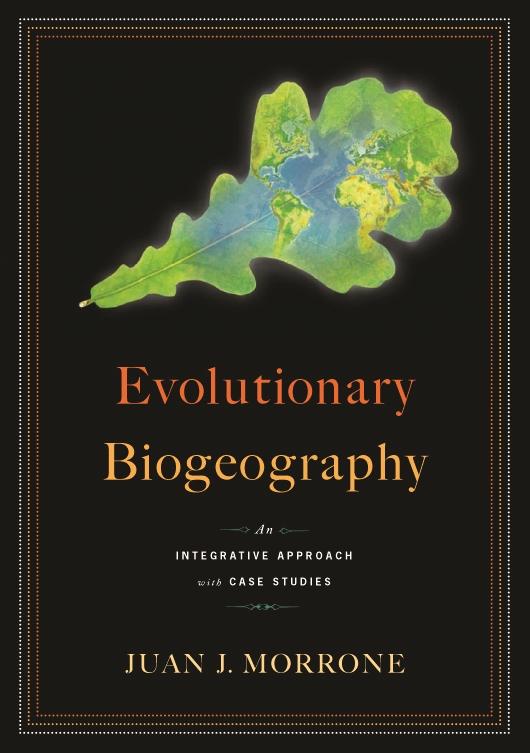
Rather than favoring only one approach, Juan J. Morrone proposes a comprehensive treatment of the developments and theories of evolutionary biogeography. Evolutionary biogeography uses distributional, phylogenetic, molecular, and fossil data to assess the historical changes that have produced current biotic patterns. Panbiogeography, parsimony analysis of endemicity, cladistic biogeography, and phylogeography are the four recent and most common approaches. Many conceive of these methods as representing different "schools," but Morrone shows how each addresses different questions in the various steps of an evolutionary biogeographical analysis.
Panbiogeography and parsimony analysis of endemicity are useful for identifying biotic components or areas of endemism. Cladistic biogeography uses phylogenetic data to determine the relationships between these biotic components. Further information on fossils, phylogeographic patterns, and molecular clocks can be incorporated to identify different cenocrons. Finally, available geological knowledge can help construct a geobiotic scenario that may explain how analyzed areas were put into contact and how the biotic components and cenocrons inhabiting them evolved. Morrone compares these methods and employs case studies to make it clear which is best for the question at hand. Set problems, discussion sections, and glossaries further enhance classroom use.
Payez facilement par carte, Klarna, Apple Pay ou Google Pay. Pas satisfait ? Vous avez toujours une garantie de remboursement de 14 jours. En savoir plus dans nos conditions. Si vous avez des questions, envoyez-nous un e-mail à hello@memmo.org.
Memmo facilite tes études, où que tu sois dans le monde. On rassemble tes manuels de cours et des outils d'étude intelligents au même endroit : résumés, quiz, podcasts et flashcards. Et il y a Ted, ton compagnon d'étude qui répond à toutes tes questions. Plus de 50 000 étudiants étudient déjà ici – conçu pour t'aider à apprendre plus vite et à moins stresser.