
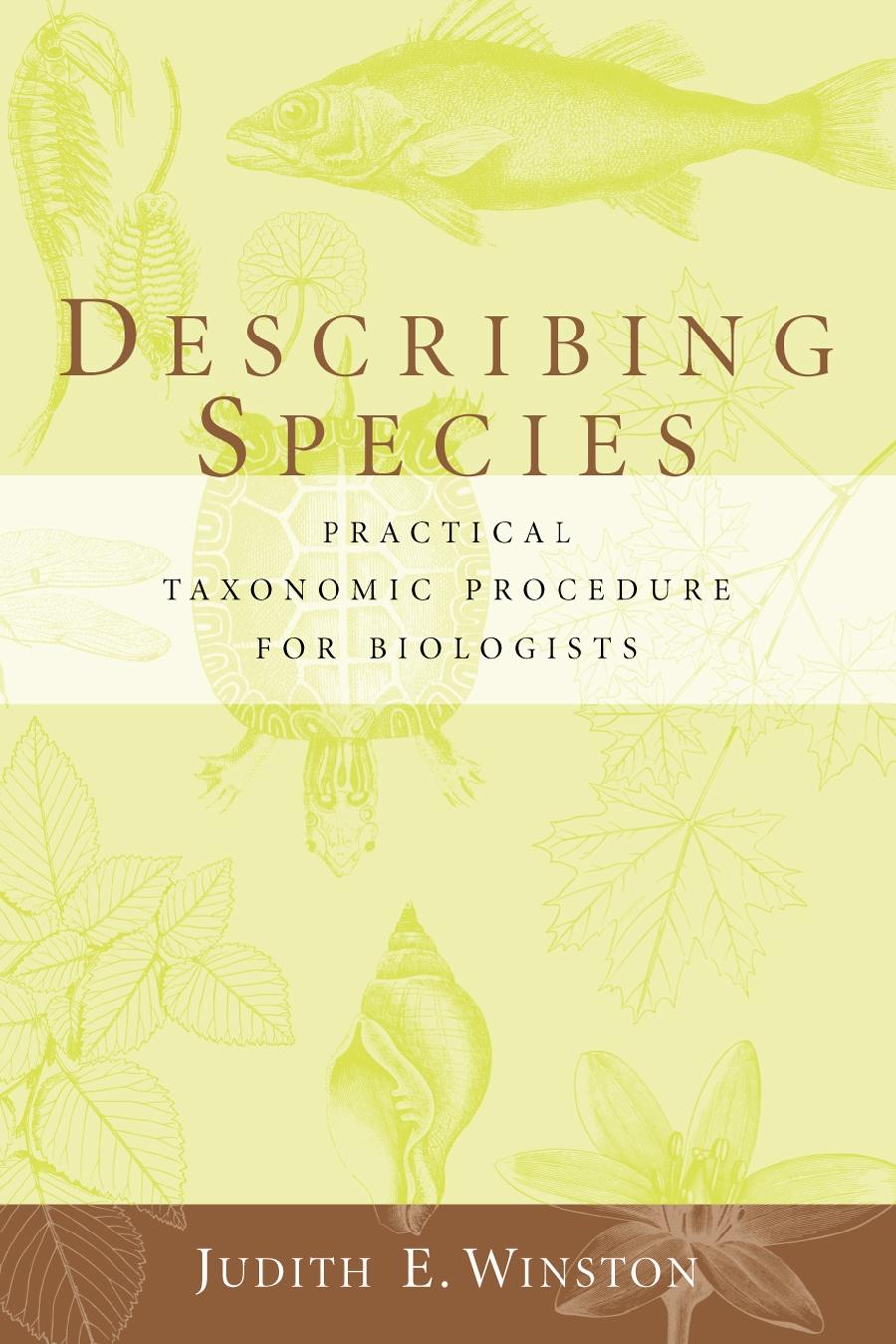
New species are discovered every day—and cataloguing all of them has grown into a nearly insurmountable task worldwide. Now, this definitive reference manual acts as a style guide for writing and filing species descriptions. New collecting techniques and new technology have led to a dramatic increase in the number of species that are discovered. Explorations of unstudied regions and new habitats for almost any group of organisms can result in a large number of new species discoveries—and hence the need to be described. Yet there is no one source a student or researcher can readily consult to learn the basic practical aspects of taxonomic procedures.
Species description can present a variety of difficulties: Problems arise when new species are not given names because their discoverers do not know how to write a formal species description or when these species are poorly described. Biologists may also have to deal with nomenclatural problems created by previous workers or resulting from new information generated by their own research. This practical resource for scientists and students contains instructions and examples showing how to describe newly discovered species in both the animal and plant kingdoms.
With special chapters on publishing taxonomic papers and on ecology in species description, as well as sections covering subspecies, genus-level, and higher taxa descriptions, Describing Species enhances any writer's taxonomic projects, reports, checklists, floras, faunal surveys, revisions, monographs, or guides.
The volume is based on current versions of the International Codes of Zoological and Botanical Nomenclature and recognizes that systematics is a global and multicultural exercise. Though Describing Species has been written for an English-speaking audience, it is useful anywhere Taxonomy is spoken and will be a valuable tool for professionals and students in zoology, botany, ecology, paleontology, and other fields of biology.
Payez facilement par carte, Klarna, Apple Pay ou Google Pay. Pas satisfait ? Vous avez toujours une garantie de remboursement de 14 jours. En savoir plus dans nos conditions. Si vous avez des questions, envoyez-nous un e-mail à hello@memmo.org.
Memmo facilite tes études, où que tu sois dans le monde. On rassemble tes manuels de cours et des outils d'étude intelligents au même endroit : résumés, quiz, podcasts et flashcards. Et il y a Ted, ton compagnon d'étude qui répond à toutes tes questions. Plus de 50 000 étudiants étudient déjà ici – conçu pour t'aider à apprendre plus vite et à moins stresser.