
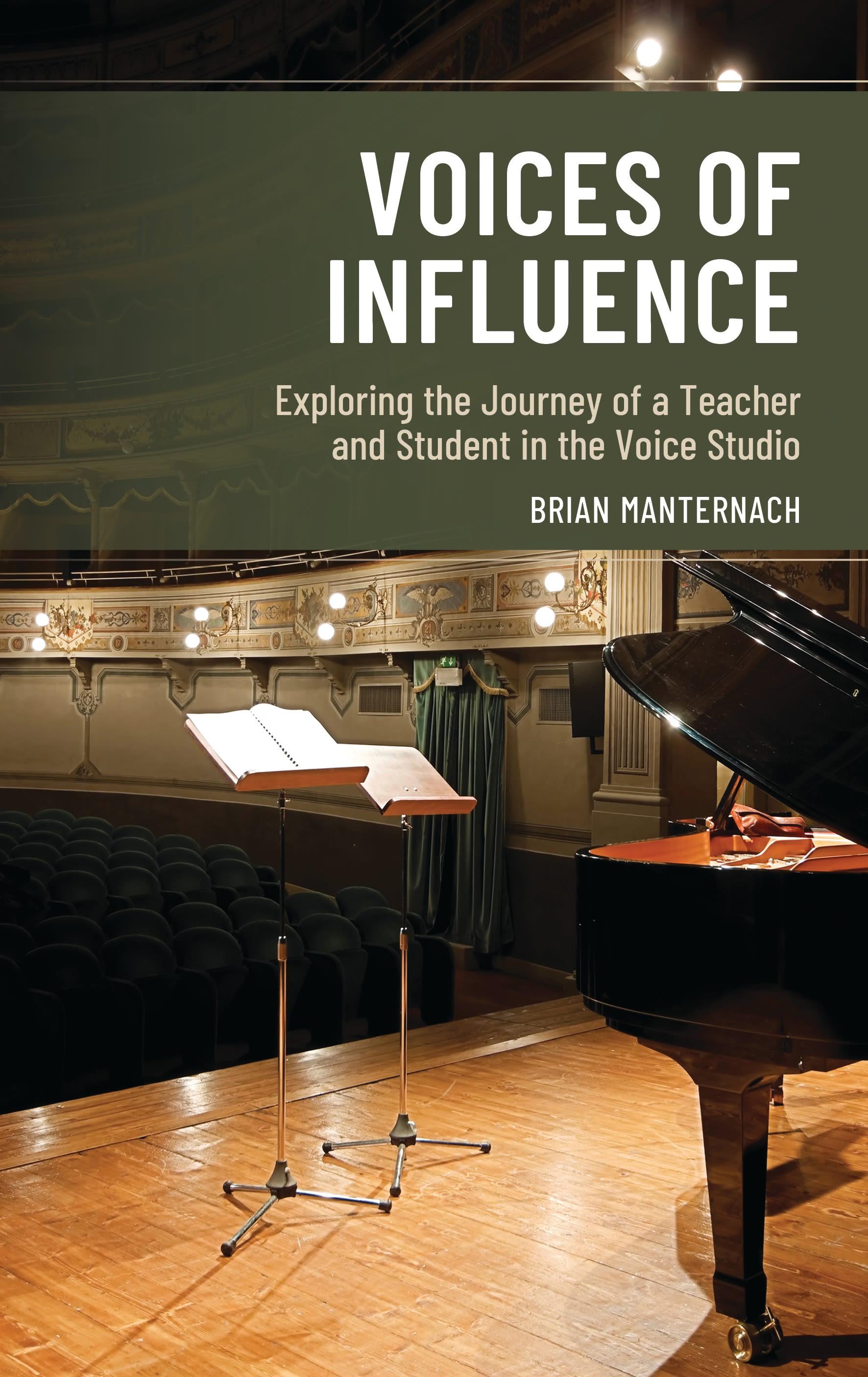
Brian Manternach examines the dynamic relationship of influence between teacher and student in the voice studio. Relating personal stories and formative experiences, the book is part pedagogical guide, part memoir, and part exploration of how vocal philosophies and practices evolve as they are passed from teacher to student.
Part One introduces readers to noted voice professor Robert J. Harrison, exploring biographical elements that have formed how he thinks, what he believes, and how that has informed his life as an artist and as a teacher. Part Two examines Harrison's teaching approaches, including tactics he used in the voice studio to address aspects of respiration, phonation, resonance, registration, and articulation. It also discusses how Harrison taught artistry, from how he defines his own musical tastes and sensibilities to how he taught communicative singing. Part Three presents the complicated idea of “legacy,” considering how we might remember teachers and their influence once their formal instruction has concluded. Manternach also considers how to contextualize the work of teachers from previous generations to fairly assess their contributions.
Along the way, Manternach describes how he has been influenced by Harrison now that he is a teacher himself. He outlines areas of pedagogical agreement as well as disagreement and indicates how-through the educational chain of succession-some of Harrison's practices are passed on practically verbatim while others have necessarily evolved in order to serve the current generation of students.
Part One introduces readers to noted voice professor Robert J. Harrison, exploring biographical elements that have formed how he thinks, what he believes, and how that has informed his life as an artist and as a teacher. Part Two examines Harrison's teaching approaches, including tactics he used in the voice studio to address aspects of respiration, phonation, resonance, registration, and articulation. It also discusses how Harrison taught artistry, from how he defines his own musical tastes and sensibilities to how he taught communicative singing. Part Three presents the complicated idea of “legacy,” considering how we might remember teachers and their influence once their formal instruction has concluded. Manternach also considers how to contextualize the work of teachers from previous generations to fairly assess their contributions.
Along the way, Manternach describes how he has been influenced by Harrison now that he is a teacher himself. He outlines areas of pedagogical agreement as well as disagreement and indicates how-through the educational chain of succession-some of Harrison's practices are passed on practically verbatim while others have necessarily evolved in order to serve the current generation of students.
Sivuja: 224
Kategoria: Musikvetenskap
e-ISBN: 9798765146149
Lähetyspaino: 1.2 kg
Toimitusaika: 1-2 päivää
Maksa helposti kortilla, Klarnalla, Apple Paylla tai Google Paylla. Etkö ole tyytyväinen? Sinulla on aina 14 päivän palautusoikeus. Lue lisää ehdoistamme. Jos sinulla on kysyttävää, lähetä meille sähköpostia osoitteeseen hello@memmo.org.
Memmo tekee opiskelusta helpompaa – missä päin maailmaa ikinä oletkin. Meillä yhdistät kurssikirjat ja fiksut opiskelutyökalut yhteen paikkaan: tiivistelmät, visat, podcastit ja muistikortit. Ja sitten Ted, opiskelukaverisi, joka vastaa kaikkeen, mitä ikinä mietitkin. Yli 50 000 opiskelijaa opiskelee jo täällä – rakennettu auttamaan sinua oppimaan nopeammin ja stressaamaan vähemmän.