
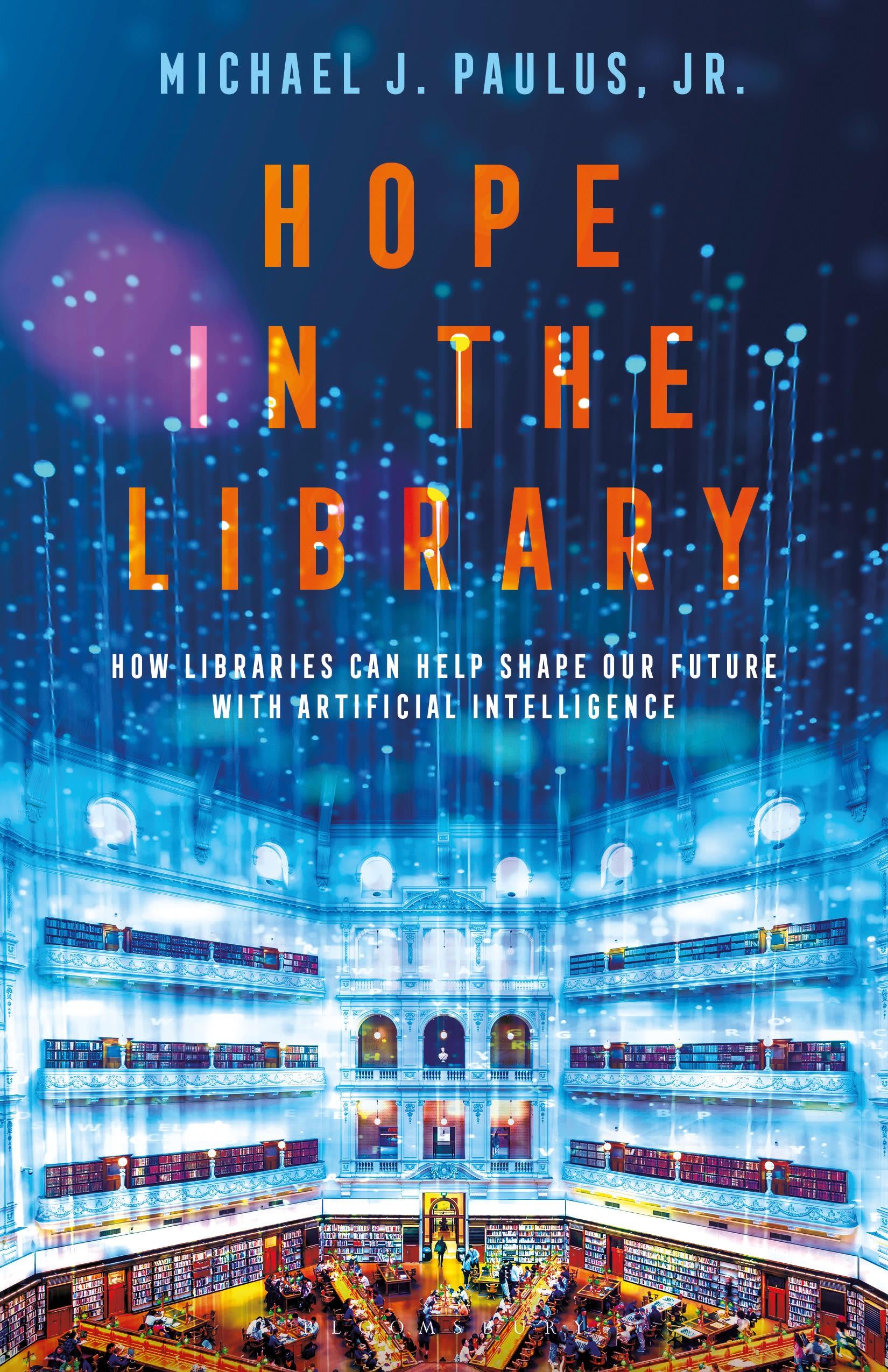
What is the role of the library in an increasingly complex information environment filled with and redesigned for artificial intelligence?
Hope in the Library presents a compelling case for the continued relevance of libraries in an age increasingly shaped by artificial intelligence. Michael J. Paulus, Jr., shows how libraries, as human-centered and human-scaled institutions, have enduring roles as archives for reflection and understanding, sites of imagination and hope, and catalysts for human agency. This book argues that, by providing an essential counterbalance to impersonal and automated systems, libraries are essential for not only surviving but thriving in our emerging information environment.
Hope in the Library is structured as a series of essays organized by explorations of the library in the past, in imagined futures, and in our digitally-enhanced present. Firsthand narrative and
archaeological history are interspersed with literary meditations from writers including Mary
Shelley, Ursula K. Le Guin, and Jorge Luis Borges. The book can be read a few different ways: from beginning to end; following topical pathways suggested in the final section; or in any other order chosen by the reader. Each essay and section, like a book or section of a library, may be read independently.
Informed by over two decades of leading and studying libraries, these essays include the author's professional as well as personal reflections and encourage a more radical reframing of how AI may be integrated into libraries and society to help create a better future.
Hope in the Library presents a compelling case for the continued relevance of libraries in an age increasingly shaped by artificial intelligence. Michael J. Paulus, Jr., shows how libraries, as human-centered and human-scaled institutions, have enduring roles as archives for reflection and understanding, sites of imagination and hope, and catalysts for human agency. This book argues that, by providing an essential counterbalance to impersonal and automated systems, libraries are essential for not only surviving but thriving in our emerging information environment.
Hope in the Library is structured as a series of essays organized by explorations of the library in the past, in imagined futures, and in our digitally-enhanced present. Firsthand narrative and
archaeological history are interspersed with literary meditations from writers including Mary
Shelley, Ursula K. Le Guin, and Jorge Luis Borges. The book can be read a few different ways: from beginning to end; following topical pathways suggested in the final section; or in any other order chosen by the reader. Each essay and section, like a book or section of a library, may be read independently.
Informed by over two decades of leading and studying libraries, these essays include the author's professional as well as personal reflections and encourage a more radical reframing of how AI may be integrated into libraries and society to help create a better future.
Maksa helposti kortilla, Klarnalla, Apple Paylla tai Google Paylla. Etkö ole tyytyväinen? Sinulla on aina 14 päivän palautusoikeus. Lue lisää ehdoistamme. Jos sinulla on kysyttävää, lähetä meille sähköpostia osoitteeseen hello@memmo.org.
Memmo tekee opiskelusta helpompaa – missä päin maailmaa ikinä oletkin. Meillä yhdistät kurssikirjat ja fiksut opiskelutyökalut yhteen paikkaan: tiivistelmät, visat, podcastit ja muistikortit. Ja sitten Ted, opiskelukaverisi, joka vastaa kaikkeen, mitä ikinä mietitkin. Yli 50 000 opiskelijaa opiskelee jo täällä – rakennettu auttamaan sinua oppimaan nopeammin ja stressaamaan vähemmän.