
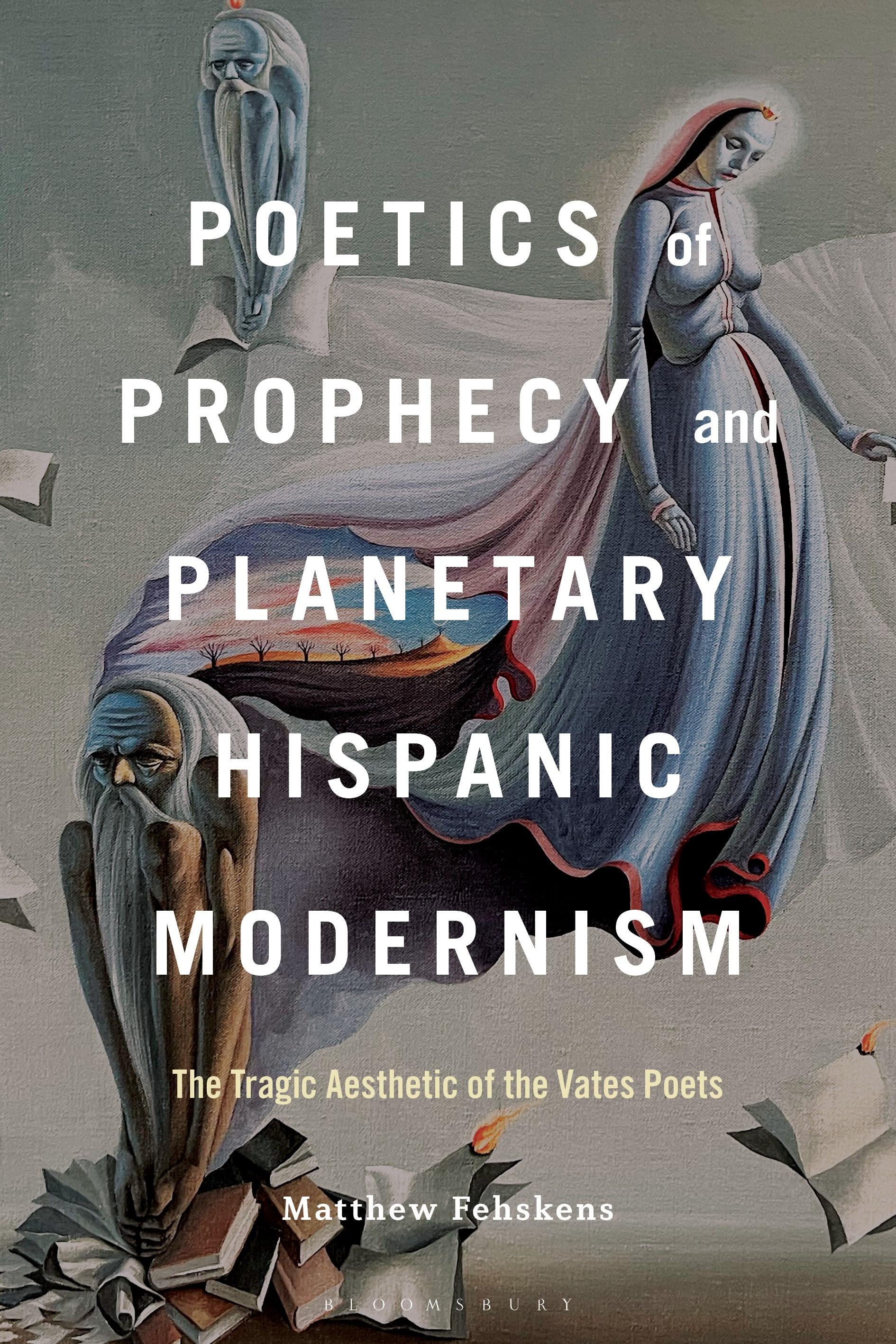
A study of Hispanic planetary modernism's use of prophetic discourse as an attempt to counter modern nihilism and provide modernity with poetry as its new Scripture.
Traditional studies of established literary modernisms (such as in the United Kingdom, France, and Germany) have long acknowledged the prophetic authority and tragic struggle for sacredness within modernity. As Poetics of Prophecy and Planetary Hispanic Modernism argues, the aesthetic and ideological phenomenon of the Vates (or prophetic) poet is also present in the rich tradition of Hispanic literature that spans more than 20 countries. However, the later modernization of Spain and Spanish America postpones its adoption until the advent of literary modernism.
Matthew Fehskens shows that this prophetic role is consistent across multiple poets in Europe, Spanish America, and the United States and constitutes a fundamental aspect of the transatlantic production of modernism in Spanish. The phenomenon is wide ranging, from the movement's founding authors, such as Cuban José Martí and Nicaraguan Rubén Darío, to Uruguayan poets Delmira Agustini and María Eugenia Vaz Ferreira, and Spanish authors Antonio Machado, Miguel de Unamuno, and Ramón del Valle Inclán.
Hispanic modernism had lofty aims, namely to speak poetic words of divine import to a culture ravaged by the Age of Reason and the materialism of modernity. Its authors aimed to transcend the limitations of literature, reason, and a disenchanted culture to create modern scriptures. This study demonstrates the centrality of prophecy in the development of Hispanic poetry in modernity.
Traditional studies of established literary modernisms (such as in the United Kingdom, France, and Germany) have long acknowledged the prophetic authority and tragic struggle for sacredness within modernity. As Poetics of Prophecy and Planetary Hispanic Modernism argues, the aesthetic and ideological phenomenon of the Vates (or prophetic) poet is also present in the rich tradition of Hispanic literature that spans more than 20 countries. However, the later modernization of Spain and Spanish America postpones its adoption until the advent of literary modernism.
Matthew Fehskens shows that this prophetic role is consistent across multiple poets in Europe, Spanish America, and the United States and constitutes a fundamental aspect of the transatlantic production of modernism in Spanish. The phenomenon is wide ranging, from the movement's founding authors, such as Cuban José Martí and Nicaraguan Rubén Darío, to Uruguayan poets Delmira Agustini and María Eugenia Vaz Ferreira, and Spanish authors Antonio Machado, Miguel de Unamuno, and Ramón del Valle Inclán.
Hispanic modernism had lofty aims, namely to speak poetic words of divine import to a culture ravaged by the Age of Reason and the materialism of modernity. Its authors aimed to transcend the limitations of literature, reason, and a disenchanted culture to create modern scriptures. This study demonstrates the centrality of prophecy in the development of Hispanic poetry in modernity.
Sivuja: 232
Kategoria: Litteraturvetenskap & Teori
e-ISBN: 9798765126790
Lähetyspaino: 1.2 kg
Toimitusaika: 1-2 päivää
Maksa helposti kortilla, Klarnalla, Apple Paylla tai Google Paylla. Etkö ole tyytyväinen? Sinulla on aina 14 päivän palautusoikeus. Lue lisää ehdoistamme. Jos sinulla on kysyttävää, lähetä meille sähköpostia osoitteeseen hello@memmo.org.
Memmo tekee opiskelusta helpompaa – missä päin maailmaa ikinä oletkin. Meillä yhdistät kurssikirjat ja fiksut opiskelutyökalut yhteen paikkaan: tiivistelmät, visat, podcastit ja muistikortit. Ja sitten Ted, opiskelukaverisi, joka vastaa kaikkeen, mitä ikinä mietitkin. Yli 50 000 opiskelijaa opiskelee jo täällä – rakennettu auttamaan sinua oppimaan nopeammin ja stressaamaan vähemmän.