
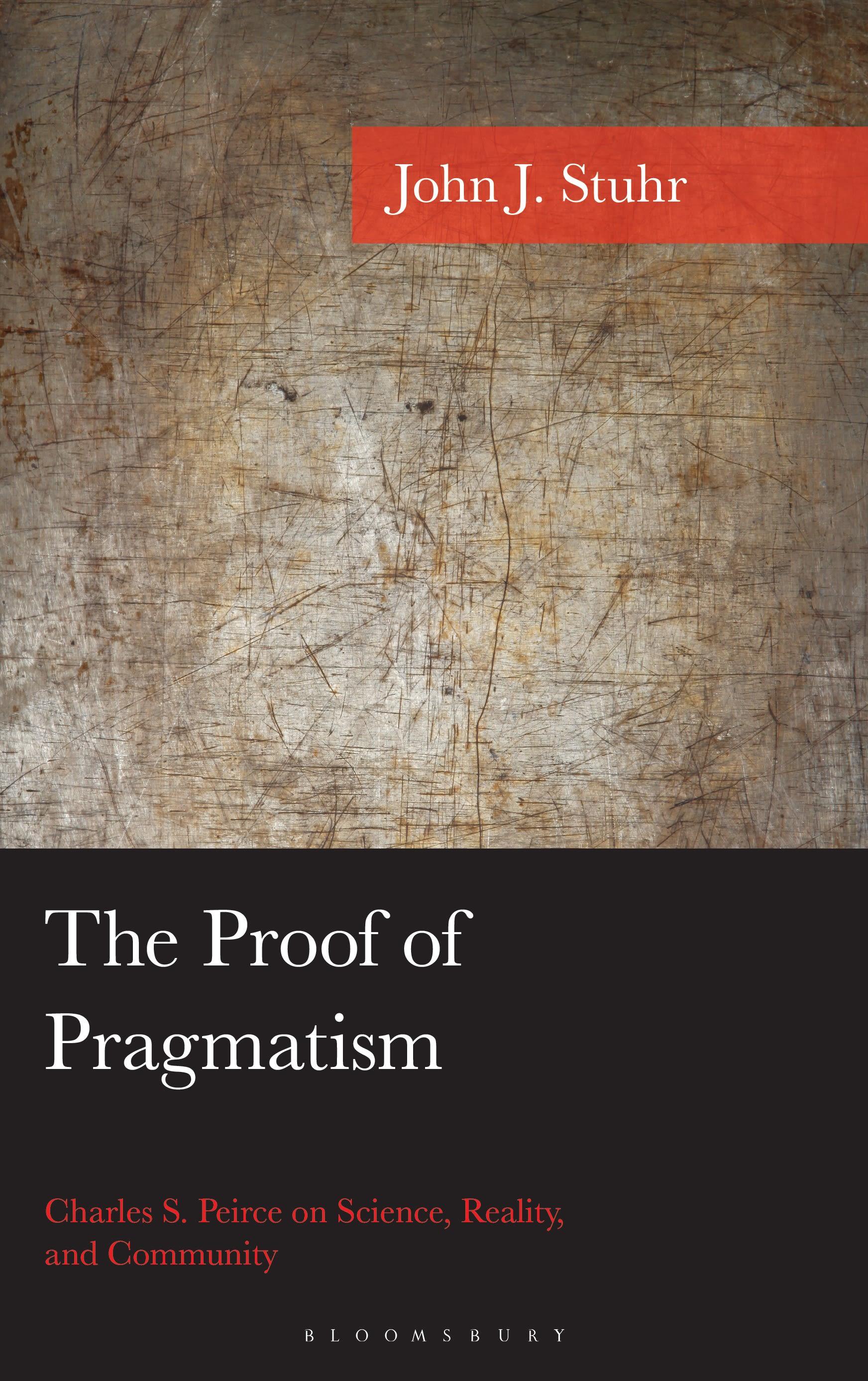
Pragmatism is true and not only useful.
Drawing critically on the writings of Charles Peirce, this book presents a proof of pragmatism and explores its implications for using scientific method, understanding the nature of reality, and recognizing and deepening the centrality of community.
Peirce's development of a successful proof of pragmatism had three stages, each improving on the earlier: a proof based in the psychology of belief; a proof based in a phenomenology of perception; and a proof based in semiotics. In reconstructing and refashioning Peirce's philosophy and its theoretical and practical consequences, John J. Stuhr demonstrates how Peirce makes it possible for pragmatists to reject fully the mission, methods, and conclusions of modern European philosophy and, in so doing, to articulate a revolutionary new philosophy rooted in experimental, fallible, and public thought. For this pragmatism, community is not simply a prerequisite of communication; it is an end and, as an ideal, it is an instrument for transformation, a way to change the world.
In establishing a proof of the truth of pragmatism, Stuhr clarifies the logical, ontological, and normative commitments of pragmatism, making clear their impact for inquiry and problem solving, reasoning and an understanding of reality, and ethical commitments and social ideals. The book provides a thorough and clear account of the development of pragmatism and a lively and original extension and application of pragmatic theory to practice.
Drawing critically on the writings of Charles Peirce, this book presents a proof of pragmatism and explores its implications for using scientific method, understanding the nature of reality, and recognizing and deepening the centrality of community.
Peirce's development of a successful proof of pragmatism had three stages, each improving on the earlier: a proof based in the psychology of belief; a proof based in a phenomenology of perception; and a proof based in semiotics. In reconstructing and refashioning Peirce's philosophy and its theoretical and practical consequences, John J. Stuhr demonstrates how Peirce makes it possible for pragmatists to reject fully the mission, methods, and conclusions of modern European philosophy and, in so doing, to articulate a revolutionary new philosophy rooted in experimental, fallible, and public thought. For this pragmatism, community is not simply a prerequisite of communication; it is an end and, as an ideal, it is an instrument for transformation, a way to change the world.
In establishing a proof of the truth of pragmatism, Stuhr clarifies the logical, ontological, and normative commitments of pragmatism, making clear their impact for inquiry and problem solving, reasoning and an understanding of reality, and ethical commitments and social ideals. The book provides a thorough and clear account of the development of pragmatism and a lively and original extension and application of pragmatic theory to practice.
Maksa helposti kortilla, Klarnalla, Apple Paylla tai Google Paylla. Etkö ole tyytyväinen? Sinulla on aina 14 päivän palautusoikeus. Lue lisää ehdoistamme. Jos sinulla on kysyttävää, lähetä meille sähköpostia osoitteeseen hello@memmo.org.
Memmo tekee opiskelusta helpompaa – missä päin maailmaa ikinä oletkin. Meillä yhdistät kurssikirjat ja fiksut opiskelutyökalut yhteen paikkaan: tiivistelmät, visat, podcastit ja muistikortit. Ja sitten Ted, opiskelukaverisi, joka vastaa kaikkeen, mitä ikinä mietitkin. Yli 50 000 opiskelijaa opiskelee jo täällä – rakennettu auttamaan sinua oppimaan nopeammin ja stressaamaan vähemmän.