
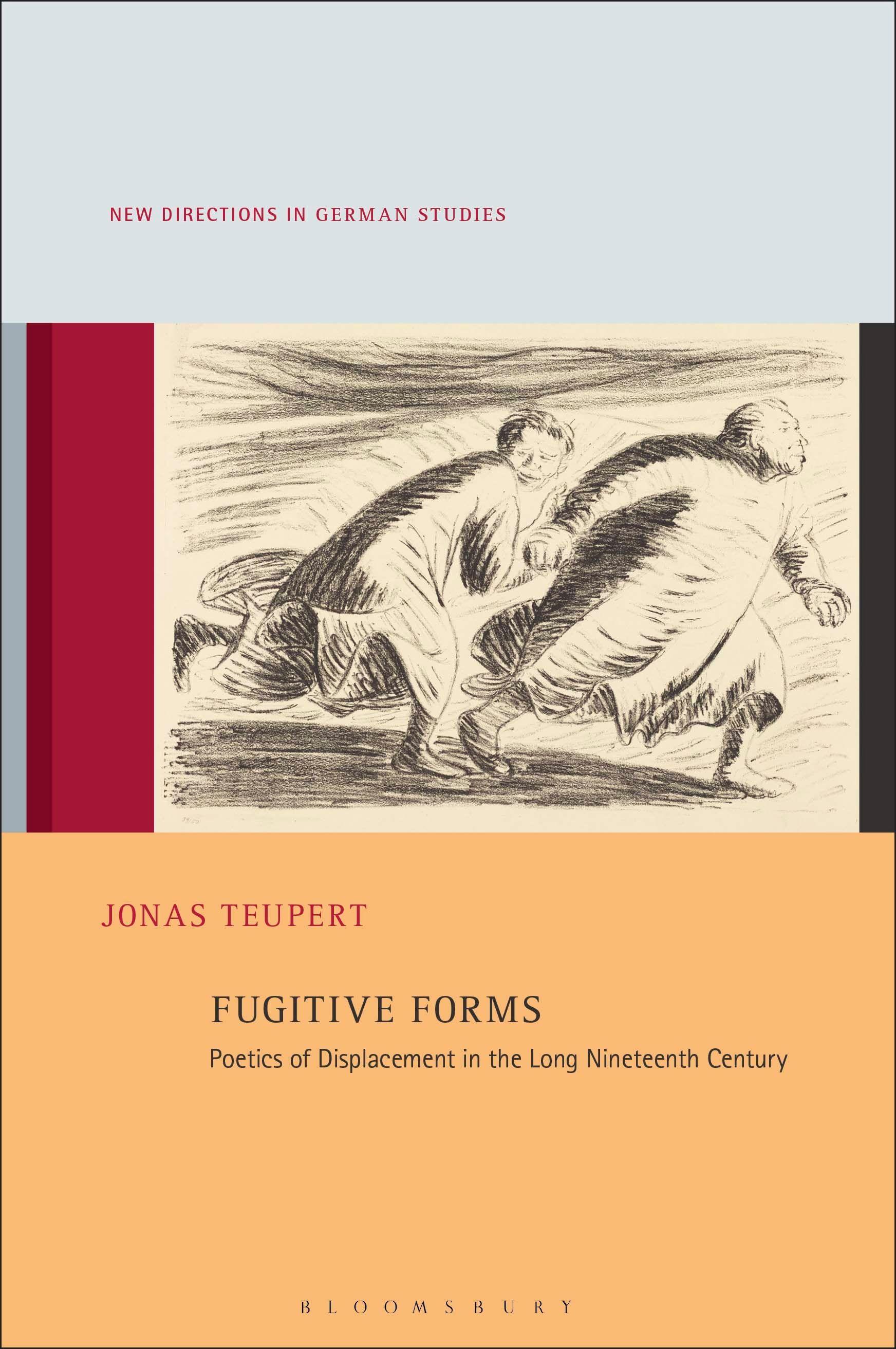
Jonas Teupert theorizes the "fugitive forms" of ephemeral German-language prose writings from the long-19th century, drawing a link between this period's literary history and political philosophy and the refugee narratives from our current moment.
Fugitive Forms traces the German term for refugee, “Flüchtling,” also “fugitive” and “fleeting,” through a genealogy of 19th-century prose writings that articulate ambivalent experiences of displacement. These fast-paced and ephemeral writings – often short stories, small prose pieces, and travelogues – evade classical genres and respond to the disruptive, volatile nature of their political present.
By engaging questions of literary form with history, philosophy, and media aesthetics, Teupert conceptualizes fugitive writing as a form that enacts the precarious flight toward freedom. The long 19th century, in addition to being relatively understudied within migration studies, represents an interstitial period in the history of modern politics. While this era often has been overlooked in discussion of the formation of subject and state, Teupert argues that the concept of fugitivity as a path towards freedom offers new insights into the resistant potential of literature produced before human movement fell under the control of state power.
Reading canonical and lesser-known works by Heinrich von Kleist, Heinrich Heine, and Robert Walser, this book provides a history of writing under conditions of displacement and develops fugitivity as a new category for German Studies. Furthermore, Fugitive Forms makes a case that the Germanophone canon offers literary strategies to critique and imagine community in an age of modern biopolitics.
Fugitive Forms traces the German term for refugee, “Flüchtling,” also “fugitive” and “fleeting,” through a genealogy of 19th-century prose writings that articulate ambivalent experiences of displacement. These fast-paced and ephemeral writings – often short stories, small prose pieces, and travelogues – evade classical genres and respond to the disruptive, volatile nature of their political present.
By engaging questions of literary form with history, philosophy, and media aesthetics, Teupert conceptualizes fugitive writing as a form that enacts the precarious flight toward freedom. The long 19th century, in addition to being relatively understudied within migration studies, represents an interstitial period in the history of modern politics. While this era often has been overlooked in discussion of the formation of subject and state, Teupert argues that the concept of fugitivity as a path towards freedom offers new insights into the resistant potential of literature produced before human movement fell under the control of state power.
Reading canonical and lesser-known works by Heinrich von Kleist, Heinrich Heine, and Robert Walser, this book provides a history of writing under conditions of displacement and develops fugitivity as a new category for German Studies. Furthermore, Fugitive Forms makes a case that the Germanophone canon offers literary strategies to critique and imagine community in an age of modern biopolitics.
Sivuja: 224
Kategoria: Litteraturvetenskap & Teori
e-ISBN: 9798216465898
Lähetyspaino: 1.2 kg
Toimitusaika: 1-2 päivää
Maksa helposti kortilla, Klarnalla, Apple Paylla tai Google Paylla. Etkö ole tyytyväinen? Sinulla on aina 14 päivän palautusoikeus. Lue lisää ehdoistamme. Jos sinulla on kysyttävää, lähetä meille sähköpostia osoitteeseen hello@memmo.org.
Memmo tekee opiskelusta helpompaa – missä päin maailmaa ikinä oletkin. Meillä yhdistät kurssikirjat ja fiksut opiskelutyökalut yhteen paikkaan: tiivistelmät, visat, podcastit ja muistikortit. Ja sitten Ted, opiskelukaverisi, joka vastaa kaikkeen, mitä ikinä mietitkin. Yli 50 000 opiskelijaa opiskelee jo täällä – rakennettu auttamaan sinua oppimaan nopeammin ja stressaamaan vähemmän.