
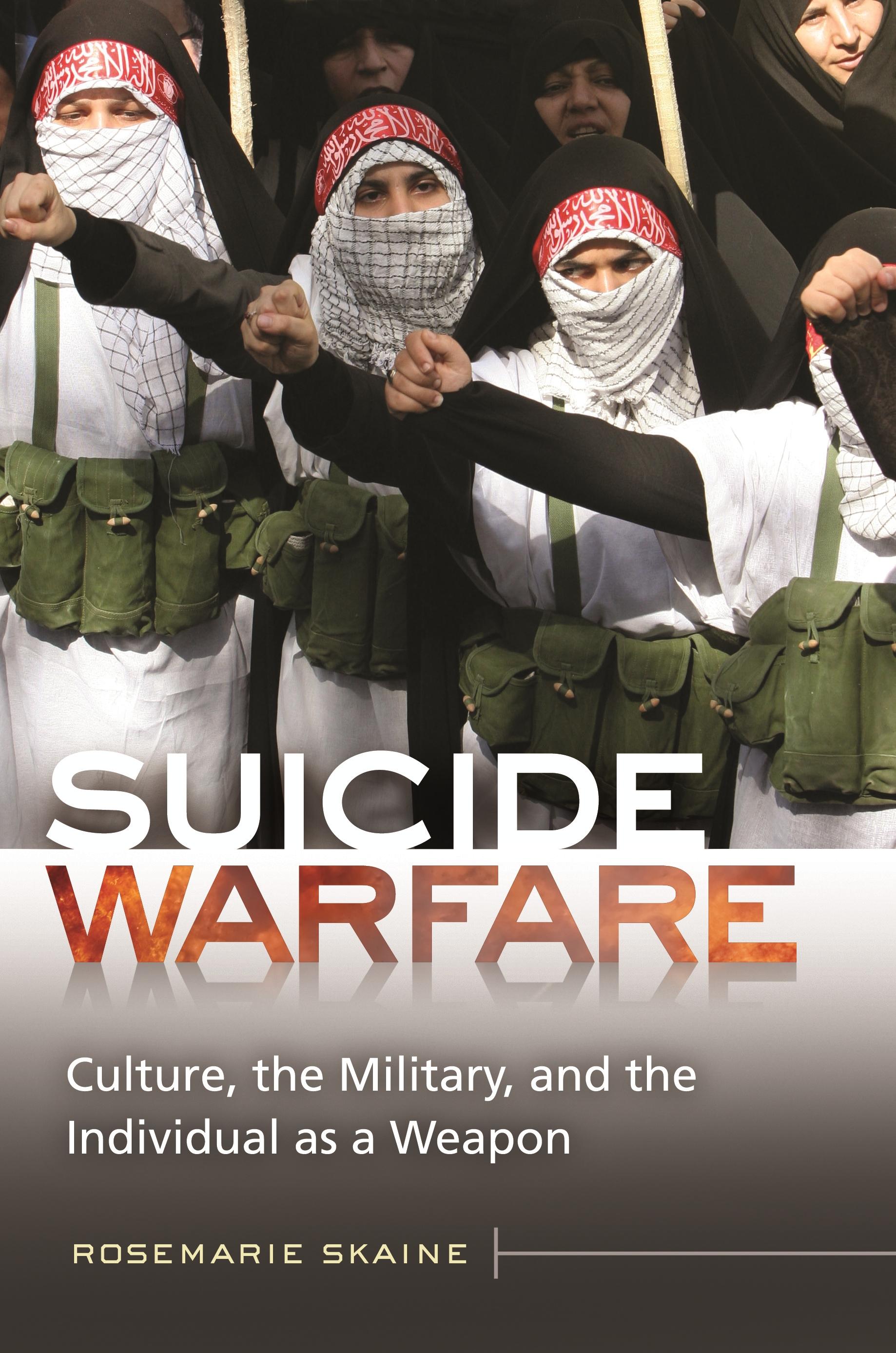
This book provides up-to-date coverage of the policies, strategies, and effects of suicide in war, examining this subject from societal and military perspectives to shed light on the justifications for using human beings as expendable weapons.
Suicide warfare has expanded over the years and become a global phenomenon. In some parts of the world, it has become rooted in the fabric of society. Westerners often find it difficult to grasp why someone would be willing to sacrifice their life in order to take the lives of others. Suicide Warfare: Culture, the Military, and the Individual as a Weapon provides a thorough examination of the topic that enables readers to understand the justification for suicide warfare and better appreciate how the ideology of the individuals and organizations that resort to suicide warfare greatly complicates security issues in the 21st century.
The book covers the policies, strategies, and effects of suicide in war, examining suicide warfare in its entirety from a theoretical standpoint, and then applying those theories to the actual manifestations of and politico-military responses to suicide warfare. The author discusses specific organizations such as Al Qaeda and the Chechen rebels, analyzing each within its societal context, military justification, individual motivation, and outcomes, and addresses principles of sociological and conflict theory to place suicide warfare in a clearer conceptual framework. The book presents case studies that allow readers to better understand abstract theories and make distinctions between individual cases of suicide warfare.
Suicide warfare has expanded over the years and become a global phenomenon. In some parts of the world, it has become rooted in the fabric of society. Westerners often find it difficult to grasp why someone would be willing to sacrifice their life in order to take the lives of others. Suicide Warfare: Culture, the Military, and the Individual as a Weapon provides a thorough examination of the topic that enables readers to understand the justification for suicide warfare and better appreciate how the ideology of the individuals and organizations that resort to suicide warfare greatly complicates security issues in the 21st century.
The book covers the policies, strategies, and effects of suicide in war, examining suicide warfare in its entirety from a theoretical standpoint, and then applying those theories to the actual manifestations of and politico-military responses to suicide warfare. The author discusses specific organizations such as Al Qaeda and the Chechen rebels, analyzing each within its societal context, military justification, individual motivation, and outcomes, and addresses principles of sociological and conflict theory to place suicide warfare in a clearer conceptual framework. The book presents case studies that allow readers to better understand abstract theories and make distinctions between individual cases of suicide warfare.
Maksa helposti kortilla, Klarnalla, Apple Paylla tai Google Paylla. Etkö ole tyytyväinen? Sinulla on aina 14 päivän palautusoikeus. Lue lisää ehdoistamme. Jos sinulla on kysyttävää, lähetä meille sähköpostia osoitteeseen hello@memmo.org.
Memmo tekee opiskelusta helpompaa – missä päin maailmaa ikinä oletkin. Meillä yhdistät kurssikirjat ja fiksut opiskelutyökalut yhteen paikkaan: tiivistelmät, visat, podcastit ja muistikortit. Ja sitten Ted, opiskelukaverisi, joka vastaa kaikkeen, mitä ikinä mietitkin. Yli 50 000 opiskelijaa opiskelee jo täällä – rakennettu auttamaan sinua oppimaan nopeammin ja stressaamaan vähemmän.