
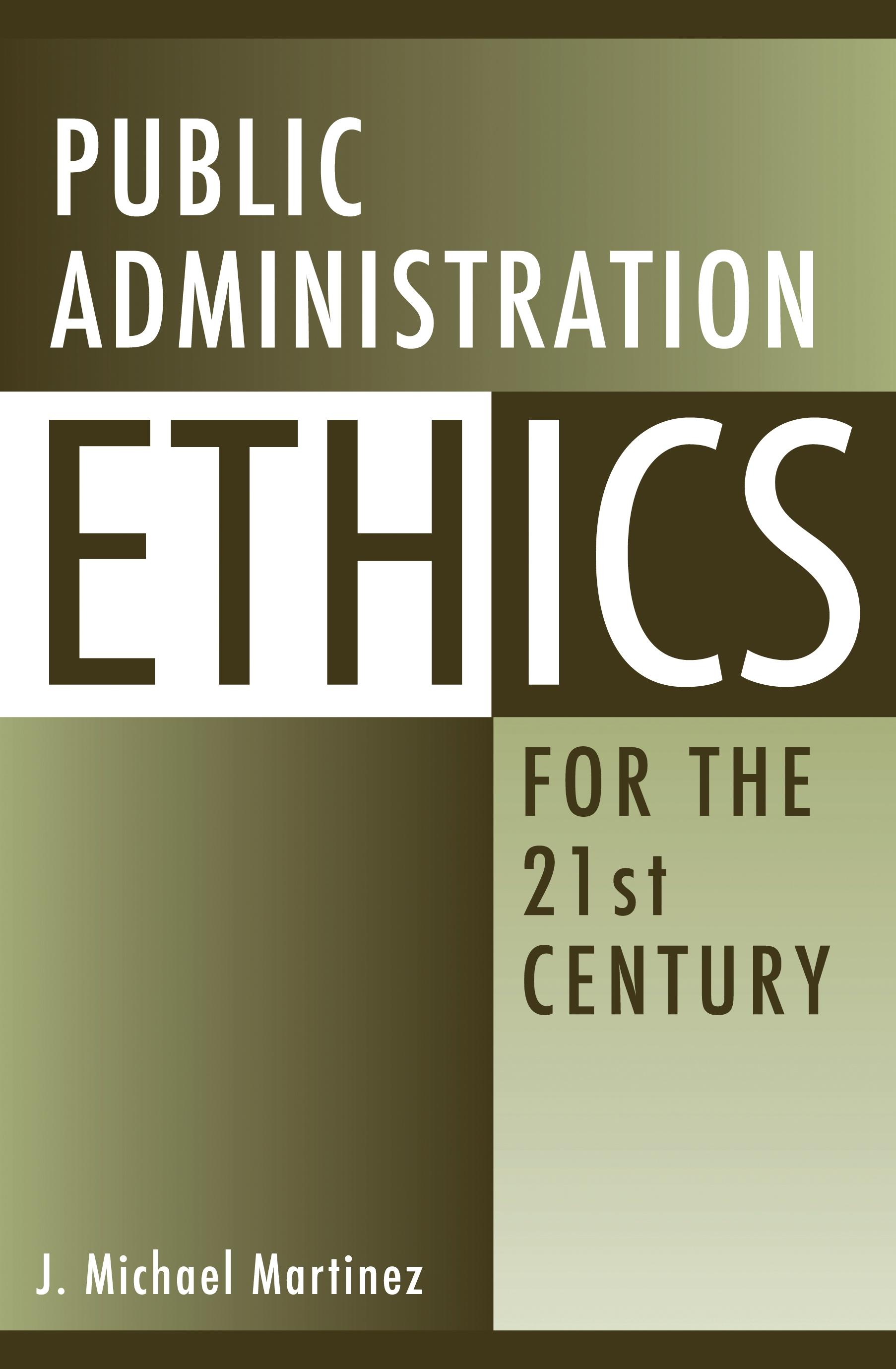
This volume establishes a foundation for a uniform code of professional ethics for public administrators in the United States.
Public Administration Ethics for the 21st Century lays the ethical foundations for a uniform professional code of ethics for public administrators, civil servants, and non-profit administrators in the US. Martinez synthesizes five disparate schools of ethical thought as to how public administrators can come to know the good and behave in ways that advance the values of citizenship, equity, and public interest within their respective organizations. Using case studies, he teaches American administrators how to combine the approaches of all five schools to evaluate and resolve complex ethical dilemmas within the constraints of the U.S. democratic values set.
Martinez enunciates the common ethical principles that guide public administrators in their practice within the specific ethical parameters and organizational cultures of a myriad entities at the federal, state, and local levels of government in the United States, as well as in non-profit organizations. Along the way, Martinez addresses a number of crucial issues, including personal gain, conflict of interest, transparency, democratic impartiality, hiring, hierarchical discipline, media relations, partisan pressure, appointments by elected officials, and whistle-blowing. The striking, high-profile case studies—Nathan Bedford Forrest, Adolph Eichmann, Lieutenant William Calley, and Mary Ann Wright—illustrate ethical dilemmas where, for better or worse, the individual was at odds with the organization.
Public Administration Ethics for the 21st Century lays the ethical foundations for a uniform professional code of ethics for public administrators, civil servants, and non-profit administrators in the US. Martinez synthesizes five disparate schools of ethical thought as to how public administrators can come to know the good and behave in ways that advance the values of citizenship, equity, and public interest within their respective organizations. Using case studies, he teaches American administrators how to combine the approaches of all five schools to evaluate and resolve complex ethical dilemmas within the constraints of the U.S. democratic values set.
Martinez enunciates the common ethical principles that guide public administrators in their practice within the specific ethical parameters and organizational cultures of a myriad entities at the federal, state, and local levels of government in the United States, as well as in non-profit organizations. Along the way, Martinez addresses a number of crucial issues, including personal gain, conflict of interest, transparency, democratic impartiality, hiring, hierarchical discipline, media relations, partisan pressure, appointments by elected officials, and whistle-blowing. The striking, high-profile case studies—Nathan Bedford Forrest, Adolph Eichmann, Lieutenant William Calley, and Mary Ann Wright—illustrate ethical dilemmas where, for better or worse, the individual was at odds with the organization.
Sivuja: 216
Kategoria: Statsvetenskap & Politik
e-ISBN: 9798216134039
Lähetyspaino: 1.2 kg
Toimitusaika: 1-2 päivää
Maksa helposti kortilla, Klarnalla, Apple Paylla tai Google Paylla. Etkö ole tyytyväinen? Sinulla on aina 14 päivän palautusoikeus. Lue lisää ehdoistamme. Jos sinulla on kysyttävää, lähetä meille sähköpostia osoitteeseen hello@memmo.org.
Memmo tekee opiskelusta helpompaa – missä päin maailmaa ikinä oletkin. Meillä yhdistät kurssikirjat ja fiksut opiskelutyökalut yhteen paikkaan: tiivistelmät, visat, podcastit ja muistikortit. Ja sitten Ted, opiskelukaverisi, joka vastaa kaikkeen, mitä ikinä mietitkin. Yli 50 000 opiskelijaa opiskelee jo täällä – rakennettu auttamaan sinua oppimaan nopeammin ja stressaamaan vähemmän.