
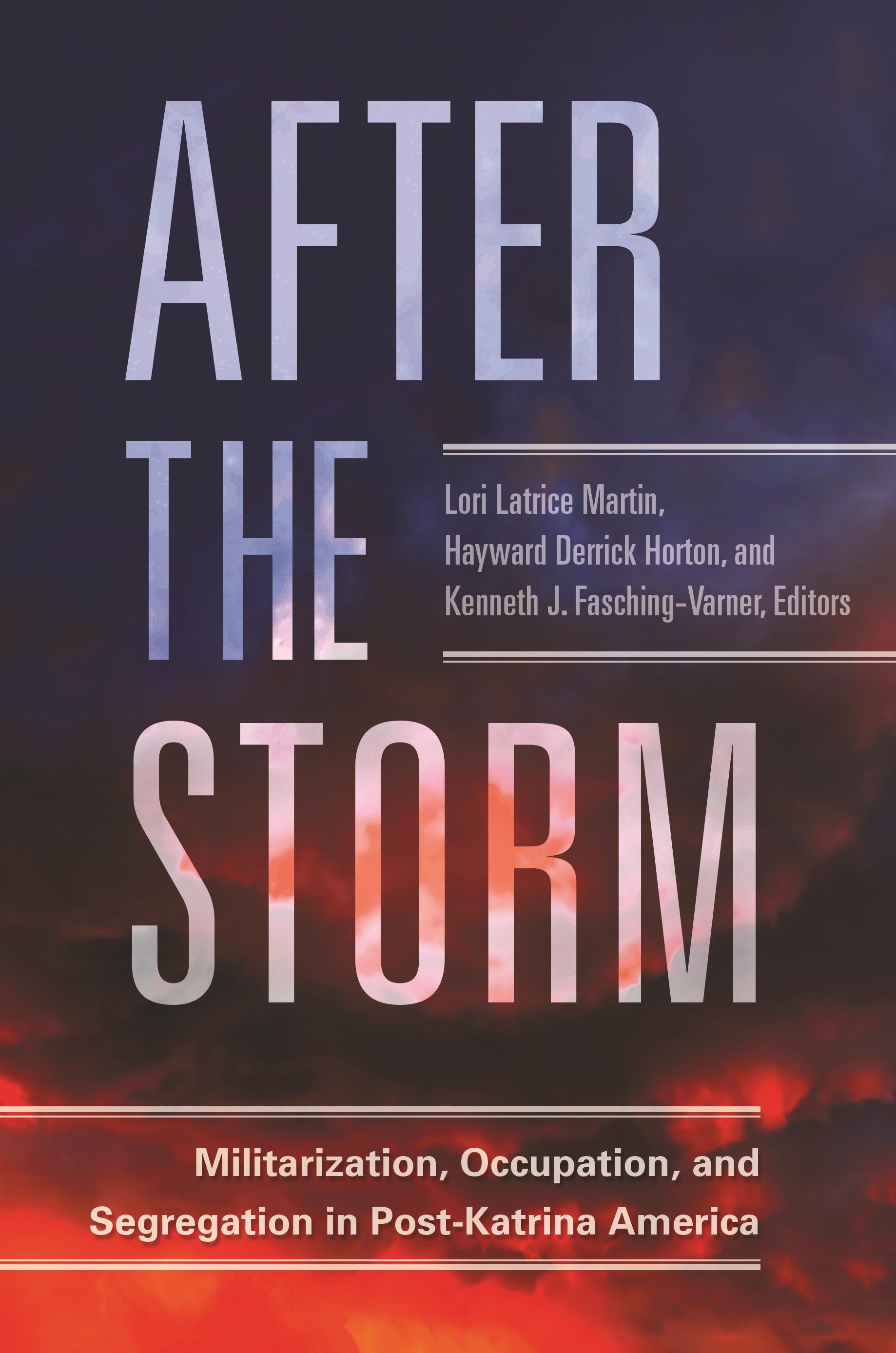
This book examines the state of race relations in America 10 years after one of the worst natural disasters in American history, Hurricane Katrina, and looks at the socioeconomic consequences of decades of public and private practices brought to light by the storm in cities throughout the Gulf Coast as well as in America more broadly.
More than a decade ago, Hurricane Katrina served to expose a well-engineered system of oppression, one which continues to privilege some groups and disadvantage others. In the wake of the natural disaster that hit New Orleans, it became clear that institutions such as residential segregation, mass incarceration and unemployment, police brutality, political disenfranchisement, racial profiling, gentrification, community occupation, discrimination, and a prison-to-school pipeline are expressly intended to work against people of color and individuals from economically disadvantaged backgrounds. Unfortunately, very little has improved in the lives of people living in majority-minority communities since Katrina.
After the Storm uses Hurricane Katrina and the aftermath of the natural disaster as a point of departure for understanding enduring racial divides in asset ownership, academic achievement, educational attainment, and mass incarceration in New Orleans and beyond. The book explores the many specific aspects of the widespread problem and considers how to move toward achieving a state where all can thrive. Readers will better appreciate the key roles of race, inequality, education, occupation, and militarization in understanding the failures in the responses to this disaster and grasp how institutionalized inequity continues to plague our nation.
More than a decade ago, Hurricane Katrina served to expose a well-engineered system of oppression, one which continues to privilege some groups and disadvantage others. In the wake of the natural disaster that hit New Orleans, it became clear that institutions such as residential segregation, mass incarceration and unemployment, police brutality, political disenfranchisement, racial profiling, gentrification, community occupation, discrimination, and a prison-to-school pipeline are expressly intended to work against people of color and individuals from economically disadvantaged backgrounds. Unfortunately, very little has improved in the lives of people living in majority-minority communities since Katrina.
After the Storm uses Hurricane Katrina and the aftermath of the natural disaster as a point of departure for understanding enduring racial divides in asset ownership, academic achievement, educational attainment, and mass incarceration in New Orleans and beyond. The book explores the many specific aspects of the widespread problem and considers how to move toward achieving a state where all can thrive. Readers will better appreciate the key roles of race, inequality, education, occupation, and militarization in understanding the failures in the responses to this disaster and grasp how institutionalized inequity continues to plague our nation.
Maksa helposti kortilla, Klarnalla, Apple Paylla tai Google Paylla. Etkö ole tyytyväinen? Sinulla on aina 14 päivän palautusoikeus. Lue lisää ehdoistamme. Jos sinulla on kysyttävää, lähetä meille sähköpostia osoitteeseen hello@memmo.org.
Memmo tekee opiskelusta helpompaa – missä päin maailmaa ikinä oletkin. Meillä yhdistät kurssikirjat ja fiksut opiskelutyökalut yhteen paikkaan: tiivistelmät, visat, podcastit ja muistikortit. Ja sitten Ted, opiskelukaverisi, joka vastaa kaikkeen, mitä ikinä mietitkin. Yli 50 000 opiskelijaa opiskelee jo täällä – rakennettu auttamaan sinua oppimaan nopeammin ja stressaamaan vähemmän.