
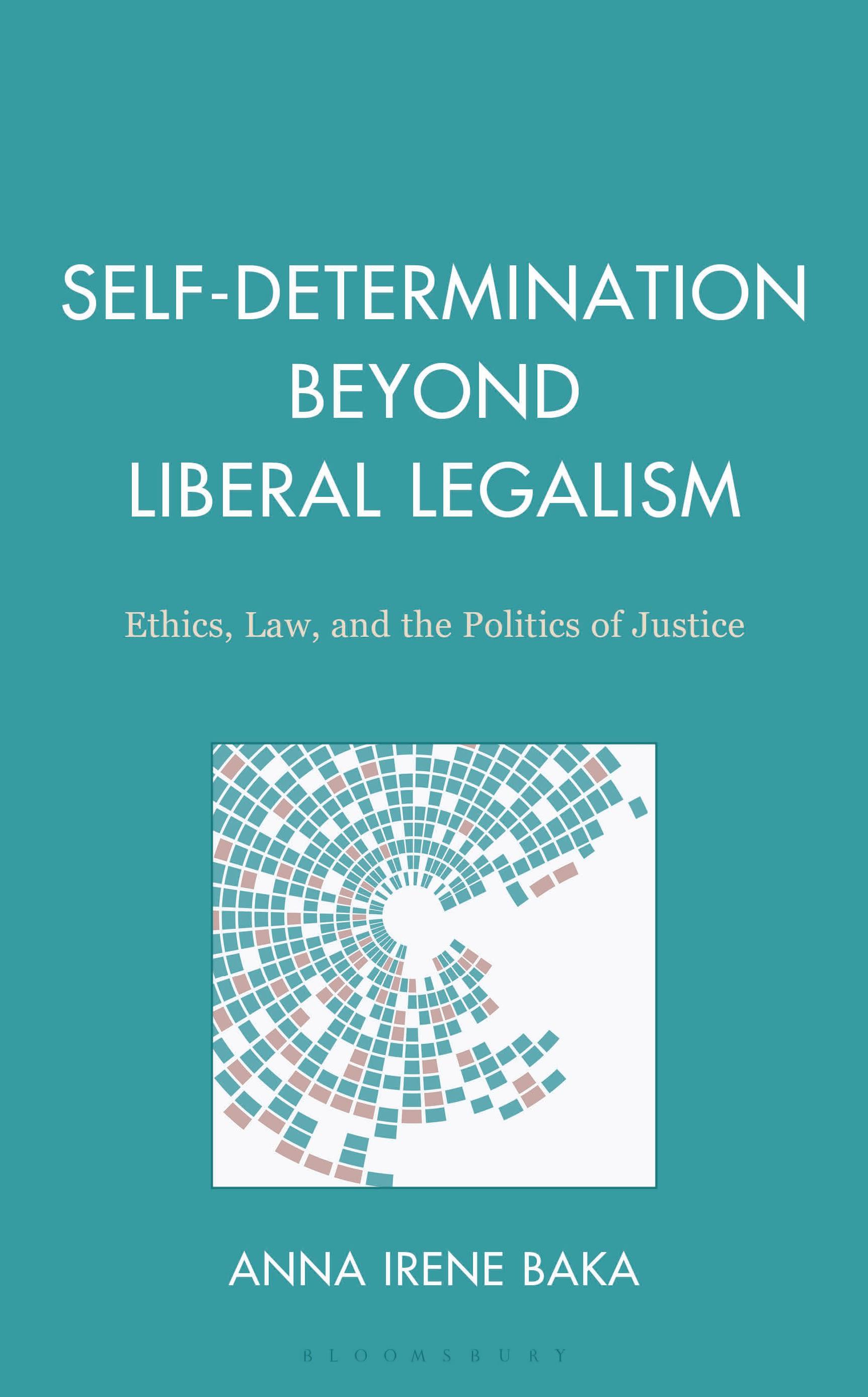
Anna Irene Baka challenges dominant liberal and legalist paradigms in international law by reinterpreting the right of peoples to self-determination through the lenses of Aristotelian philosophy, phenomenology, social psychology, and corrective justice.
Focusing on high-profile postcolonial conflicts in Kosovo, Cyprus, and Palestine, Baka argues that abstract international and constitutional legal doctrines on self-determination fail to account for the lived realities of collective deprivation and historical trauma. Baka offers a compelling critique not only of mainstream theories of self-determination, but also of the shortcomings of critical movements such as Critical Legal Studies. In their place, she advances a renewed ethical and conceptual framework for international law-one grounded in responsibility, rational judgment, and moral engagement. This interdisciplinary method brings fresh insight into questions of collective identity, legitimacy, and the moral accountability of law itself. Ultimately suggesting that meaningful responses to historical injustice require international jurists to cultivate intellectual independence and legal virtue, this is a timely and essential contribution for scholars and practitioners of international law, human rights, legal philosophy, and global justice.
Focusing on high-profile postcolonial conflicts in Kosovo, Cyprus, and Palestine, Baka argues that abstract international and constitutional legal doctrines on self-determination fail to account for the lived realities of collective deprivation and historical trauma. Baka offers a compelling critique not only of mainstream theories of self-determination, but also of the shortcomings of critical movements such as Critical Legal Studies. In their place, she advances a renewed ethical and conceptual framework for international law-one grounded in responsibility, rational judgment, and moral engagement. This interdisciplinary method brings fresh insight into questions of collective identity, legitimacy, and the moral accountability of law itself. Ultimately suggesting that meaningful responses to historical injustice require international jurists to cultivate intellectual independence and legal virtue, this is a timely and essential contribution for scholars and practitioners of international law, human rights, legal philosophy, and global justice.
Maksa helposti kortilla, Klarnalla, Apple Paylla tai Google Paylla. Etkö ole tyytyväinen? Sinulla on aina 14 päivän palautusoikeus. Lue lisää ehdoistamme. Jos sinulla on kysyttävää, lähetä meille sähköpostia osoitteeseen hello@memmo.org.
Memmo tekee opiskelusta helpompaa – missä päin maailmaa ikinä oletkin. Meillä yhdistät kurssikirjat ja fiksut opiskelutyökalut yhteen paikkaan: tiivistelmät, visat, podcastit ja muistikortit. Ja sitten Ted, opiskelukaverisi, joka vastaa kaikkeen, mitä ikinä mietitkin. Yli 50 000 opiskelijaa opiskelee jo täällä – rakennettu auttamaan sinua oppimaan nopeammin ja stressaamaan vähemmän.