
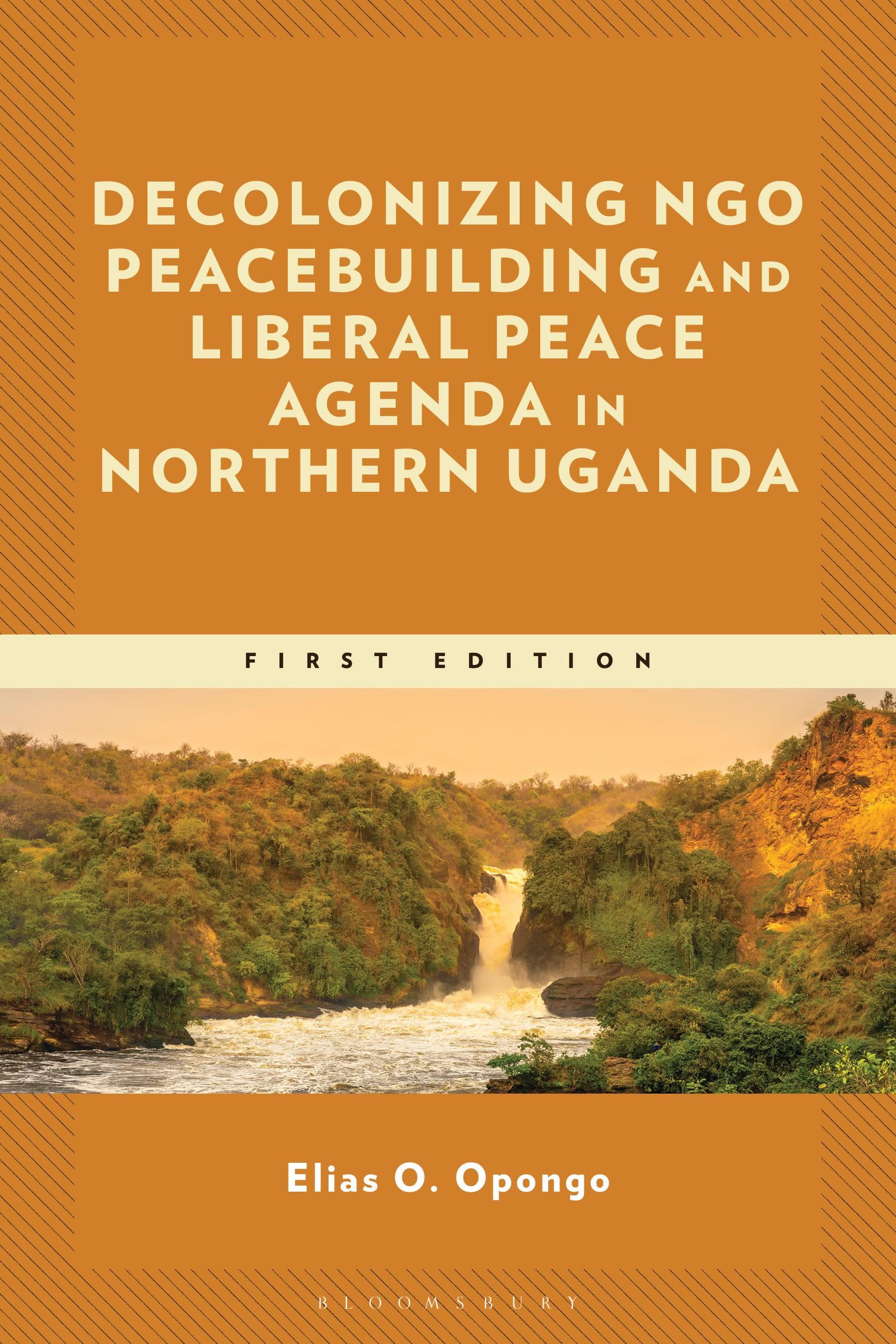
Critically examining how Western-funded NGO interventions have shaped post-conflict recovery in Northern Uganda, Elias O. Opongo argues that the liberal peace agenda-focused on democracy promotion, market reforms, and human rights-often marginalizes local agency and undermines culturally rooted approaches to peacebuilding.
Drawing on extensive fieldwork and grounded theory, Opongo explores how these externally driven models disconnect from the lived realities of conflict-affected communities. He introduces relational constructionism as a framework that emphasizes participatory, context-sensitive, and indigenous approaches-such as the Acholi Mato Oput ritual-that center dialogue, reintegration, and restorative justice.
The book also critiques the role of international actors, particularly the International Criminal Court (ICC), whose interventions can clash with local reconciliation efforts. Opongo's findings in Northern Uganda offer critical insights for other post-conflict African contexts dominated by donor-driven peacebuilding. He calls for a decolonial shift toward frameworks that restore African agency, reduce dependency, and prioritize community-led solutions for sustainable peace. This book is essential reading for scholars, practitioners, and policymakers seeking more inclusive, grounded, and transformative peacebuilding models in Africa and beyond.
Drawing on extensive fieldwork and grounded theory, Opongo explores how these externally driven models disconnect from the lived realities of conflict-affected communities. He introduces relational constructionism as a framework that emphasizes participatory, context-sensitive, and indigenous approaches-such as the Acholi Mato Oput ritual-that center dialogue, reintegration, and restorative justice.
The book also critiques the role of international actors, particularly the International Criminal Court (ICC), whose interventions can clash with local reconciliation efforts. Opongo's findings in Northern Uganda offer critical insights for other post-conflict African contexts dominated by donor-driven peacebuilding. He calls for a decolonial shift toward frameworks that restore African agency, reduce dependency, and prioritize community-led solutions for sustainable peace. This book is essential reading for scholars, practitioners, and policymakers seeking more inclusive, grounded, and transformative peacebuilding models in Africa and beyond.
Maksa helposti kortilla, Klarnalla, Apple Paylla tai Google Paylla. Etkö ole tyytyväinen? Sinulla on aina 14 päivän palautusoikeus. Lue lisää ehdoistamme. Jos sinulla on kysyttävää, lähetä meille sähköpostia osoitteeseen hello@memmo.org.
Memmo tekee opiskelusta helpompaa – missä päin maailmaa ikinä oletkin. Meillä yhdistät kurssikirjat ja fiksut opiskelutyökalut yhteen paikkaan: tiivistelmät, visat, podcastit ja muistikortit. Ja sitten Ted, opiskelukaverisi, joka vastaa kaikkeen, mitä ikinä mietitkin. Yli 50 000 opiskelijaa opiskelee jo täällä – rakennettu auttamaan sinua oppimaan nopeammin ja stressaamaan vähemmän.